Support our educational content for free when you purchase through links on our site. Learn more
🎒 What Is the Best Travel Backpack Capacity? Find Your Fit

What is the best travel backpack capacity? For most one-bag trips, start with 35–40 liters. That range offers room for everyday travel essentials without encouraging you to lug around a portable wardrobe—but your packing style, destination, and airline’s size limits can change the answer.
We’ve tested enough backpacks to know how quickly “a little extra room” becomes an extra pair of shoes, a just-in-case jacket, and a bag that suddenly feels enormous on the subway stairs. One crucial detail: liters measure volume, not carry-on compliance, so always check your backpack’s packed dimensions against your airline’s rules.
Key Takeaways
- 35–40L is a versatile starting point for many travelers, especially for one-bag trips.
- 20–30L can work for light packers and short trips; 45L or more suits bulkier gear or changing climates.
- Trip length alone doesn’t determine capacity: laundry access, footwear, weather, and packing habits matter.
- Airline limits are based on dimensions and sometimes weight—not a universal liter allowance.
- Choose the smallest backpack that comfortably fits your essentials, then test it fully packed before departure.
Table of Contents
- ⚡️ Quick Tips and Facts: Travel Backpack Capacity at a Glance
- 🧭 How Travel Backpack Sizes and Liter Measurements Work
- What does backpack capacity in liters actually measure?
- Why advertised capacity can vary between brands
- 🎒 What Is the Best Travel Backpack Capacity?
- The best capacity for most travelers
- Best backpack size by trip length
- 📏 Travel Backpack Capacity Guide: Find Your Ideal Liter Range
- 1. 10–20 liters: Personal item and minimalist daypack
- 2. 20–30 liters: Compact weekend and one-bag travel
- 3. 30–40 liters: Carry-on-friendly travel backpack
- 4. 40–45 liters: Maximum-size carry-on for longer trips
- 5. 45–55 liters: Extended travel with more room
- 6. 55–70 liters: Multi-week travel and bulky packing
- 7. 70+ liters: Expedition travel, winter gear, and checked bags
- ✈️ Carry-On Backpack Capacity and Airline Size Limits
- How many liters can you take as a carry-on?
- Personal item versus overhead-bin carry-on
- Why backpack dimensions matter more than liters
- How to check airline baggage rules before flying
- 🗺️ Choose Capacity by Destination and Travel Style
- City breaks, hostels, and urban travel
- International trips and one-bag travel
- South America and long-term backpacking
- Business travel and digital nomad setups
- Hiking, camping, and travel-adventure trips
- Winter travel and bulky clothing
- 🧳 Choose Backpack Capacity by Packing Style
- Minimalist packing versus bringing the extras
- Laundry access, footwear, and specialty gear
- How packing cubes affect usable space
- 🧍 How to Choose the Right Backpack Size and Fit
- Torso length, hip belt, and load comfort
- Capacity, backpack dimensions, and body size
- Why a bigger backpack can make packing harder
- ⚖️ Backpack Capacity, Weight, and Comfort
- How much should a loaded travel backpack weigh?
- Volume is not the same as weight capacity
- Packing heavier items safely
- 🛒 What to Look for in a Travel Backpack
- Clamshell versus top-loading designs
- Laptop sleeves, pockets, and organization
- Harnesses, compression straps, and weather protection
- Expandable backpacks: useful flexibility or extra bulk?
- 📦 How to Test Your Backpack Capacity Before a Trip
- Make a packing list and do a trial pack
- Check airline dimensions with a packed bag
- Adjust your capacity after a test trip
- ✅ Travel Backpack Capacity Mistakes to Avoid
- Conclusion
- Recommended Links
- FAQ
- Is a 40-liter backpack big enough for a week?
- Is a 30-liter backpack enough for international travel?
- Can a 45-liter backpack count as a carry-on?
- What backpack capacity is best for a two-week trip?
- Is a 50-liter backpack too big for travel?
- What size travel backpack fits under an airplane seat?
- How do I know if my backpack is too large?
- Reference Links
⚡️ Quick Tips and Facts: Travel Backpack Capacity at a Glance
For most travelers, a 35–40-liter backpack is the best balance of usable space, mobility, and potential carry-on convenience. Choose closer to 30–35L if you pack lightly; consider 40–45L when you need extra clothes, work gear, or room for souvenirs. Liters alone do not guarantee carry-on compliance: a bag’s packed dimensions and your airline’s rules matter more.
If you’re comparing smaller, lighter options, see our guide to 🎒 15 Best Small Backpacks for Travel (2026): Ultimate Lightweight Picks. For more buying advice, browse our backpack reviews and backpack types.
| Your travel plan | Starting capacity to consider | What to watch |
|---|---|---|
| Day trips and personal-item packing | 10–20L | Airline personal-item dimensions vary |
| Weekend or minimalist travel | 20–30L | Bulky shoes and jackets use space quickly |
| One-bag travel for several days | 30–40L | Check the packed bag’s dimensions |
| Longer trips with laundry access | 35–45L | Trip length matters less than what you pack |
| Multiple climates or specialized gear | 45–65L | More capacity often means more weight |
| Winter expeditions or camping equipment | 65L+ | Usually better suited to checked or outdoor-use packs |
Quick facts:
- One liter is about 61 cubic inches. A one-liter bottle gives you a rough visual reference, though a backpack’s shape and pockets make its actual usable space less intuitive.
- The U.S. Federal Aviation Administration advises travelers to check airline baggage requirements; airlines set their own size and weight limits.
- A 45L backpack may exceed an airline’s dimensions, while a well-shaped 40L bag may fit. Capacity is volume; compliance is geometry.
- Laundry access can make a smaller pack work for a longer trip. Bulky boots, camera gear, formalwear, or cold-weather layers can make a short trip demand a bigger one.
- Our rule of thumb: pack your essentials first, then choose the smallest bag that fits them comfortably.
🧭 How Travel Backpack Sizes and Liter Measurements Work
Backpack capacity is usually stated in liters, but the number is a volume estimate—not a promise that every cubic centimeter is easy to pack. Two 40L backpacks can feel very different: one may have a clean, open main compartment; another may divide its volume among a laptop section, shoe pocket, lid, and exterior stash pockets.
What does backpack capacity in liters actually measure?
A liter describes volume, not dimensions, weight allowance, or how much gear a particular person can fit. The conversion is straightforward: 1 liter equals 1,000 cubic centimeters, and approximately 61 cubic inches. That does not mean a 40L bag can carry 40 liters of rectangular objects with no wasted space. Curved corners, padding, dividers, and awkwardly shaped belongings all affect usable room.
Manufacturers may count different areas in their published capacity. Some include external pockets; some distinguish the main compartment from accessory storage. For example, a bag advertised as 40L may distribute that space across its body and pockets rather than giving you one large 40L cavity. Check a brand’s capacity and product specifications before buying.
A practical way to picture capacity: imagine filling a backpack with standardized blocks. Real packing is messier. A rain jacket squishes; a pair of boots does not. A structured laptop sleeve keeps its shape, while soft clothing compresses. That’s why an honest test pack beats trusting a liter number alone.
Why advertised capacity can vary between brands
There is no single consumer-facing method that makes every brand’s liter claim directly comparable. Differences can come from:
- What compartments are included: main body only, or pockets and expansion sections too.
- How the bag is measured: a brand may use internal dimensions, a fill method, or another volume calculation.
- Bag construction: rigid panels and thick padding can reduce the room available for your belongings.
- Shape and access: a wide clamshell can be easier to pack than a narrow, tall bag with the same stated capacity.
- Expansion: an expandable backpack may have different compressed and expanded volumes.
That measurement variation is why professional reviewers look beyond marketing numbers. In its travel-backpack testing, OutdoorGearLab compares storage, comfort, and practical features—not just liters. Our backpack brand spotlights also help you compare how brands design their packs.
🎒 What Is the Best Travel Backpack Capacity?
For most one-bag travelers, start with 35–40 liters. That range usually gives you enough room for everyday clothing, toiletries, electronics, and a few extras without automatically turning your backpack into a portable wardrobe. It is a starting point, not a universal prescription.
There’s a useful spread of expert opinion. OutdoorGearLab’s travel backpack review calls 35L a strong all-around size, while Indie Traveller’s buyer’s guide describes 35–45L as a “happy sweet spot.” Another backpack-size guide recommends 45L for international travel but warns that “bigger is NOT always better when you have to carry it up mountains and across international airports!” (The Pedal Project).
Those recommendations differ because they assume different travelers. A 35L pack makes sense for someone who packs light, does laundry, and wants to move easily. A 45L pack may suit someone carrying extra shoes, camera equipment, or clothing for varied weather. Neither number guarantees airline approval: the bag’s dimensions and the carrier’s rules decide that.
The best capacity for most travelers
Use 35–40L as your first shortlist if you want one bag for a typical city-to-city trip. It is large enough to be practical for many travelers yet small enough to encourage restraint. But if your gear is bulky or you’re traveling through several climates, 40–45L may be more comfortable.
A few well-known examples illustrate the trade-offs:
- Osprey Farpoint 40: a travel pack with a harness and hip belt designed to make carrying more comfortable.
- Cotopaxi Allpa 35L: a compartmentalized design that helps separate gear but may be less flexible for unusually bulky loads.
- Aer Travel Pack 3: an organization-heavy option available in more than one size.
- Tortuga Travel Backpack Pro 40L: a structured travel pack aimed at comfortable, organized carry.
These are examples, not automatic winners. The best capacity is the smallest size that fits your real packing list without making the bag unpleasant to carry.
Best backpack size by trip length
Trip duration is only one part of the equation. A week-long trip with laundry access and light clothing may need less space than a four-day winter trip with boots and a thick coat.
| Trip pattern | A sensible starting range | Why |
|---|---|---|
| Day out, sightseeing, or commuting | 10–20L | Room for daily essentials and a light layer |
| Weekend away | 20–30L | Enough for a few outfits if you pack efficiently |
| Several days with one-bag packing | 30–40L | A useful balance for clothing, toiletries, and electronics |
| One to two weeks with laundry | 35–45L | Rewearing and washing clothing reduces the need for extra volume |
| Extended travel through different climates | 45–65L | More room for layers and specialized equipment |
| Camping, winter trekking, or group gear | 55L+ | Sleeping, cooking, or cold-weather equipment takes up space |
The practical lesson from Indie Traveller is that a 30L bag can suit a short trip, while a 35–45L pack can serve longer travel if you pack lightly and wash clothes. OutdoorGearLab offers a more cautious view: it notes that a 35–45L bag may carry a week’s essentials, but packing style and bulky extras can make four days a safer expectation for some travelers (review and testing). Both can be true. One assumes light, flexible packing; the other leaves more room for real-world variation.
📏 Travel Backpack Capacity Guide: Find Your Ideal Liter Range
Use this guide as a filter, then compare the pack’s dimensions, fit, access, and intended load. To explore other formats, browse our backpack types category.
1. 10–20 liters: Personal item and minimalist daypack
A 10–20L pack works well for day trips, commuting, sightseeing, or a compact under-seat bag—depending on airline dimensions and how much you carry. It can hold a water bottle, snacks, a light jacket, a small camera, and essentials. As a main travel bag, it is restrictive for most people unless you pack extremely lightly or pair it with wheled luggage.
Good for: day excursions, city walks, short flights as a personal item, or a secondary travel bag.
Drawbacks: little room for spare footwear, bulky layers, or a laptop plus several days of clothing. Do not assume a particular capacity qualifies as a personal item; consult your airline’s size rules.
2. 20–30 liters: Compact weekend and one-bag travel
A 20–30L backpack can work for a weekend, business overnight, or minimalist short trip. Some travelers can stretch it further by rewearing clothes and doing laundry. This size is also useful when your main luggage is a suitcase and you want a compact companion bag.
A 30L pack is often a good choice if you value a light, nimble load more than spare space. On the other hand, a second pair of shoes, a camera kit, or a thick hoodie can eat its capacity fast. Try your full packing list before committing.
3. 30–40 liters: Carry-on-friendly travel backpack
For many travelers, 30–40L is the most versatile range. A 30–35L pack favors minimalism and easier movement; a 35–40L pack makes room for more clothing or work equipment. This category includes popular models such as the Cotopaxi Allpa 35L, Aer Travel Pack 3, and Osprey Farpoint 40.
But “carry-on-friendly” is not the same as “accepted on every flight.” Check packed dimensions and airline policies, especially if you fly on a budget carrier or use a regional aircraft.
Our reviewer tip: don’t judge a bag only when empty. A soft backpack can swell beyond its advertised dimensions once packed, especially if you overfill exterior pockets.
4. 40–45 liters: Maximum-size carry-on for longer trips
A 40–45L backpack can be a strong fit for travelers who need extra room, but it sits near the upper end of common carry-on volumes. Some bags in this range meet certain airlines’ limits; others exceed them in one or more dimensions. Soft sides can compress, but there is no guarantee a gate agent or sizer will agree with your optimism.
The FAA points travelers to their airline for baggage policies. That is the rule worth trusting over a general “carry-on size” label.
Consider this range if you:
- Carry more than one pair of shoes.
- Need a laptop, work accessories, and travel clothing.
- Want some spare capacity for a longer trip.
- Can tolerate a heavier, larger pack when it is full.
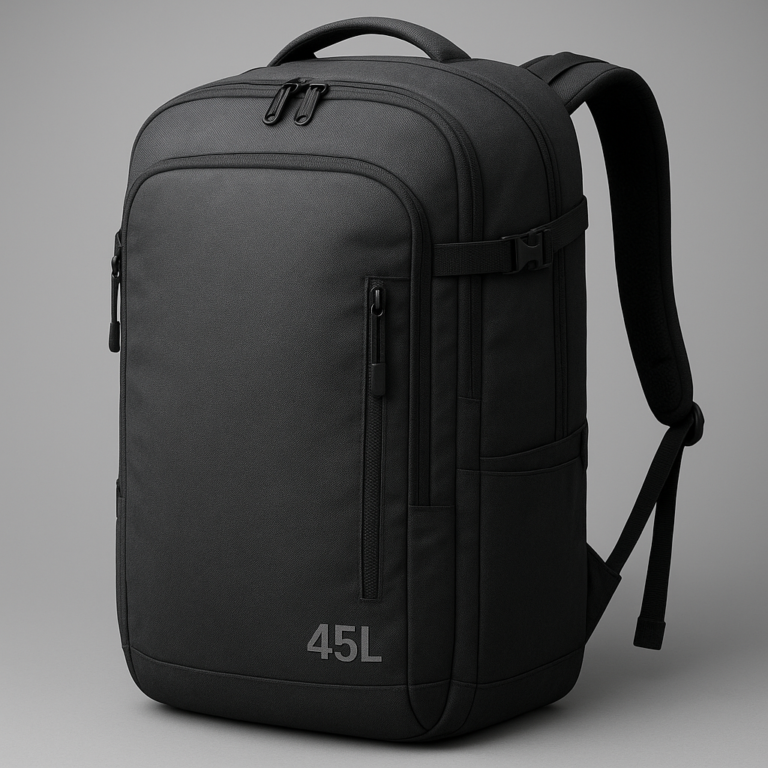
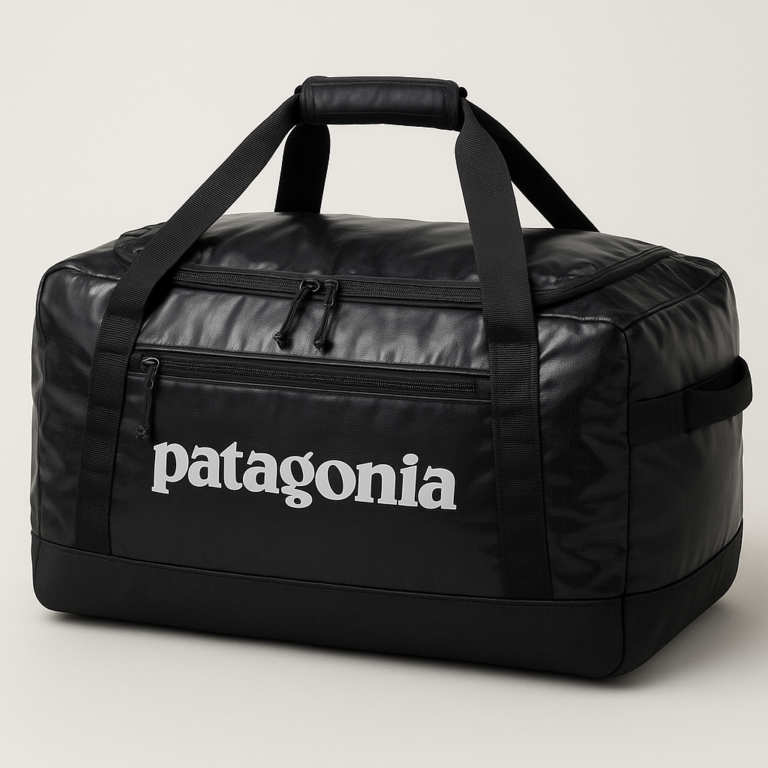
The Patagonia Black Hole MLC 45L and Peak Design Travel Backpack 45L are examples of bags offering substantial volume. Compare each model’s actual dimensions and carry method before choosing.
5. 45–55 liters: Extended travel with more room
A 45–55L pack can be useful for longer travel, variable climates, or specialized gear. It may also appeal to travelers who simply prefer not to pack like a game of suitcase Tetris. The trade-off is real: a larger bag is easier to overfill, can be more cumbersome in transit, and may need to be checked.
Some bags in this range split capacity between a main pack and a detachable daypack. The Osprey Farpoint 55, for example, combines a main travel pack with a smaller removable pack. That can be versatile, but confirm how the pieces count toward your airline’s baggage allowance.
Choose this size because your gear requires it—not because a bigger pack feels like a safety net. That empty space has a sneaky habit of filling itself.
6. 55–70 liters: Multi-week travel and bulky packing
This range suits travelers who need more space for extended trips, multiple climates, bulky clothing, or outdoor equipment. It may also work for someone carrying supplies for another person. For ordinary city travel with laundry access, it is often more volume than necessary.
A larger frame and hip belt can help distribute a substantial load, but they do not make excess weight disappear. If you choose this range, test the loaded pack on stairs and during a long walk—not just across your living room.
Potential downside: these packs are usually poor candidates for overhead-bin carry-on. Measure carefully and plan for checked-bag rules, fees, and handling.
7. 70+ liters: Expedition travel, winter gear, and checked bags
A 70L-plus backpack is generally for expedition travel, winter camping, extended trekking, or carrying gear for multiple people. It can accommodate sleeping systems, insulated layers, food, and equipment that simply will not fit into a compact urban travel pack.
For typical flights and city trips, this capacity is often excessive. Large packs invite overpacking and are awkward on public transit, crowded sidewalks, and staircases. If you genuinely need this volume, look at outdoor-oriented packs with a supportive harness rather than assuming a travel backpack is built for the same load.
✈️ Carry-On Backpack Capacity and Airline Size Limits
There is no universal liter limit for carry-on baggage. Airlines generally publish dimensions and, sometimes, weight limits. A 35L bag may be too long or too deep for a specific carrier, while a 40L bag with a compact shape might fit that airline’s sizer.
How many liters can you take as a carry-on?
A 30–40L backpack is a reasonable range to investigate for carry-on travel, but it is not an airline-approved size category. Some travel guides use around 40–45L as a practical upper limit for many U.S. flights; other reviewers caution that even a 35L bag can be a poor fit if its proportions are awkward.
The FAA baggage guidance directs passengers to check with their airline. For international or connecting itineraries, check every carrier on the route, not just the first flight.
Personal item versus overhead-bin carry-on
A personal item is typically intended to fit beneath the seat, while a standard carry-on goes in the overhead bin. Exact allowances vary by airline and fare type. A backpack that fits beneath one aircraft seat may not fit beneath another, particularly when fully packed.
| Bag role | Typical use | What to verify |
|---|---|---|
| Personal item | Small backpack, purse, or compact day bag | Airline’s personal-item dimensions and under-seat space |
| Carry-on | Main backpack placed in overhead bin | Maximum dimensions, weight limit, and fare allowance |
| Checked baggage | Larger pack or trip gear | Checked size and weight limits, protective packing, and fees |
If you want a pack that can serve as a personal item, explore our small travel backpack guide. Still, measure the actual packed bag before travel.
Why backpack dimensions matter more than liters
A backpack’s capacity is three-dimensional, but an airline sizer checks its outside dimensions. A tall, narrow pack and a short, wide pack can have similar volumes yet fit very differently in a measurement box.
Watch for:
- Depth: overstuffing the front pocket can push a pack past the limit.
- Width: side water bottles or compression straps may add bulk.
- Height: a structured top lid can make the bag too tall.
- Expansion: unzipered expansion panels can change the packed profile.
- External attachments: dangling straps and clipped-on gear can complicate measurement.
OutdoorGearLab’s testing found meaningful carry-on differences among travel packs and noted that a bag’s listed dimensions may be close to or beyond common limits (testing and comparisons). Treat a model’s “carry-on compatible” marketing as a clue, not a boarding pass.
How to check airline baggage rules before flying
- Open the airline’s official baggage page. Look for both carry-on and personal-item rules.
- Check your fare type. Basic or budget fares may have different allowances.
- Review each carrier in your itinerary. A codeshare or connection can introduce a stricter rule.
- Measure the backpack when packed. Include handles, pockets, and anything attached.
- Check weight limits. Some airlines restrict cabin-bag weight as well as size.
- If uncertain, choose a smaller pack or plan to check it. Hope is not a packing strategy.
For U.S. travel, the FAA’s baggage page is a useful starting point, but the airline’s own policy is the final reference.
🗺️ Choose Capacity by Destination and Travel Style
The destination changes what goes in the bag. A warm-weather city trip and a cold-weather trek may last the same number of days, but their volume requirements are worlds apart. Browse our backpack trends for more travel-pack ideas and formats.
City breaks, hostels, and urban travel
For city travel, 30–40L is a practical starting range for one-bag packing. Prioritize easy access, a comfortable harness, durable zippers, and a shape that does not turn subway aisles into an obstacle course.
Hostel travelers may appreciate a clamshell opening because it makes clothes easier to reach without unpacking everything. On the other hand, a highly structured bag can be heavy even when empty. Check the empty weight before deciding that a few extra liters are worth the extra bulk.
International trips and one-bag travel
For one-bag international travel, many travelers do well with 35–40L, provided they pack for the actual climate and have access to laundry. If you prefer more room, a 40–45L pack may work, but check airline dimensions for every leg.
The Indie Traveller travel backpack guide recommends carry-on-sized bags in roughly the 40–45L range for many trips and emphasizes the benefits of packing light. Meanwhile, a more compact 35L approach can reduce the temptation to carry unnecessary extras. Your best choice depends on whether you value more room or easier mobility.
South America and long-term backpacking
Long trips across different regions may call for more capacity when climates and activities vary. A traveler moving between warm lowlands and cold mountain areas may need extra layers and equipment. Indie Traveller describes using a 55L pack for a journey through the Andes and Amazon, illustrating why a single universal capacity recommendation cannot cover every itinerary (travel pack guide).
That does not mean every South America trip requires 55L. If you stay in a narrower climate range, pack light, and wash clothing, a 35–45L bag may be more manageable. Build your packing list around the route, elevation, weather, and activities—not the continent’s name.
Business travel and digital nomad setups
Business travel often needs extra space for a laptop, chargers, documents, and clothing that resists creasing. A 30–40L bag can work for many short work trips, but consider a dedicated laptop compartment and a layout that separates electronics from clothing.
For longer work travel, a structured 35–45L pack may fit a compact office setup. Keep electronics weight in mind: a laptop, charger, camera, and power bank can make a bag feel heavy long before it runs out of volume. For practical pack comparisons, browse our backpack reviews.
Hiking, camping, and travel-adventure trips
Outdoor equipment changes capacity needs quickly. A day hike may call for 10–30L, while a multi-day trip with a sleeping bag, shelter, food, and cooking gear may need 40–70L or more. The right size depends on equipment bulk, weather, resupply points, and how much food and water you carry.
A travel backpack and a hiking backpack are not interchangeable just because both have shoulder straps. Hiking packs may provide a more supportive frame, adjustable harness, and load-bearing hip belt. For a real trek, choose a pack designed for the terrain and load, not simply the one with the biggest advertised number.
Winter travel and bulky clothing
Winter clothing can consume surprising space. Puffy jackets, insulating layers, gloves, and bulky footwear may push a trip toward 40–55L or more, even if the itinerary is short.
Before sizing up, see what can be worn in transit, compressed safely, or rented at the destination. Compression sacks can reduce soft gear volume, but do not squash delicate insulation carelessly. If you are carrying technical winter equipment, prioritize the pack’s support and access—not just its capacity.
🧳 Choose Backpack Capacity by Packing Style
The same 35L backpack can feel roomy to a minimalist and comically cramped to someone carrying three pairs of shoes. Your habits matter as much as the bag. That’s why our backpack reviews consider real-world organization alongside the spec sheet.
Minimalist packing versus bringing the extras
Minimalist packing often makes 30–35L workable for trips that might otherwise prompt a larger bag. A less minimalist approach may require 40–45L, especially when it includes extra footwear, camera equipment, or clothing formal occasions.
Ask yourself:
- Will you rewear clothing?
- Can you do laundry during the trip?
- Do you need a second pair of shoes?
- Are you carrying work or camera gear?
- Do you need clothes for more than one climate?
- Are you packing items “just in case” that you rarely use?
A common trap is buying extra capacity to solve an organization problem. If you cannot find your socks in a 35L pack, a 45L pack may simply give your socks more hiding places.
Laundry access, footwear, and specialty gear
Three packing variables often change your ideal size:
Laundry access: washing a small rotation of clothes can make a compact pack work for a long trip.
Footwear: shoes take up a lot of space and do not compress. One spare pair can alter the choice between 30L and 40L.
Specialty gear: cameras, climbing equipment, sports gear, and formalwear have different space and protection needs. A standard travel backpack may not offer the padding or support they require.
Pack the bulky items first. If they fit, the softer clothing can fill the remaining gaps. If they do not, consider specialized luggage or checking a bag rather than forcing everything into an overstuffed carry-on.
How packing cubes affect usable space
Packing cubes help you organize clothing and can make a backpack easier to unpack, but they do not create more volume. Their seams and rigid edges can even waste space in a tightly shaped bag.
Use cubes to group items by purpose—tops, underwear, or laundry—not as a reason to buy a larger pack. Compression cubes can reduce the bulk of some clothing, but they may wrinkle garments and do little for hard items such as shoes or electronics.
Reviewer tip: test your actual cubes inside the backpack. A cube that fits neatly in a suitcase may be too wide for a narrow travel-pack compartment.
🧍 How to Choose the Right Backpack Size and Fit
Capacity and fit are separate decisions. You can select the right liter range and still end up with sore shoulders if the torso length, harness, or load distribution is wrong. Our brand spotlights can help you compare how different manufacturers approach fit.
Torso length, hip belt, and load comfort
A backpack’s harness should sit comfortably on your body, and a supportive hip belt can transfer some load from your shoulders to your hips. That matters more as a bag gets heavier. Outdoor packs often provide more adjustability than minimalist travel bags.
Try a pack with weight inside—not just empty in a shop. Adjust shoulder straps, sternum strap, and hip belt, then walk around. If the bag pulls backward, bounces, or creates pressure points, a larger capacity will not fix the fit.
For sizing advice, see the REI guide to backpack fit. Fit systems vary between brands, so use the manufacturer’s instructions and, when possible, test multiple models.
Capacity, backpack dimensions, and body size
A small-framed traveler may find a long, rigid 45L pack awkward even if its total volume seems reasonable. A taller traveler may prefer a longer pack with a properly adjusted harness. Do not choose by gender label alone: compare torso adjustment, back-panel length, hip-belt placement, and comfort.
Check these details before buying:
- Is the torso length adjustable?
- Does the hip belt sit on your hips rather than your waist?
- Can the shoulder straps move or adjust to your frame?
- Can you reach water and frequently used items?
- Does the packed bag stay balanced when walking?
A pack that fits well at 35L may be more comfortable than a poorly fitted 30L pack, and a correctly fitted 45L hiking pack may carry better than a smaller bag with a weak harness.
Why a bigger backpack can make packing harder
More capacity can mean more weight, more bulk, and more room for items you do not need. A larger pack may also be harder to carry through crowds or fit in overhead storage. The Pedal Project’s warning—“bigger is NOT always better”—rings true when your pack spends more time on your back than in a hotel room (backpack size guide).
A useful test: pack everything you expect to take, then remove the items you included “just in case.” If the smaller pack still holds your essentials comfortably, you probably do not need the larger one.
⚖️ Backpack Capacity, Weight, and Comfort
Liters measure space, not how heavy your bag will be. A 30L pack full of camera equipment can weigh more than a 45L pack filled with lightweight clothing. Volume and load are related, but they are not interchangeable.
How much should a loaded travel backpack weigh?
There is no universal ideal weight for every traveler. Comfort depends on your strength, fitness, body size, distance walked, pack fit, and how the weight is distributed. As a practical approach, weigh your loaded backpack before departure and test-walk with it.
The American College of Sports Medicine and other health organizations offer general guidance about physical activity, but no single backpack load limit applies to every adult and every trip. If a pack causes pain, numbness, or unstable movement, reduce the load and reassess fit.
Do not chase a liter target at the expense of comfort. A smaller, heavier bag can be worse than a slightly larger bag with a supportive harness and lighter contents.
Volume is not the same as weight capacity
A manufacturer’s liter rating indicates approximate space; it does not tell you the maximum safe load. A pack’s fabric, stitching, frame, suspension, and harness determine how it carries weight. Check the product’s official specifications and intended use.
For example, the Osprey Farpoint 40 has a harness and hip belt, while a sleek commuter-style backpack may prioritize laptop access and appearance over carrying a heavy load over long distances.
Packing heavier items safely
- Place dense items close to your back. This helps keep the load from pulling away from your body.
- Keep weight centered. Avoid loading one side heavily.
- Use the hip belt when the pack has one. Adjust it so it sits comfortably on your hips.
- Keep essential items accessible. Store water, medication, and travel documents where you can reach them.
- Test the packed load. Walk, climb stairs, and sit down with the bag on.
- Remove unnecessary weight. Spare gadgets and duplicate toiletries are classic culprits.
If you are carrying camping equipment or camera gear, organize the load around support and protection—not just the convenience of a pocket.
🛒 What to Look for in a Travel Backpack
Capacity is only one part of choosing a backpack. A well-designed 35L bag may serve you better than a poorly organized 45L pack. For more models and brand comparisons, visit our backpack brands directory.
Clamshell versus top-loading designs
A clamshell backpack opens like a suitcase, making it easier to see and pack clothing. It can be convenient for hotel stays, but a heavily compartmentalized layout may limit how you fit bulky items.
A top-loading backpack can suit hiking and outdoor use, where a tall main compartment and supportive harness are useful. Reaching gear at the bottom may be less convenient without a front access zipper.
Choose based on how you travel:
| Design | Strengths | Trade-offs |
|---|---|---|
| Clamshell | Easy to pack, unpack, and organize | Can be heavier or divided into less flexible sections |
| Top-loading | Simple main compartment, often suited to outdoor use | Gear at the bottom may be harder to reach |
| Panel-loading travel pack | Convenient access with travel features | Pocket layout and structure vary widely |
Laptop sleeves, pockets, and organization
A laptop sleeve, document pocket, water-bottle holder, and quick-access compartment can make travel smoother. But every extra pocket adds seams, zippers, and sometimes weight. Choose organization that matches your routine.
Consider:
- Does the laptop compartment fit your device and protect it from impact?
- Can you reach travel documents without opening the main compartment?
- Are key pockets secure in crowded areas?
- Does the bag have a place for a water bottle?
- Are compartments reducing the space you need for clothing?
The Aer Travel Pack 3 is known for its organized layout, while a simpler pack may offer a more open space for bulky or irregular items. Our backpack reviews explore these differences model by model.
Harnesses, compression straps, and weather protection
Look for padded shoulder straps and a sternum strap if you expect to carry the bag for extended periods. A hip belt can improve comfort with heavier loads. Compression straps help reduce bulk when the pack is not full, but they do not guarantee airline fit.
For weather protection, check the fabric, zippers, seams, and whether a rain cover is included. “Water-resistant” does not automatically mean waterproof. If electronics or clothing must stay dry, use a dry bag or protective liner rather than relying on marketing language alone.
Expandable backpacks: useful flexibility or extra bulk?
Expansion can be helpful when you bring home souvenirs or need a little extra room on the return journey. The downside: an expanded pack may exceed carry-on dimensions, and the expansion zipper can add structure and weight.
The Peak Design Travel Backpack offers adjustable capacity, giving travelers more flexibility between compact and expanded modes. If you choose an expandable design, test both configurations and confirm which one fits your airline allowance.
📦 How to Test Your Backpack Capacity Before a Trip
A quick home test can save you from discovering at the airport that your “perfect” bag is either too small for your gear or too large for the sizer. We learned to test packs fully loaded; empty-bag measurements tell only part of the story.
Make a packing list and do a trial pack
- Write down the trip’s essentials. Include clothing, toiletries, electronics, medication, footwear, and special equipment.
- Separate must-haves from nice-to-haves. Be honest about the items that are only coming along for emotional support.
- Pack the bulky items first. Shoes, coats, and camera equipment reveal space problems early.
- Add softer clothing around them. Use the remaining space efficiently without crushing delicate items.
- Pack the bag as you would for departure. Include organizers and exterior-pocket contents.
- Carry it for at least 15–20 minutes. Check for pressure points, awkward weight, and access problems.
- Remove items you did not need. If the pack is still uncomfortably full, reconsider the capacity or packing list.
Check airline dimensions with a packed bag
Measure height, width, and depth after packing. Include handles and pockets, and avoid relying on the bag’s compressed, empty dimensions. Compare your result with the official rules for your airline and fare.
If you are close to the limit, move bulky items, tighten compression straps, or use a smaller pack. Soft-sided bags may be compressible, but you should not plan on forcing a full backpack into a sizer. The FAA recommends checking airline baggage guidance; follow the carrier’s own published requirements.
Adjust your capacity after a test trip
After traveling, note what you actually used and what stayed untouched. Did you need the extra shoes? Was the laptop compartment useful? Did you run out of space, or did the backpack feel like a small apartment with shoulder straps?
Use that feedback to refine your next trip:
- Bag too full: reduce duplicate items or move up a size.
- Bag half-empty: consider a smaller capacity or use compression straps.
- Bag uncomfortable: reassess fit, load weight, and harness design.
- Bag awkward at the airport: check dimensions and airline rules before choosing another model.
A few minutes of honest reflection can be more valuable than another round of browsing product photos.
✅ Travel Backpack Capacity Mistakes to Avoid
- Buying by liter count alone. Compare dimensions, layout, fit, and manufacturer specifications.
- Assuming a 40L or 45L pack is automatically carry-on legal. Airlines publish their own limits; check the official rules.
- Choosing extra capacity “just in case.” More room often becomes more stuff—and more weight.
- Ignoring bulky gear. Boots, camera equipment, and winter layers can change your ideal size quickly.
- Forgetting laundry. A compact clothing rotation can support a much longer trip.
- Confusing travel packs with hiking packs. A travel-friendly opening does not guarantee a supportive trekking harness.
- Testing the bag empty. A packed backpack changes shape, dimensions, and comfort.
- Ignoring torso fit. Capacity cannot compensate for a harness that does not suit your body.
- Trusting a brand’s carry-on claim without checking your route. Aircraft, airlines, fare types, and connecting carriers can differ.
- Focusing on trip length instead of packing habits. A week away does not automatically require a larger pack than a weekend.