Support our educational content for free when you purchase through links on our site. Learn more
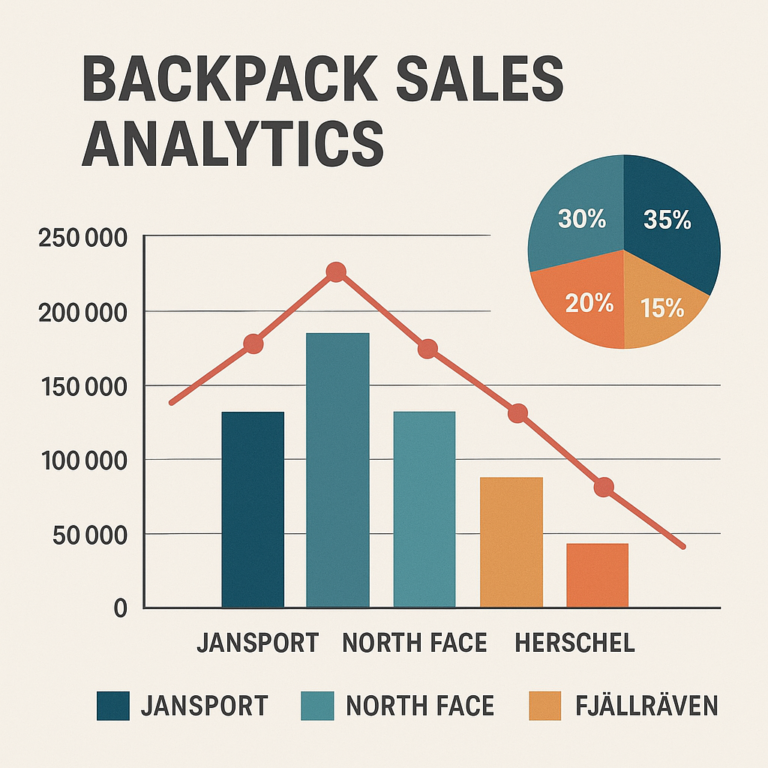
📊 Trending Backpack Brands Graph: 20 Brands to Watch (2026)

A trending backpack brands graph shows what shoppers are paying attention to—not necessarily what they’re buying or which packs are best. To read it wisely, check whether it charts search interest, sales, or social buzz, then compare brands within the same category and timeframe.
We’ve seen a familiar name like JanSport pop up in back-to-school searches while Osprey draws hikers and Aer attracts tech commuters. Those brands can all be “trending” at once—just for very different reasons.
This guide breaks down how backpack trend graphs work and spotlights 20 brands across school, travel, work, outdoor, and everyday carry. You’ll also get a practical way to turn online buzz into a shortlist that fits your actual routine.
Key Takeaways
- A trend graph is only as useful as its metric: search interest, sales, social mentions, and market share measure different things.
- Compare like with like: match the region, timeframe, and backpack category before drawing conclusions.
- Popularity isn’t proof of quality: check fit, capacity, materials, organization, and warranty for the specific model.
- Different brands trend in different lanes: JanSport is familiar in school carry, Osprey in hiking and travel, and Aer in tech-focused commuting.
- Look for sustained interest, not just a viral spike: launches, influencers, and seasonal shopping can briefly send searches soaring.
Table of Contents
- ⚡ Quick Tips and Facts: Reading a Trending Backpack Brands Graph
- 📊 What a Backpack Brand Trends Graph Can—and Can’t—Tell You
- Search interest, sales data, and social buzz: three different signals
- How to read axes, time ranges, and brand comparisons
- Why a spike in searches doesn’t always mean a spike in sales
- 🕰️ From School Satchels to Search Spikes: Backpack Brand Trends Through the Years
- Milestones that changed the backpack market
- How e-commerce and social media reshaped brand discovery
- 🔎 How We Build and Verify a Trending Backpack Brands Graph
- Choosing reliable search, retail, and social data
- Time periods, regions, and fair brand comparisons
- Limitations, sampling bias, and seasonal swings
- 📈 20 Backpack Brands to Watch in Search and Consumer Trends
- 1. JanSport: The school-backpack staple
- 2. The North Face: Outdoor credibility meets campus carry
- 3. Herschel Supply Co.: A heritage look with modern appeal
- 4. Patagonia: Repair-minded outdoor gear
- 5. Osprey: Technical packs for serious mileage
- 6. Fjällräven: The Kånken effect
- 7. Nike: Sportswear demand in backpack form
- 8. Adidas: Everyday and athletic backpack searches
- 9. lulemon: Comuter bags with an activewear following
- 10. Samsonite: Travel backpacks and luggage know-how
- 11. TUMI: Premium business and travel carry
- 12. Bellroy: Slim organization for work and travel
- 13. Aer: Tech-focused urban backpacks
- 14. Peak Design: Camera gear and adaptable carry
- 15. Cotopaxi: Colorful packs and sustainability storytelling
- 16. Deuter: Hiking and family-outdoor expertise
- 17. Gregory: Fit-focused hiking backpacks
- 18. Columbia: Accessible outdoor and everyday packs
- 19. Eastpak: Durable streetwear and school heritage
- 20. Carhart: Workwear toughness in daily carry
- 🧭 What’s Driving Backpack Brand Popularity?
- School and back-to-school search seasonality
- Travel demand, carry-on rules, and digital nomad habits
- TikTok, influencers, and viral backpack moments
- Product launches, collaborations, and limited editions
- 🎒 Backpack Trends by Category: School, Travel, Work, and Outdoors
- Best-known school and student backpack brands
- Popular travel backpacks and carry-on packs
- Work backpacks, laptop bags, and commuter packs
- Hiking, camping, and technical backpack brands
- Fashion, streetwear, and everyday backpacks
- 🌱 Sustainability and Materials: Trends Behind the Labels
- Recycled fabrics, repair programs, and resale
- What “sustainable backpack” claims actually mean
- Durability, warranties, and cost per year of use
- 🛍️ From Trending to Worth Buying: Choosing a Backpack Brand
- Match the backpack to your daily load and use case
- Fit, capacity, laptop protection, and organization
- Materials, weather resistance, comfort, and warranty
- When a viral backpack is—and isn’t—a smart buy
- 📉 Common Mistakes When Comparing Backpack Brand Graphs
- Confusing relative search interest with total searches
- Ignoring regional popularity and brand name variations
- Treating online buzz as proof of quality
- 🔮 What’s Next for Backpack Brand Search Trends?
- Emerging styles, smarter features, and changing carry habits
- How to track backpack trends over time
- Conclusion
- Recommended Links
- FAQ
- Which backpack brand is trending the most?
- What does a backpack brand trends graph measure?
- Are the most-searched backpack brands the best quality?
- Why do backpack searches rise during certain months?
- How can I compare backpack brands fairly on a graph?
- Which backpack brands are popular for school, travel, and hiking?
- Reference Links
⚡ Quick Tips and Facts: Reading a Trending Backpack Brands Graph
Looking for a backpack statistics graph? First, check what it measures: search interest, sales, social mentions, or market share. Those are different signals, and mixing them is how a tidy-looking chart can lead you to a very untidy buying decision.
At Backpack Brands™, we compare brand visibility with the details that matter when you actually wear a pack: comfort, capacity, organization, materials, fit, and warranty. For more trend analysis, browse our Backpack Trends, Backpack Reviews, and Brand Spotlights.
| What you’re seeing | What it can tell you | What it cannot prove by itself |
|---|---|---|
| Search interest | How often people look for a brand or topic relative to a chosen period and place | Actual sales, satisfaction, or product quality |
| Retail sales | Purchases recorded by a retailer or research provider | Total market demand if the sample is limited |
| Social mentions | Conversation volume and possible viral attention | Whether people intend to buy—or even like—the product |
| Market share | A brand’s portion of a defined market, if the source explains its method | Popularity in every category, country, or price tier |
| Reviews and ratings | Experiences reported by purchasers | A fully representative picture of all buyers |
Fast, useful rules of thumb:
- ✅ Compare brands over the same time period and region.
- ✅ Check whether the graph uses absolute numbers or an indexed scale.
- ✅ Separate school, commuter, travel, fashion, and hiking backpacks. They do not compete on identical needs.
- ✅ Look for more than one signal: trend graphs, reputable retail data, product specifications, and warranty terms.
- ❌ Don’t treat a search ranking as a sales leaderboard.
- ❌ Don’t assume a viral pack will fit your shoulders, laptop, or weekend plans.
One source, for example, reports that JanSport received more than 191,000 monthly Google searches in its dataset, while Nike received more than 90,000. Those figures describe search volume as reported by that article, not independently verified sales or market share. Treat them as a directional snapshot, not a universal scoreboard. See the source’s worldwide backpack statistics.
Our short version: the graph can tell you what people are looking at. Your shoulders, packing list, and product research tell you what you should buy. That distinction gets especially interesting when brands like Osprey, Aer, and TUMI are compared by different definitions of “best.”
📊 What a Backpack Brand Trends Graph Can—and Can’t—Tell You
A backpack brand trends graph is a visual summary of how a chosen measure changes over time. It may track searches, product sales, mentions, or market share. The chart’s title alone is not enough; the source, metric, location, and timeframe are the real fine print.
Search interest, sales data, and social buzz: three different signals
Imagine JanSport searches climbing in August. That could reflect back-to-school planning, not a sudden leap in every sales channel. A TikTok review might send social mentions of a specific pack soaring, while store sales remain unchanged. And a retailer’s sales chart may omit direct-to-consumer orders entirely.
| Signal | Typical source or method | Best used to understand | Main caution |
|---|---|---|---|
| Search interest | Search-platform trend tools or keyword datasets | Awareness and research behavior | Search interest may be relative or modeled |
| Search volume | Keyword research databases | Estimated query volume | Estimates differ by tool and query definition |
| Sales | Retailer records, surveys, or market research | Purchases within a defined sample | Coverage may exclude stores, regions, or online channels |
| Social buzz | Posts, hashtags, mentions, video engagement | Conversation and cultural visibility | Engagement can be positive, negative, or paid |
| Market share | Sales-based industry research | A brand’s portion of a defined market | Definitions of “backpack market” vary |
For background on interpreting web search data, Google Trends explains that its data is normalized and does not represent a scientific poll or exact search counts. That makes it useful for comparing relative interest, but not a substitute for audited sales data.
How to read axes, time ranges, and brand comparisons
Before admiring the line—or panicking because it dropped—inspect the chart:
- Read the vertical axis. Is it dollars, units, search volume, or a 0–100 index?
- Check the horizontal axis. A month-by-month graph reveals seasonality; a five-year graph is better for long-term shifts.
- Confirm the location. A brand can be widely searched in the United States and less visible elsewhere.
- Look at the query definition. “Backpack” and “backpacks” may produce different results. A brand name may also have unrelated meanings.
- Check whether the lines share a scale. If one chart normalizes each brand separately, two peaks at 100 do not mean equal search volume.
The Google Trends FAQ describes its scale as normalized relative interest. Put plainly: a peak of 100 marks a term’s high point within that selected dataset, not 100 searches or 100% market share.
Why a spike in searches doesn’t always mean a spike in sales
A search spike can signal curiosity, a product launch, a viral review, a celebrity sighting, or an upcoming school term. It can also mean people are searching for a repair, complaint, warranty, or discount. A graph rarely tells you which one.
A stronger analysis checks for several signals together:
- Search interest rises and remains elevated.
- Retail or market research confirms increased purchases.
- The brand’s own site shows a relevant product launch or availability change.
- Reviews and independent coverage indicate sustained attention—not just one burst.
- The trend appears in the relevant category and region.
We’ve seen shoppers arrive at a retailer convinced a backpack is “the one everyone is buying” because its name is everywhere online. Then they discover its laptop compartment is too small for their machine. Popularity got them to the product page; dimensions did the final veto.
🕰️ From School Satchels to Search Spikes: Backpack Brand Trends Through the Years
Backpacks have always responded to how people study, work, travel, and spend time outdoors. What changed is how quickly a new style can move from niche forum chatter to a crowded search graph.
Milestones that changed the backpack market
A few broad shifts help explain why current brand trends look so different across categories:
- School backpacks became everyday carry. Brands such as JanSport built long-running recognition around simple, familiar school packs.
- Outdoor design moved into cities. Technical back panels, durable fabrics, and trail-inspired silhouettes became common in commuting and casual use. The North Face is one visible example of a brand with both outdoor and urban audiences.
- Laptops changed pocket priorities. Padded sleeves and organized compartments became central buying questions for students and commuters.
- E-commerce made niche brands easier to discover. Search and review platforms can now bring specialist labels such as Aer and Bellroy to shoppers far beyond their original markets.
- Social platforms accelerated trend cycles. A distinctive colorway or bag-in-use video can send interest climbing quickly—though a short-lived spike is not proof of long-term demand.
These are market shifts, not a single verified ranking of historic sales. The best evidence for a specific brand’s trajectory still depends on the region, data source, and category being measured.
How e-commerce and social media reshaped brand discovery
Online shopping gives shoppers access to products that may not sit on a nearby store shelf. It also turns search results and reviews into part of the product experience. A buyer can compare a Fjällräven Kånken with a Herschel backpack before ever touching either.
That convenience has a trade-off: product photos don’t communicate strap pressure, back-panel ventilation, or how awkward a water bottle pocket becomes when the pack is full. Online popularity is a useful discovery tool, but hands-on fit checks and clear specifications still matter.
A reported example from the competing statistics article claims Herschel sales rose 20% within 48 hours of influencer promotion. That is a striking claim, but without disclosed methodology, retailer coverage, or independent corroboration, we would treat it as an anecdote from that source—not a general rule about influencer-driven sales. The more dependable takeaway is that social exposure can affect attention rapidly; its effect on total sales needs separate evidence.
🔎 How We Build and Verify a Trending Backpack Brands Graph
To make a useful graph, start with a question. “Which brand is trending?” is too broad. “Which school backpack brands gained U.S. search interest from July through September?” is much easier to answer honestly.
Choosing reliable search, retail, and social data
Use data that actually matches the question:
- For search behavior: Google Trends can compare relative interest over selected periods and regions. It is not an audited count of purchases.
- For sales: Prefer clearly defined retailer data or market research that explains coverage and category boundaries.
- For social trends: Track mentions and engagement, but distinguish organic discussion from ads, collaborations, and sponsored posts.
- For product reputation: Read current, product-specific reviews and warranty information. A brand-wide reputation can hide differences between models.
The competing backpack statistics article offers figures such as Osprey satisfaction and brand failure rates. Those numbers should not be repeated as settled industry facts unless the underlying survey, sample size, date, and definitions are available. We trust transparent, verifiable methods over a precision-looking percentage without its working.
Time periods, regions, and fair brand comparisons
A fair comparison needs matching conditions:
- Pick a region—for example, the U.S. or Canada.
- Set a date range that captures the question. Use multiple years for long-term trends; use several months for seasonal shopping.
- Compare brands with consistent query wording and category filters.
- Separate product types. Comparing an ultralight hiking pack with a school backpack can make the chart look decisive while answering nothing useful.
- Label the metric and source directly on the graphic.
- Include caveats, especially when the source uses estimates or normalized data.
For instance, an Osprey search trend and a JanSport search trend may reflect different shopper missions: trail gear research versus school-season shopping. That does not make one brand more popular in every sense.
Limitations, sampling bias, and seasonal swings
Every graph has blind spots. Search datasets can miss people who shop in stores without researching online. Retail data may omit independent retailers. Social listening can overepresent highly active users. A brand name can also be spelled several ways or confused with unrelated search terms.
Seasonality is another culprit. Backpack interest often rises around school shopping and travel periods, while hiking demand may respond to weather and outdoor seasons. A one-month snapshot can mistake the annual rhythm for a lasting trend.
We also checked the provided Tillys brand-listing summary: the site returned a Cloudflare access block stating, “You are unable to access tilys.com.” Since the page supplied no accessible listing or trend data, it cannot support a brand ranking. That is a useful reminder: an inaccessible source is not evidence, even if its URL looks relevant.
📈 20 Backpack Brands to Watch in Search and Consumer Trends
The brands below are worth tracking because they represent different shopper needs and market positions. This is a category-spanning watchlist, not a verified ranking by sales or live search volume. For more comparisons, explore our Backpack Brands, Backpack Types, and Backpack Reviews sections.
1. JanSport: The school-backpack staple
JanSport has long-running school and everyday recognition, with familiar designs such as the SuperBreak and Right Pack.
Why it draws attention: recognizable styling, straightforward layouts, and a strong school-season use case.
What to check: laptop protection, water-bottle pockets, strap comfort under a heavy load, and the warranty terms for your specific product.
- ✅ A sensible pick for simple school or casual carry.
- ❌ Not every classic model has the padding organization of a modern commuter pack.
2. The North Face: Outdoor credibility meets campus carry
The North Face sits across outdoor and everyday categories. Packs such as the Borealis are designed for mixed-use carry, with organization that suits school, commuting, and day outings.
Why it draws attention: one brand name serves hikers, students, and city users.
What to check: fit, model-specific organization, and whether you need a technical hiking suspension system or simply an everyday back panel.
- ✅ Broad range and recognizable outdoor styling.
- ❌ A versatile daypack is not automatically a substitute for a properly fitted multi-day hiking pack.
3. Herschel Supply Co.: A heritage look with modern appeal
Herschel Supply Co. pairs vintage-inspired styling with everyday features. Its range includes compact daypacks, larger school bags, and travel-oriented options.
Why it draws attention: distinctive design makes the brand easy to recognize in trend searches and social feeds.
What to check: laptop sleeve dimensions, zipper construction, and whether the bag’s internal organization suits your routine.
- ✅ Strong choice for style-conscious daily use.
- ❌ Some designs prioritize a clean look over technical features and extensive compartmentalization.
4. Patagonia: Repair-minded outdoor gear
Patagonia is associated with outdoor use and environmental initiatives. The brand’s Worn Wear program supports repair and resale for eligible gear.
Why it draws attention: outdoor credibility paired with an emphasis on keeping products in use.
What to check: pack-specific materials, features, and warranty coverage. Brand values do not tell you whether a particular model has the right fit or capacity.
- ✅ A compelling option for users who value repairability and outdoor versatility.
- ❌ Technical features vary; compare the individual pack rather than buying the logo.
5. Osprey: Technical packs for serious mileage
Osprey is a major name in hiking, travel, and daypacks. Its Daylite and Farpoint travel packs illustrate the range from daily carry to travel.
The supplied video summary describes Osprey as “pound for pound the best backpack brand in the world,” based on the speaker’s experience reviewing nearly 1,000 packs. That is an informed personal judgment, not an objective ranking across every backpack category. It is useful for the perspective behind it: the speaker emphasizes consistent innovation, shoulder straps, and back panels.
Why it draws attention: comfort-focused designs and a broad outdoor-and-travel lineup.
What to check: torso fit, load capacity, hip-belt needs, and the model’s intended use.
- ✅ A strong starting point for hiking and travel packs where carrying comfort matters.
- ❌ Technical options can be more pack than a light commuter needs.
6. Fjällräven: The Kånken effect
Fjällräven is especially visible through the Kånken, a distinctive everyday pack with a large style following.
Why it draws attention: recognizable shape, colors, and crossover from practical daypack to fashion accessory.
What to check: shoulder comfort for your load, laptop protection on the exact model, and whether the compact design fits your daily items.
- ✅ Memorable design and a broad range of color choices.
- ❌ Popularity does not make every version ideal for heavy loads or long walks.
7. Nike: Sportswear demand in backpack form
Nike brings sportswear visibility to school, gym, and casual bags.
Why it draws attention: an established athletic brand often reaches shoppers who want one bag for class and workouts.
What to check: ventilation, wet-gear separation, laptop protection, and whether the bag balances athletic and school needs.
- ✅ Easy to pair with a sports-focused routine.
- ❌ Organization and construction differ significantly among models.
8. Adidas: Everyday and athletic backpack searches
Adidas offers athletic and casual backpacks with broad brand recognition.
Why it draws attention: shoppers may compare Adidas with Nike for school, gym, and sports use.
What to check: capacity, strap padding, durable base fabric, and the layout of internal pockets.
- ✅ A familiar option for athletic and everyday carry.
- ❌ Don’t assume every sports backpack includes useful laptop protection.
9. lulemon: Comuter bags with an activewear following
lulemon attracts active commuters looking for bags that transition between work, fitness, and errands.
Why it draws attention: the brand’s apparel audience naturally overlaps with people seeking coordinated everyday gear.
What to check: laptop fit, easy-access pockets, water resistance, and comfort when carrying workout equipment.
- ✅ Strong appeal for work-to-gym routines.
- ❌ A polished everyday bag may not offer the carrying support or ruggedness needed for hiking.
10. Samsonite: Travel backpacks and luggage know-how
Samsonite has a travel-centered range that includes commuter and laptop packs.
Why it draws attention: luggage shoppers may prefer to keep travel equipment within a familiar brand family.
What to check: carry-on dimensions for your airline, laptop protection, and access to essentials while moving through terminals.
- ✅ Good category fit for travel and business carry.
- ❌ A travel-friendly layout can be bulkier than you want for a minimalist daily commute.
11. TUMI: Premium business and travel carry
TUMI is associated with business travel and premium luggage design. In the featured-video summary, the reviewer calls TUMI a premium rather than purely luxury brand, arguing that it emphasizes functional value and reputation. That is one expert’s framing, but it captures why many travelers compare TUMI differently from logo-led fashion labels.
Why it draws attention: business-ready styling, travel organization, and brand visibility in airports.
What to check: internal layout, carry comfort, and whether the features justify the premium positioning for your use.
- ✅ A strong candidate for frequent business travelers who value organized carry.
- ❌ The brand’s reputation cannot replace a careful check of dimensions, weight, and feature needs.
12. Bellroy: Slim organization for work and travel
Bellroy focuses on streamlined design and practical organization.
Why it draws attention: urban commuters often want a clean silhouette without giving up useful pockets.
What to check: laptop dimensions, water-bottle storage, accessibility, and back-panel comfort for longer walks.
- ✅ Good fit for organized daily carry with a restrained look.
- ❌ Minimalist styling may feel limiting if you want lots of external pockets.
13. Aer: Tech-focused urban backpacks
Aer specializes in urban and travel-friendly packs with a tech-office emphasis.
The featured-video reviewer says, “What Incase sort of started with that transition from outdoorsy bags into tech office bags, Aer is now carrying that torch.” That quote reflects a category perspective: Aer’s appeal is the bridge between practical outdoor-inspired construction and a professional appearance.
Why it draws attention: laptop-oriented organization, clean styling, and commuter-focused design.
What to check: empty weight, compartment layout, and whether your daily load justifies the organization.
- ✅ A compelling option for office and tech carry.
- ❌ Pocket-rich designs can feel overbuilt if you only carry a notebook and lunch.
14. Peak Design: Camera gear and adaptable carry
Peak Design makes backpacks for photography and everyday use, including its Everyday Backpack.
Why it draws attention: photographers value adjustable internal dividers, while other users may like adaptable organization.
What to check: access preferences, camera gear needs, and whether the structured layout works for non-photography use.
- ✅ A strong choice for camera equipment and users who like modular organization.
- ❌ The structure and specialized dividers may be unnecessary for a basic daily bag.
15. Cotopaxi: Colorful packs and sustainability storytelling
Cotopaxi stands out with vivid colorways and outdoor-inspired designs.
Why it draws attention: distinctive looks make the brand easy to spot, while its social-impact messaging attracts values-conscious shoppers.
What to check: product-specific construction and zipper performance. A source summary specifically notes zipper concerns with the Allpa 35L, but without a transparent sample or test method, treat that as a caution to inspect recent reviews, not proof every unit has the same problem.
- ✅ Personality-filled designs and travel-friendly choices.
- ❌ Color and brand story should not distract from hardware, fit, and warranty details.
16. Deuter: Hiking and family-outdoor expertise
Deuter offers hiking, trekking, and outdoor backpacks, with models such as the Speed Lite and Aircontact.
Why it draws attention: technical fit and ventilation are key considerations for hikers.
What to check: torso length, load range, ventilation style, and whether the pack’s capacity suits your route.
- ✅ Worth comparing for hiking and longer outdoor days.
- ❌ A trail-focused harness may be unnecessary for city errands.
17. Gregory: Fit-focused hiking backpacks
Gregory specializes in outdoor packs, including technical hiking models such as the Baltoro.
Why it draws attention: hikers often compare Gregory with Osprey and Deuter when fit and load transfer are priorities.
What to check: actual torso and hip-belt fit. A highly regarded pack is still the wrong pack if it doesn’t match your body.
- ✅ A strong contender for serious hiking and load-carrying needs.
- ❌ Technical packs require more careful fitting than simple daypacks.
18. Columbia: Accessible outdoor and everyday packs
Columbia serves shoppers looking for outdoor and casual packs across a wide range of uses.
Why it draws attention: broad retail presence makes the brand easy to discover and compare.
What to check: model-specific materials, seam construction, fit, and whether features match your use case.
- ✅ A useful brand to include in an outdoor or casual shortlist.
- ❌ The Columbia name covers different designs; inspect the model, not just the label.
19. Eastpak: Durable streetwear and school heritage
Eastpak combines school-bag heritage with streetwear collaborations and everyday styles.
Why it draws attention: classic silhouettes and fashion partnerships appeal to both students and casual users.
What to check: laptop protection, pocket layout, and the warranty terms applicable in your country.
- ✅ A good match for straightforward everyday carry and style-led use.
- ❌ Some designs are simpler than feature-heavy commuter or hiking packs.
20. Carhart: Workwear toughness in daily carry
Carhart applies a workwear sensibility to everyday backpacks and bags.
Why it draws attention: people looking for rugged-looking materials often consider workwear labels for daily carry.
What to check: actual abrasion resistance, internal organization, and whether the bag is comfortable when fully loaded.
- ✅ A practical style direction for work, tools, and casual use.
- ❌ Tough-looking fabric alone does not guarantee a comfortable harness or weatherproof construction.
🧭 What’s Driving Backpack Brand Popularity?
No single trend explains every brand’s rise. School shopping, travel habits, social media, and product design all pull the graph in different directions.
School and back-to-school search seasonality
School backpacks see predictable bursts of interest around the academic calendar. Brands such as JanSport and Nike may benefit from familiarity, while parents and students compare capacity, laptop sleeves, and durability.
To interpret school-season data:
- Compare the same months across multiple years.
- Separate branded searches from generic “school backpack” searches.
- Watch for retailer promotions and new color releases.
- Don’t interpret a seasonal peak as year-round leadership.
Travel demand, carry-on rules, and digital nomad habits
Travel backpacks appeal to shoppers seeking a single bag for transit, work, and short trips. Brands such as Osprey, Aer, Peak Design, and Samsonite occupy different points in that category.
The practical issue is size: airline personal-item and carry-on rules differ. Check the airline’s current baggage dimensions before choosing a travel pack, rather than trusting a brand’s “carry-on friendly” label as universal. The FAA’s passenger guidance is a useful starting point for broader air-travel information, but baggage allowances come from the individual airline.
TikTok, influencers, and viral backpack moments
A short video can show how a bag opens, what fits inside, or how it looks on-body—useful details that a product photo may miss. It can also compress a complex purchase into “everyone needs this bag,” which is less useful.
When a backpack goes viral, check:
- Is the post sponsored or affiliate-linked?
- Are reviewers showing the fully loaded bag?
- Do independent owners report similar strengths and weaknesses?
- Is the viral item in stock, or are resellers amplifying scarcity?
- Does the product solve your problem, or just look good in a quick clip?
The supplied statistics article makes claims about rapid influencer-related sales growth and differences in generational preference for “Instagramability.” Because the underlying survey and sales methodology are not provided in the summary, we’d use those as hypotheses to investigate, not dependable population-wide facts.
Product launches, collaborations, and limited editions
A collaboration can produce a sharp but temporary trend spike. New colors, celebrity partnerships, or a refreshed model can also send brand and product searches climbing. That attention is worth tracking—but look for whether interest persists after launch week.
For buying, compare the collaboration version with the standard model. Sometimes the practical design is identical; sometimes a special color or feature changes materials, pockets, or availability. The trend graph tells you when people looked. It does not tell you whether the limited edition is more comfortable.
🎒 Backpack Trends by Category: School, Travel, Work, and Outdoors
A brand ranking becomes much more useful when the comparison is category-specific. Here’s a quick map of common brand associations—not a declaration that every model from each brand excels at every task.
| Use case | Brands shoppers often compare | Priority features |
|---|---|---|
| School and campus | JanSport, Nike, Adidas, Herschel, The North Face | Laptop protection, comfortable straps, water bottle storage |
| Travel | Osprey, Samsonite, TUMI, Aer, Peak Design, Patagonia | Access, capacity, travel organization, airline dimensions |
| Work and commuting | Aer, Bellroy, TUMI, lulemon, The North Face | Laptop sleeve, professional styling, weather resistance |
| Hiking | Osprey, Gregory, Deuter, Patagonia, The North Face | Fit, suspension, ventilation, load support |
| Everyday and streetwear | Fjällräven, Herschel, Eastpak, Nike, Carhart | Comfort, practical capacity, style, durability |
Best-known school and student backpack brands
For school, the best shortlist usually starts with the student’s actual load: books, laptop, lunch, sports clothes, and commute length. JanSport, The North Face, Herschel, Nike, and Adidas all offer options, but pocket layout and padding vary by model.
Our school-pack check:
- Measure the laptop instead of relying only on the stated screen size.
- Look for a padded, ideally raised laptop compartment if the device needs extra protection.
- Check strap padding and sternum-strap availability for heavier daily loads.
- Choose a capacity that holds essentials without encouraging an overstuffed, awkward carry.
Popular travel backpacks and carry-on packs
For travel, compare opening style, organization, bag dimensions, and comfort when full. Osprey Farpoint, Aer Travel Pack, Peak Design Travel Backpack, and Samsonite backpacks serve different preferences.
- Clamshell opening: easier access to packed clothing.
- Top-loading design: often simpler and more suited to outdoor use.
- Compression straps: help secure a partly filled bag.
- Laptop access: convenient for work trips, but check protection and placement.
- Dimensions: verify against your airline’s current rules.
One source summary cautions that some 35-liter daypack-style models may exceed stricter airline carry-on limits. That’s exactly why capacity alone is not enough: two packs with the same liter rating can have different external dimensions.
Work backpacks, laptop bags, and commuter packs
Comuters often want fast access, laptop protection, and enough structure to keep small items from tumbling around like loose change in a dryer. Aer, Bellroy, TUMI, and lulemon are worth comparing.
For an office pack, check:
- Laptop compartment size and padding.
- Water-bottle pocket position when the main compartment is full.
- Quick-access pockets for keys, transit cards, and earbuds.
- Whether the bag stands upright or flops over.
- Back-panel comfort during the actual commute—not just a quick try-on.
Hiking, camping, and technical backpack brands
For trail use, prioritize fit and load support over appearance. Compare Osprey, Gregory, Deuter, and Patagonia based on your route and expected load.
Outdoor packs commonly include features that commuter bags do not: adjustable harnesses, load-bearing hip belts, ventilation systems, hydration compatibility, and attachment points. The REI Expert Advice guide to backpack fit explains how to adjust a pack and why fit matters.
Fashion, streetwear, and everyday backpacks
For everyday carry, comfort and looks can coexist—but check whether the bag’s design supports your habits. Fjällräven, Herschel, Eastpak, and Carhart offer distinct styles.
If you carry a laptop every day, avoid assuming that a fashion-focused bag has enough padding. If you carry only a notebook, water bottle, and jacket, a large technical commuter pack may be needlessly bulky. Buy for your real Tuesday, not your imaginary expedition.
🌱 Sustainability and Materials: Trends Behind the Labels
Sustainability can influence brand searches, but a green-looking label is not a complete environmental assessment. Materials, lifespan, repairability, manufacturing, and end-of-life options all matter.
Recycled fabrics, repair programs, and resale
Some brands use recycled materials in selected packs, while others emphasize repair or resale programs. For example, Patagonia Worn Wear supports used gear and repair pathways; Fjällräven’s sustainability information outlines its stated commitments.
A competing source summary claims recycled polyester accounts for 30% of new backpack production, up from 5% a decade earlier. Without a cited dataset, definition, or production sample, we cannot independently verify those precise figures. The broader point—that recycled textile use is a visible product trend—is more defensible than treating that percentage as settled fact.
What “sustainable backpack” claims actually mean
Ask what the claim refers to:
- Recycled content: Which components use recycled material, and in what proportion?
- Material certification: Is the standard named and independently verifiable?
- Durability: Can the bag be repaired, and are replacement parts available?
- Production: Does the company publish supply-chain or manufacturing details?
- End of life: Can the bag be resold, repaired, recycled, or responsibly retired?
The U.S. Federal Trade Commission’s Green Guides explain principles for environmental marketing claims. They’re useful for shoppers, too: broad words such as “eco-friendly” deserve a closer look.
Durability, warranties, and cost per year of use
A warranty can matter, but read the terms rather than the slogan. Coverage may vary by product, region, defect, wear, and misuse. Check the official warranty page for the exact model before relying on a lifetime or repair claim.
A practical comparison is expected years of use, repair options, and how the pack performs under your normal load—not just its initial construction. Avoid assuming premium bags always fail less often: the competing article reports brand-specific failure and satisfaction rates, but the supplied summary does not include enough methodology to validate them independently.
🛍️ From Trending to Worth Buying: Choosing a Backpack Brand
A trending brand is a starting point, not a verdict. We use this simple process to turn a graph into a useful shortlist.
Match the backpack to your daily load and use case
- Write down your routine. School, commute, hiking, flights, gym, or a mix?
- List the essentials. Laptop, books, water bottle, layers, camera, or overnight clothes?
- Estimate how long you carry the bag. A short car-to-office walk has different comfort demands from a long transit commute.
- Decide what must be protected. Electronics, camera equipment, or rain-sensitive items?
- Pick a sensible capacity range. Use the dimensions of your gear, not a brand’s trend ranking.
A competing guide suggests rough capacity ranges such as 15–25 liters for day trips, 20–30 liters for school or commuting, 30–45 liters for weekend travel, and 50 liters or more for multi-day hiking. These are useful starting points, not rules: body size, packing style, and trip length change what works.
Fit, capacity, laptop protection, and organization
For hiking, fit is central. For daily use, pocket access and device protection may matter more. The REI backpack-fitting guide covers fit and adjustment; the Consumer Product Safety Commission provides broader safety information for consumer products, though it does not rank backpacks by comfort.
Try this pack-fit check:
- Put in the items you normally carry.
- Adjust the shoulder straps so the pack sits comfortably against your back.
- For a hiking pack, position the hip belt correctly and see whether it takes meaningful load off your shoulders.
- Walk, sit, and reach for common items.
- Check whether water bottles, chargers, or lunch become hard to access once the bag is full.
Materials, weather resistance, comfort, and warranty
Look beyond a fabric label:
- Water-resistant fabric can handle light moisture but may not be fully waterproof.
- Rain covers and sealed seams may matter for prolonged exposure.
- Back panels and strap shape affect heat and pressure.
- Zippers and stress points are worth inspecting because they see frequent use.
- Warranty details determine what repair or replacement support is actually available.
For brand-specific warranty claims, go straight to the manufacturer: Osprey’s guarantee information, Patagonia’s Ironclad Guarantee, The North Face warranty information, and JanSport’s warranty information. Terms can change, so check current conditions.
When a viral backpack is—and isn’t—a smart buy
A viral pack may be a smart buy if it matches your use, fits comfortably, and has the features you need. It’s a poor buy if you’re paying for attention while sacrificing fit or function.
Before buying, ask yourself:
- Does it fit my actual laptop or camera?
- Can I carry it comfortably when full?
- Is the fabric appropriate for my weather and routine?
- Are recent reviews consistent about the same strengths and weaknesses?
- Is the warranty clear?
- Would I still want it if nobody had posted about it?
That last question is the quiet little truth serum of backpack shopping.
📉 Common Mistakes When Comparing Backpack Brand Graphs
Confusing relative search interest with total searches
An indexed chart may show a score from 0 to 100. That is not automatically search volume, sales, or market share. Google explains that Trends data is normalized, so a value reflects relative popularity within the selected timeframe and location—not an exact count (Google Trends FAQ).
Ignoring regional popularity and brand name variations
A chart from one country may not represent another. Searches for a brand may also be affected by spelling, punctuation, product names, or unrelated meanings. For example, use consistent spellings and test brand-plus-category terms when possible.
The source summary for worldwide search figures spells lulemon as “Lulemon” and Carhart as “Carhart.” That illustrates why query definitions matter: a ranking can be affected by how a name was entered and grouped.
Treating online buzz as proof of quality
A trending backpack may be new, photogenic, heavily promoted, or simply easy to discuss. None of those automatically proves it’s durable, comfortable, or good value. The competing statistics article says fashion-first packs have higher return rates and makes several precise claims about failure rates, satisfaction, and materials; without transparent research details, those figures should be treated cautiously.
We trust the useful combination: verified product specs, independent testing, repeated owner feedback, warranty terms, and an honest understanding of what the graph measures.
🔮 What’s Next for Backpack Brand Search Trends?
Backpack trends will continue to reflect changing routines: hybrid work, travel, school, outdoor recreation, and interest in longer-lasting products. But a trend is most valuable when it reveals a real need—not just the latest colorway.
Emerging styles, smarter features, and changing carry habits
Areas worth watching include:
- Versatile designs that move between commuting and travel.
- Repair and resale programs that help extend product life.
- Modular organization for people carrying cameras, tech, or work gear.
- Anti-theft and tracking features, where evidence supports practical value.
- Lightweight but comfortable construction for daily walking and transit.
A competing article estimates that smart backpacks have an 8% adoption rate and describes rapid growth, but the summary does not provide a source or method. Treat that as an unverified estimate, not a market-wide benchmark. A built-in charging feature, for example, also depends on safe battery use and whether the pack’s design suits your devices.
How to track backpack trends over time
To follow trends without getting fooled by one dramatic line:
- Choose a consistent region and time period.
- Track generic terms alongside specific brands.
- Compare similar products and categories.
- Check for seasonal effects and launch dates.
- Cross-check search data with retail reports, product availability, and review activity.
- Record the source and method so you can reproduce the comparison.
- Revisit the graph after the spike. A lasting trend should survive beyond the launch-week fireworks.
For a broader context on market figures and consumer patterns, see Backpack Statistics Worldwide.