Support our educational content for free when you purchase through links on our site. Learn more
What Is the Largest Backpack Brand? 🎒

JanSport is often cited as the largest single backpack brand by sales volume, especially for school and everyday backpacks in the U.S. But there’s no public, apples-to-aples global data that proves one brand is the definitive worldwide leader. At the corporate level, VF Corporation has an especially broad backpack portfolio, including JanSport and The North Face.
That distinction matters: a company that sells huge numbers of backpacks isn’t necessarily the company with the highest total revenue. The first number may belong to a backpack brand; the second could include clothing, shoes, and luggage.
We’ve seen shoppers assume the biggest name must make the best pack, then discover that a comfortable school bag and a load-bearing hiking pack are practically different species. Here, we compare major backpack brands, explain what “largest” can mean, and help you pick a pack that fits your actual needs.
Key Takeaways
- JanSport is a strong candidate for the largest single backpack brand, particularly in the U.S. school and daypack market.
- VF Corporation is a major backpack-industry heavyweight, with multiple well-known brands, including JanSport and The North Face.
- There’s no definitive public global ranking comparing brands by backpack-only sales or units sold.
- Company revenue, backpack sales, manufacturing volume, and brand popularity are different measures—and shouldn’t be mixed up.
- The best backpack for you depends on fit and purpose, not the size of the brand behind it.
Table of Contents
- ⚡️ Quick Tips and Facts: What Is the Largest Backpack Brand?
- 🧭 What “Largest Backpack Brand” Actually Means
- Brand size vs. backpack manufacturer size
- Revenue, sales volume, market share, and global reach
- 🎒 How Backpack Brands and Manufacturing Grew
- A brief history of backpacks and mass production
- Where the world’s backpacks are made
- 🌍 Backpack Industry Trends and Global Market Insights
- The role of Asia-Pacific manufacturing hubs
- How e-commerce and outdoor recreation shape backpack sales
- Sustainability, materials, and supply-chain transparency
- 🏆 12 of the World’s Biggest Backpack Brands and Manufacturers
- 1. Samsonite
- 2. VF Corporation: The North Face and JanSport
- 3. Nike
- 4. Adidas
- 5. Puma
- 6. Osprey
- 7. Deuter
- 8. Patagonia
- 9. Columbia Sportswear
- 10. Targus
- 11. Herschel Supply Co.
- 12. L.L.Bean
- 📊 How the Biggest Backpack Companies Compare
- Brand ownership and parent companies
- Product categories, distribution, and geographic reach
- Why market rankings vary by measurement
- 🔍 What Sets Large Backpack Brands Apart
- Design, durability, and product testing
- Materials, warranties, and repair services
- Innovation, customization, and manufacturing scale
- 🛒 How to Choose a Backpack from a Major Brand
- Match backpack capacity to your daily needs
- Compare fit, comfort, and carry features
- Check quality, warranty, and repair options
- Spot counterfeit backpacks and misleading claims
- 💡 Are the Biggest Backpack Brands Always the Best?
- Advantages of buying from an established brand
- When a smaller backpack company may be a better fit
- ✅ Key Takeaways: Who Leads the Backpack Industry?
- Conclusion
- Recommended Links
- FAQ
- What is the largest backpack brand in the world?
- Is Samsonite the biggest backpack company?
- What backpack brand sells the most backpacks?
- Which company manufactures the most backpacks?
- Are JanSport and The North Face owned by the same company?
- What is the most popular backpack brand in the United States?
- Which backpack brands are known for durability?
- How can I verify a backpack brand’s size or market ranking?
- Reference Links
⚡️ Quick Tips and Facts: What Is the Largest Backpack Brand?
If you’ve ever wondered what is the most popular backpack?, you’ve already bumped into the tricky part: popular, biggest, and best-selling aren’t interchangeable.
Quick answer: JanSport is often described as the world’s largest backpack brand by unit volume, particularly in the U.S. school and daypack market. But publicly available data doesn’t establish a definitive, independently verified global ranking by backpack sales. VF Corporation, JanSport’s parent company, is the bigger corporate player because it owns several major backpack brands, including The North Face and Eastpak.
| Question | Best-supported answer | Important caveat |
|---|---|---|
| Largest single backpack brand? | JanSport is a frequently cited leader, especially for U.S. small backpacks | No current, comparable global unit-sales figures confirm an undisputed worldwide winner |
| Largest corporate portfolio among familiar backpack names? | VF Corporation has several major backpack brands, including JanSport, The North Face, and Eastpak | VF’s company-wide revenue is not backpack revenue |
| Biggest by total company revenue? | Large sportswear and luggage companies may rank highly | Nike, Adidas, and Samsonite sell much more than backpacks |
| Best backpack for you? | The brand whose fit, capacity, features, and durability suit your use | Company size doesn’t guarantee a comfortable pack |
A competing Backpack Brands™ article calls JanSport “the world’s largest backpack manufacturer by volume and brand recognition.” That’s a useful description of its strong position, but it should be read as a brand-level claim, not proof of global manufacturing output. A brand can sell huge numbers of packs without owning the factories that make them.
✅ Our practical verdict: For a widely recognized school or everyday backpack, JanSport is a defensible answer. For an overall corporate heavyweight, look at VF Corporation. For hiking, business travel, or oversized expedition loads, the “largest” brand may not be the best fit.
We’ll untangle the numbers shortly. First, let’s define what “largest” is measuring.
🧭 What “Largest Backpack Brand” Actually Means
“Largest” sounds like a simple crown. In the backpack business, it’s more like a backpack with several compartments: sales, manufacturing, ownership, and market share are all tucked inside.
Brand size vs. backpack manufacturer size
A backpack brand is the name on the product: JanSport, Osprey, Nike, or Samsonite. A manufacturer may be the brand owner, a contracted factory, or a company producing bags for several labels. The two may be entirely different businesses.
For example, JanSport is part of VF Corporation, a portfolio company with multiple apparel and outdoor brands. VF’s corporate scale reflects its entire business, not just backpacks. Likewise, a factory in Vietnam or China may produce packs for several brands without selling anything under its own consumer-facing name.
| Term | What it measures | Why it can mislead |
|---|---|---|
| Backpack brand | A consumer label and its products | Brand recognition doesn’t prove the highest sales |
| Backpack manufacturer | A company or factory that makes packs | Contract manufacturing may be invisible to shoppers |
| Parent company | The business that owns one or more brands | Revenue can include apparel, footwear, luggage, and more |
| Backpack market leader | A leader by a defined metric | Rankings differ if one uses revenue, units, region, or product type |
Revenue, sales volume, market share, and global reach
A brand can lead in units sold while another leads in sales revenue. A low-cost school bag and a technical expedition pack don’t contribute the same revenue per unit. Add travel luggage, laptop bags, and sports duffels to a company’s earnings, and the comparison gets even less tidy.
The competing Expert Market Research overview of backpack companies lists major companies but doesn’t establish a backpack-specific global sales winner. Its company figures cover much broader businesses. That distinction matters: a company’s total revenue is not a backpack ranking.
Reliable comparisons should specify:
- Geography: U.S., Asia, or worldwide?
- Product scope: backpacks only, or all bags and luggage?
- Metric: units sold, revenue, market share, or production capacity?
- Time period: one year, a fiscal year, or a historical estimate?
- Source quality: audited company reporting, market research, or an unsourced claim?
That’s why “JanSport is the biggest” and “VF is bigger” can both be reasonable statements—if each is answering a different question.
🎒 How Backpack Brands and Manufacturing Grew
The backpack started as a way to carry gear. It became a school essential, a hiking tool, a commuting office, and occasionally the place where your missing keys go to start a new life.
A brief history of backpacks and mass production
JanSport was founded in Seattle in 1967 by Murray Pletz, Janis “Jan” Lewis, and Norman Pletz. The brand’s history is closely tied to a flexible-frame backpack designed for a contest, followed by the development of panel-loading daypacks that made it easier to reach gear without unpacking the whole bag. JanSport’s official site and VF Corporation’s brand information provide background on the brand and its ownership.
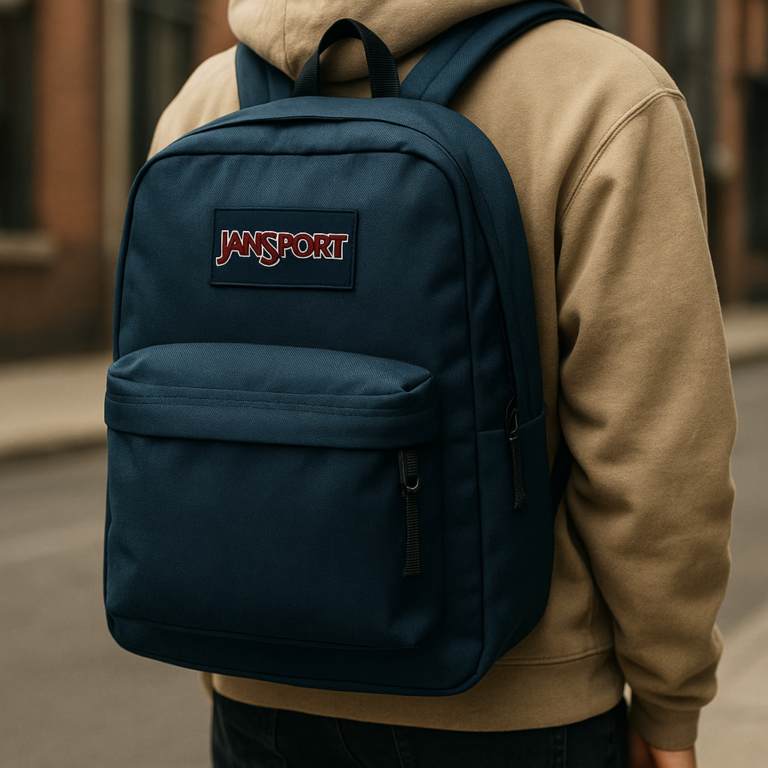
Its best-known designs helped make backpacks ordinary campus equipment rather than specialist outdoor gear. The JanSport SuperBreak remains a familiar example: simple, light, and built around everyday carry rather than complex suspension.
Backpack manufacturing later expanded into global supply chains. Brands could design products, choose materials, and manage distribution while specialist factories handled production. This separation makes it hard to name a single “largest manufacturer” just by looking at brand labels.
Where the world’s backpacks are made
Backpacks are produced across multiple countries, with China, Vietnam, Bangladesh, and Indonesia among common manufacturing locations. The exact factory and country can vary by model, season, and supplier, so check the product label or brand’s supply-chain disclosures rather than assuming every bag from a brand comes from one place.
The International Labour Organization’s garment and textile resources offer context on the global apparel and sewn-goods supply chain. For brand-specific sourcing policies, see VF Corporation’s responsibility information and Patagonia’s supply-chain disclosures.
Reviewer tip: Country of manufacture alone doesn’t tell you whether a backpack is well made. Inspect the stitching, zipper quality, fabric, stress-point reinforcement, and warranty. We’ve seen “Made in” labels treated like a durability score; they aren’t one.
🌍 Backpack Industry Trends and Global Market Insights
The backpack market spans school bags, sports packs, hiking packs, business backpacks, fashion bags, and travel luggage. Market reports often use different definitions, which is why estimates can disagree even when each report is internally consistent.
One competing report estimates the worldwide backpack market at nearly USD 17.46 billion in 2025, with projections of about USD 31.27 billion by 2035. Another cited estimate places the 2024 market at roughly USD 16.47 billion. These are market-research estimates, not audited totals, and they may count product categories differently. Treat them as indicators of scale and direction—not as a precise scoreboard for individual brands.
The role of Asia-Pacific manufacturing hubs
Asia-Pacific is important both as a manufacturing base and as a major consumer market. Some companies have large regional footprints; India-based V.I.P. Industries is a significant luggage company, for instance. But being a leading luggage producer does not automatically make a company the largest backpack brand. The product category matters.
When comparing a brand’s global reach, look for evidence such as:
- Countries where it sells through official stores or distributors
- Company disclosures about manufacturing and suppliers
- Product availability across regional websites
- Revenue reporting that separates backpacks from other categories
How e-commerce and outdoor recreation shape backpack sales
Backpacks now compete across more occasions: commuting, school, weekend travel, cycling, hiking, and carry-on trips. Online retail makes niche brands easier to find, while established labels benefit from broad distribution and familiar warranty systems.
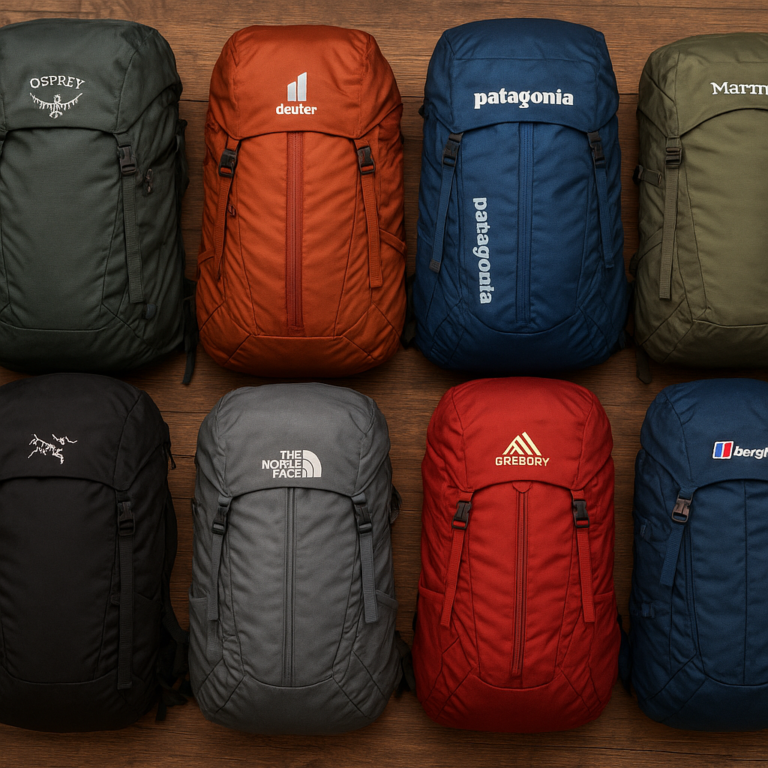
Outdoor brands such as Osprey and Deuter tend to focus on fit and load carriage. Sports brands such as Nike and adidas cover school, gym, and casual use. Travel specialists such as Samsonite emphasize organization and travel compatibility.
The takeaway? A brand’s scale often reflects how many needs it serves—not simply how many backpacks it sells.
Sustainability, materials, and supply-chain transparency
Recycled fabrics, repair programs, product longevity, and supplier transparency are increasingly relevant to backpack shoppers. A sustainability claim is most useful when a brand explains what material is recycled, what percentage is used, and which products are covered.
- Patagonia’s footprint pages outline its environmental and supply-chain work.
- The North Face’s sustainability information describes its initiatives.
- European Commission guidance on textile products explains broader policy work on textile sustainability.
✅ Look for specific disclosures and repair options. ❌ Don’t treat a recycled-fabric badge as proof that a whole backpack—or its supply chain—is sustainable.
🏆 12 of the World’s Biggest Backpack Brands and Manufacturers
This is a selection of major, recognizable players, not a definitive sales ranking. Public data doesn’t let us compare every company using consistent backpack-only revenue or unit figures.
| Brand or company | Known for | Strongest fit | Main caveat |
|---|---|---|---|
| JanSport | School and everyday daypacks | Students, casual carry | Many models keep features simple |
| VF Corporation | Parent of multiple major brands | Portfolio-level scale | Corporate revenue covers many categories |
| Samsonite | Travel and business bags | Comuting and travel | Luggage sales complicate backpack comparisons |
| Nike | Sports and lifestyle bags | Gym, school, casual use | Not primarily a backpack specialist |
| adidas | Sports and lifestyle bags | Training and everyday carry | Broad apparel and footwear business |
| Puma | Sport and casual backpacks | Everyday and gym use | Smaller backpack-specific reporting |
| Osprey | Technical hiking and travel packs | Outdoor trips and load carrying | Fit and features vary significantly by model |
| Deuter | Hiking and mountainering packs | Trail and mountain use | Technical designs may be more than commuters need |
| Patagonia | Outdoor packs and travel bags | Everyday and outdoor use | Some styles prioritize simplicity over organization |
| Columbia | Outdoor and casual packs | General outdoor use | Model features and technical depth vary |
| Targus | Laptop and business backpacks | Electronics and commuting | Less focused on hiking suspension |
| Herschel Supply Co. | Lifestyle and school bags | Urban and casual use | Style-led models may have fewer technical features |
1. Samsonite
Samsonite is one of the world’s most recognizable luggage companies, with backpacks for work, commuting, and travel. Many designs include laptop compartments, interior organization, and luggage pass-through sleeves.
Why it stands out: strong travel organization and a broad retail footprint.
Trade-off: company size reflects luggage and other travel products, not backpack sales alone.
👉 Shop Samsonite: Amazon | Samsonite Official Website
2. VF Corporation: The North Face and JanSport
VF Corporation owns several well-known outdoor and backpack labels, including JanSport and The North Face. That gives VF a much broader backpack presence than a company relying one label.
Why it stands out: several brands reach different users—from school daypack shoppers to outdoor enthusiasts.
Trade-off: VF’s total sales cannot be treated as backpack revenue or market share.
JanSport’s SuperBreak is a classic everyday option; The North Face’s Borealis serves commuters and day hikers with more organization and support.
👉 Shop VF brands: JanSport on Amazon | The North Face on Amazon | VF Corporation Official Brands
3. Nike
Nike backpacks are aimed mainly at sport, school, and everyday carry. The company’s business scale is enormous, but its reported revenue includes footwear, clothing, and other products.
Why it stands out: familiar sports styles and practical compartments for gym or daily use.
Trade-off: a large Nike business does not demonstrate backpack category leadership.
👉 Shop Nike: Amazon | Nike Official Website
4. Adidas
Adidas offers backpacks across training, school, and casual categories. Like Nike, its company-wide performance is not a direct measure of backpack sales.
Why it stands out: broad sports and lifestyle distribution.
Trade-off: most designs are general-purpose rather than specialist hiking packs.
👉 Shop adidas: Amazon | adidas Official Website
5. Puma
Puma makes sport and lifestyle backpacks that suit school, gym sessions, and everyday use.
Why it stands out: casual, athletic styling and accessible everyday features.
Trade-off: fewer models are built for heavy hiking loads or technical expedition use.
👉 Shop Puma: Amazon | Puma Official Website
6. Osprey
Osprey is a specialist outdoor brand known for hiking, backpacking, and travel packs. Models such as the Aether are designed around substantial loads and supportive suspension.
Why it stands out: fit options, technical organization, and models for specific outdoor uses.
Trade-off: a well-supported hiking pack can be heavier and more complex than a daily commuter needs.
👉 Shop Osprey: Amazon | Osprey Official Website
7. Deuter
Deuter is a long-established German outdoor brand with hiking, trekking, and mountainering packs. Ventilation and load management are central features in many of its designs.
Why it stands out: outdoor-focused fit and suspension systems.
Trade-off: a technical frame and hiking-specific features can feel excessive for a short commute.
👉 Shop Deuter: Amazon | Deuter Official Website
8. Patagonia
Patagonia makes backpacks for everyday use, outdoor activities, and travel. The company also publishes information about materials and supply chains, useful for shoppers who want more than a generic sustainability slogan.
Why it stands out: outdoor credibility and published environmental information.
Trade-off: pocket layouts and technical features depend heavily on the specific model.
👉 Shop Patagonia: Amazon | Patagonia Official Website
9. Columbia Sportswear
Columbia sells outdoor and everyday backpacks alongside its apparel and footwear. Its broad outdoor assortment makes it a familiar option for casual hiking and day trips.
Why it stands out: outdoor-oriented options across a broad product range.
Trade-off: inspect each pack’s suspension and capacity; “outdoor brand” doesn’t mean every model suits heavy loads.
👉 Shop Columbia: Amazon | Columbia Official Website
10. Targus
Targus focuses on computer accessories and business carry, including backpacks with laptop protection and work-friendly organization.
Why it stands out: electronics protection and commuter-oriented pockets.
Trade-off: laptop padding doesn’t replace a hiking pack’s frame, hip belt, or load-transfer system.
👉 Shop Targus: Amazon | Targus Official Website
11. Herschel Supply Co.
Herschel is known for urban and school bags with distinctive styling. It’s a strong choice if you want everyday organization without a technical trekking look.
Why it stands out: recognizable design and casual versatility.
Trade-off: some models emphasize appearance and daily use over heavy-load comfort.
👉 Shop Herschel: Amazon | Herschel Official Website
12. L.L.Bean
L.L.Bean has a long-standing presence in school, outdoor, and everyday bags. Its range includes simple daypacks as well as designs intended for more active use.
Why it stands out: a broad mix of practical everyday and outdoor styles.
Trade-off: individual models vary; compare the actual fit, fabric, and intended load.
👉 Shop L.L.Bean: Amazon | L.L.Bean Official Website
📊 How the Biggest Backpack Companies Compare
Brand ownership and parent companies
Ownership explains why a corporate group can have a bigger market footprint than any one label. VF Corporation’s portfolio includes JanSport and The North Face, while other companies operate as standalone consumer brands or as part of wider sportswear and luggage businesses.
| Consumer-facing brand | Parent or corporate context | What that means for “largest” |
|---|---|---|
| JanSport | VF Corporation | Strong standalone brand, backed by a multi-brand parent |
| The North Face | VF Corporation | Adds outdoor and technical reach to VF’s portfolio |
| Eastpak | VF Corporation | Adds urban and travel-oriented backpack presence |
| Nike | Nike, Inc. | Company scale includes footwear and apparel |
| adidas | adidas AG | Company scale spans sportswear and accessories |
| Samsonite | Samsonite International | Company scale includes luggage and travel goods |
| Osprey | Helen of Troy Limited | Specialist outdoor brand within a broader corporate group |
For current ownership, prioritize official corporate brand pages and annual reports over old listicles. See VF’s brand portfolio, Nike investor information, adidas investor relations, and Samsonite’s investor site.
Product categories, distribution, and geographic reach
A brand with school backpacks, laptop bags, sports packs, and travel bags can reach more shoppers than a specialist hiking company. That doesn’t make it better at every job. It means its total addressable market is broader.
The Expert Market Research company roundup names major athletic and outdoor players, but its list of “top” companies should not be mistaken for a ranked backpack-sales chart. It also discusses V.I.P. Industries as a major luggage company; that is relevant market context, not evidence that it leads backpack sales.
Why market rankings vary by measurement
The competing claims can be reconciled by separating the measures:
| Claim | What it may be measuring | How much to trust it |
|---|---|---|
| “JanSport is the largest backpack maker” | Brand recognition or unit volume, often U.S.-focused | Plausible, but needs a date, geography, and comparable sales data |
| “VF is a backpack giant” | Combined presence of JanSport, The North Face, Eastpak, and other brands | Strong portfolio evidence, but not a backpack-only revenue figure |
| “Nike is among the largest companies” | Overall company revenue | True at the corporate level; not proof of backpack leadership |
| “VIP is a leading luggage company” | Luggage manufacturing and regional market position | Relevant to luggage; not a direct backpack ranking |
A reported 2015 estimate that VF held 55% of the U.S. backpack market is historical, not a current market-share measurement. Likewise, claims that VF labels account for nearly half of U.S. small-backpack sales need a clear date and methodology before being treated as current fact.
What we trust most: audited company reports for corporate revenue, official brand disclosures for ownership and product details, and independent market research for clearly defined category estimates. We’re cautious with rankings that don’t explain their counting method.
🔍 What Sets Large Backpack Brands Apart
Design, durability, and product testing
A large brand may offer more models and wider access to testing or warranty services, but size alone doesn’t guarantee durability. We recommend assessing a backpack by its intended job:
- Everyday and school: check zipper quality, strap attachment points, water-bottle pockets, and whether books sit comfortably.
- Laptop commuting: look for a suspended, padded device compartment and stable organization.
- Hiking: prioritize torso fit, suspension, ventilation, and a hip belt suited to the weight.
- Travel: check access, compression, carry-on dimensions, and luggage-handle compatibility.
We often hear shoppers say, “The bag looked sturdy online.” Then the zippers get loaded with textbooks and the straps tell a different story. Look at seams and reinforcement where straps meet the body; those areas handle repeated stress.
Materials, warranties, and repair services
Fabric denier is one clue, not a complete durability verdict. Construction, coating, seam design, zipper choice, and how you use the pack all matter. A higher-denier fabric may resist abrasion well but add weight; lightweight materials can perform brilliantly when used within their design limits.
Before buying, read the warranty terms for your region and model:
- Does the warranty cover manufacturing defects, normal wear, or both?
- Is repair available, or does the company replace the pack?
- Are zippers and buckles included?
- Do you need proof of purchase?
Brands such as Osprey and Patagonia publish warranty or repair information. A warranty is useful, but it’s not a promise that a pack is indestructible.
Innovation, customization, and manufacturing scale
Scale can help a brand invest in multiple product lines, distribution, and customer service. Specialist brands, meanwhile, may focus their design effort on fewer categories. Neither approach wins every time.
Some outdoor products use torso-adjustment systems, women-specific fits, or multiple frame sizes. The first featured video’s key advice is worth repeating: “Every one is different, and a pack that works really well for one person might not for someone else.” Its examples—from a load-bearing Osprey Aether 55 to the ultralight Hyperlite Mountain Gear Southwest—show why brand popularity can’t substitute for matching pack design to the load. Watch the featured video.
🛒 How to Choose a Backpack from a Major Brand
Match backpack capacity to your daily needs
Start with what you carry, not a brand logo or a large-looking number.
- List your regular gear. Include laptop, books, lunch, water, layers, or hiking essentials.
- Estimate the volume. Compare your load with the manufacturer’s stated capacity in liters.
- Decide whether you need expansion room. A tightly packed bag is uncomfortable; a giant bag can encourage overpacking.
- Separate day use from overnight use. One backpack may not suit both.
- Check external dimensions. Capacity doesn’t guarantee airline carry-on compliance.
For hiking loads, capacity alone is especially misleading. The video’s comparison makes the point neatly: a traditional pack like the Osprey Aether 55 is designed for heavier loads, while frameless ultralight packs are intended for much lighter gear. Choose for the load you actually carry, not the load you imagine carrying after buying a new rain jacket.
Compare fit, comfort, and carry features
Use this quick fit check in a store or at home:
- Adjust the shoulder straps with a realistic load inside.
- Check that the pack sits close to your back without pulling your shoulders backward.
- On hiking packs, position the hip belt over the hip bones and tighten it snugly.
- Walk, bend, and reach overhead; notice shifting or pressure points.
- Try women-specific or different torso options if the standard fit feels wrong.
The American Hiking Society’s backpacking guidance offers practical outdoor preparation resources. For commuting, focus on strap comfort, laptop protection, and easy access. For trails, prioritize load transfer and ventilation. The most useful feature is the one you’ll appreciate after an hour, not the one that looks clever in a product photo.
Check quality, warranty, and repair options
Before committing, inspect:
- Stitching at strap anchors and handles
- Zippers moving smoothly under light tension
- Buckles that close securely
- Fabric that matches your expected wear
- Warranty coverage in your country
- Repair instructions and replacement-part availability
Read customer reviews with a little healthy skepticism. Look for repeated patterns across many reviews, such as zipper failures or uncomfortable straps, rather than treating one dramatic complaint as a verdict. Verified-purchase reviews on Amazon’s backpack listings can be useful for spotting recurring issues, but confirm model details: brands sometimes use similar names for different generations.
Spot counterfeit backpacks and misleading claims
Popular brands attract imitation products. To reduce the risk:
- Buy from the brand’s official site or an authorized retailer.
- Check the seller name, return policy, and product labeling.
- Compare the listing with the brand’s official product page.
- Be wary of unusually vague warranties and copied product photographs.
- Don’t assume “waterproof” means fully submersible; check the brand’s definition.
The U.S. Federal Trade Commission’s advice online shopping includes steps for evaluating sellers and purchases. A suspiciously low offer isn’t a bargain if the bag arrives with a zipper that sounds like a tiny zipper-shaped complaint.
💡 Are the Biggest Backpack Brands Always the Best?
Advantages of buying from an established brand
Large brands often offer:
- Broad availability and more model choices
- Established customer support and warranty processes
- Easier access to replacement accessories
- Familiar sizing and product information
- More user reviews to help identify recurring issues
That reach is useful, particularly if you need a school backpack quickly or want to compare models in person. JanSport’s broad recognition and classic designs make it a sensible everyday option for many students.
When a smaller backpack company may be a better fit
Smaller specialists can be a better match when you need a very specific type of pack: ultralight thru-hiking, cycling, camera carry, custom sizing, or repair-focused construction. Brands such as Hyperlite Mountain Gear or Mountainsmith serve narrower needs than a giant sportswear company.
The first featured video makes this point through its traditional, ultralight, frameless, and hybrid examples: a pack’s intended load matters more than the manufacturer’s size. A frameless pack is not a bargain version of a heavy-load pack; it is a different tool for a different job.
✅ Key Takeaways: Who Leads the Backpack Industry?
- JanSport is a strong candidate for the largest single backpack brand by volume, especially in the U.S. school and small-daypack category.
- No public, comparable data proves one brand is definitively the largest worldwide by backpack-only revenue or units sold.
- VF Corporation is a major corporate force because it owns several prominent backpack brands, including JanSport, The North Face, and Eastpak.
- Nike, adidas, Samsonite, and other large companies may lead in overall corporate revenue, but their figures include many non-backpack products.
- A historical U.S. market-share estimate or a broad company ranking should not be presented as a current global backpack-sales ranking.
- For shoppers, fit and intended use matter more than corporate size. A school daypack, a laptop commuter, and a load-hauling hiking pack solve different problems.
The crown, then, has two sensible contenders: JanSport for the single-brand answer most often cited, VF for the portfolio-level heavyweight. The shopper’s winner is whichever pack fits the job—and your back—best.