Support our educational content for free when you purchase through links on our site. Learn more
✈️ How Many Liters is a Carry-On Bag? The 45L Truth (2026)

The magic number for a carry-on bag is 45 liters, the absolute maximum volume that fits standard overhead bins without triggering a gate check. If you are wondering how many liters is a carry-on bag, the answer depends on your airline, but aiming for 30–45 liters ensures you can pack for a week without paying extra fees.
I once watched a traveler try to shove a bulky 5-liter backpack into a sizer at Heathrow, only to be told it was “too deep” despite the volume being technically correct. That 5-inch difference cost him $60 and a ruined morning.
Did you know that a standard 2x14x9 inch suitcase actually holds roughly 45 liters of space? Yet, soft-shell backpacks can compress that same volume down to fit tighter spaces, while hard shells cannot.
Understanding the difference between dimensions and liters is the key to avoiding surprise fees and stress at the gate.
Key Takeaways
- The Sweet Spot: Aim for 30–45 liters for most international and domestic flights to guarantee a fit.
- Shape Matters: A bag’s dimensions (height + width + depth) are more critical than its total liter capacity.
- Compression is King: Soft-shell backpacks allow you to shrink volume when not fully packed, unlike rigid suitcases.
- Airline Variance: Budget carriers often enforce stricter weight limits (7kg/15lbs) alongside size restrictions.
- The Personal Item Hack: Pair a 45L carry-on with a 20L personal item to maximize your total packing space legally.
Table of Contents
- ⚡️ Quick Tips and Facts
- 📜 The Evolution of Carry-On: From Overhead Bin Chaos to Strict Liter Limits
- 🧐 Decoding the Mystery: How Many Liters is a Carry-On Bag?
- 📏 Dimensions vs. Volume: Why Inches Don’t Always Equal Liters
- ✈️ Airline-Specific Carry-On Rules: A Global Breakdown
- 🎒 The Minimalist Traveler: Mastering the 20-30 Liter Carry-On
- 🧳 The Average Traveler: Finding the Sweet Spot at 30-40 Liters
- 🏔️ The Adventurous Traveler: Pushing Limits with 40-5 Liter Packs
- 🌍 The Globetroter: When 5+ Liters Becomes a Liability
- 🧱 Hard Shell vs. Soft Shell: How Material Affects Your Carry-On Capacity
- 🎒 Top Rated Carry-On Backpacks and Suitcases by Liter Capacity
- 🧳 Packing Hacks: Maximizing Every Cubic Inch of Your Carry-On
- ⚖️ Weight Restrictions: The Silent Killer of Carry-On Dreams
- 🛍️ Personal Item vs. Carry-On: What Fits Where?
- ❓ Frequently Asked Questions About Carry-On Liters and Dimensions
- 🔗 Recommended Links for Smart Travelers
- 📚 Reference Links and Airline Policy Sources
- 🏁 Conclusion
⚡️ Quick Tips and Facts
Before we dive into the nitty-gritty of cubic centimeters and airline policies, let’s hit the brakes and grab a few golden nugets of wisdom. You might think a “carry-on” is just a bag you throw in the overhead bin, but the reality is a bit more complex (and slightly more stressful if you’re unprepared).
- The Magic Number: While airlines measure inches, 40 to 45 liters is generally the sweet spot for a carry-on backpack that fits most international and domestic overhead bins. Anything over 45L risks becoming a “gate-check” nightmare.
- Dimensions Trump Volume: A bag can be 45 liters but shaped like a cube, making it too wide for a sizer. Shape matters more than volume. Always check the linear dimensions (Height + Width + Depth) before buying.
- The “Personal Item” Lophole: Most airlines allow one carry-on bag PLUS one personal item (like a small backpack or laptop bag). This is your secret weapon to double your capacity without paying a dime.
- Weight is the Silent Killer: Even if your bag fits the sizer, if it weighs 25 lbs (1 kg) and the airline limit is 15 lbs (7 kg), you’re paying a fee. Lightweight materials are non-negotiable for budget travelers.
- Compression is Key: A 40L bag doesn’t need to be full. Look for compression straps to shrink your bag down to 30L when you’re flying with less stuff.
Did you know? The standard carry-on size has shrunk over the decades. In the 1980s, you could practically fit a small sofa in the overhead bin. Today, with budget airlines and tighter planes, we are fighting for every cubic inch.
For a deeper dive into how these trends are shaping the market, check out our analysis on Backpack Trends.
📜 The Evolution of Carry-On: From Overhead Bin Chaos to Strict Liter Limits
Remember the days when “carry-on” meant “whatever you can lift”? We do too. Back in the day, airlines were generous. You could wheel a massive suitcase down the aisle, and if it didn’t fit, someone would just shove it in. It was the Wild West of travel.
Then came the budget airline revolution. Suddenly, every inch of space was monetized. Airlines realized that if they could force you to check a bag, they could charge you $30 to $60. If they could make you pay for a “carry-on,” that’s another fee. The result? Strict dimension enforcement and a global scramble to define exactly what fits.
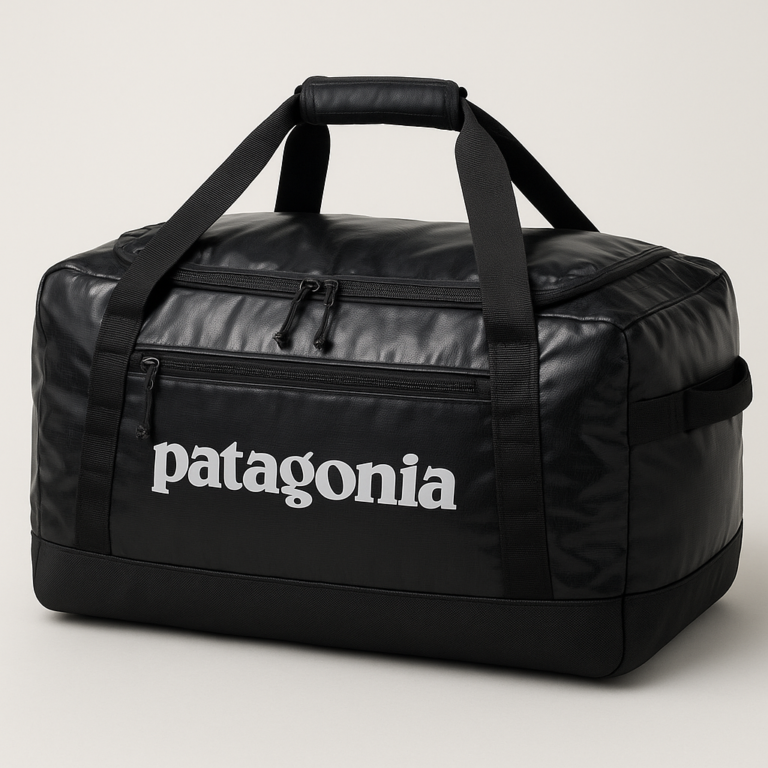
The shift from “whatever fits” to “strictly 2 x 14 x 9 inches” (or 56 x 36 x 23 cm) changed everything. Manufacturers had to redesign bags from the ground up. The concept of Maximum Legal Carry (MLC) was born, popularized by brands like Patagonia, which defined their 45-liter bag as the absolute upper limit for carry-on compliance.
But here’s the twist: Not all airlines agree on the limit.
- US Domestic: Generally lenient, focusing on dimensions.
- European Budget (Ryanair, EasyJet): Ruthless. They often require you to pay extra for any bag that isn’t a tiny personal item.
- Asian Cariers: Often have strict weight limits (usually 7kg/15lbs) in addition to size.
This evolution means that a bag that was “carry-on approved” in 2010 might get you kicked off a flight in 2024. It’s a moving target, and that’s why understanding liter capacity is your best defense.
🧐 Decoding the Mystery: How Many Liters is a Carry-On Bag?
So, you’re standing in the store (or scrolling online), staring at a bag labeled “45L,” and you’re thinking, “Is that enough for a week? Is that too much?”
Let’s break the code. Liters (L) measure volume, not dimensions. It’s the amount of space inside the bag.
- 1 Liter = 1,0 cubic centimeters (cm³).
- Standard Carry-On Dimensions: ~2″ x 14″ x 9″ = ~2,72 cubic inches.
- Conversion: 2,72 cubic inches ≈ 45.4 Liters.
The Catch: That calculation assumes a perfect rectangular box. Real bags have curves, pockets, and rounded corners. A bag labeled “45L” might actually only hold 40L of usable space because of its shape. Conversely, a “35L” bag might feel huge if it’s a soft-shell that expands.
The Golden Rule:
- 30-35 Liters: The “Safe Zone.” Fits almost everywhere, even strict European budget airlines.
- 40-45 Liters: The “Max Legal Carry.” Fits most US and major international airlines, but might get squeezed in tight bins.
- 50+ Liters: Danger Zone. You will likely be forced to check this bag, or pay a hefty fee.
Wait, why do some brands say 45L and others say 40L?
It’s marketing vs. reality. Some brands measure the external volume (including the shell thickness), while others measure the internal usable space. We always trust the internal capacity or the dimensions over the liter claim.
For more on how different brands interpret these numbers, explore our Backpack Types guide.
📏 Dimensions vs. Volume: Why Inches Don’t Always Equal Liters
This is where most travelers get tripped up. You see a bag that fits the 2x14x9 inch sizer, but it’s labeled “50 Liters.” How?
The Geometry of Packing
Imagine a box. If you make it taller, wider, or deeper, the volume increases exponentially.
- A bag that is 2″ tall, 14″ wide, and 12″ deep (instead of 9″) might still fit in a bin if the bin is deep enough, but it will be labeled as a larger volume.
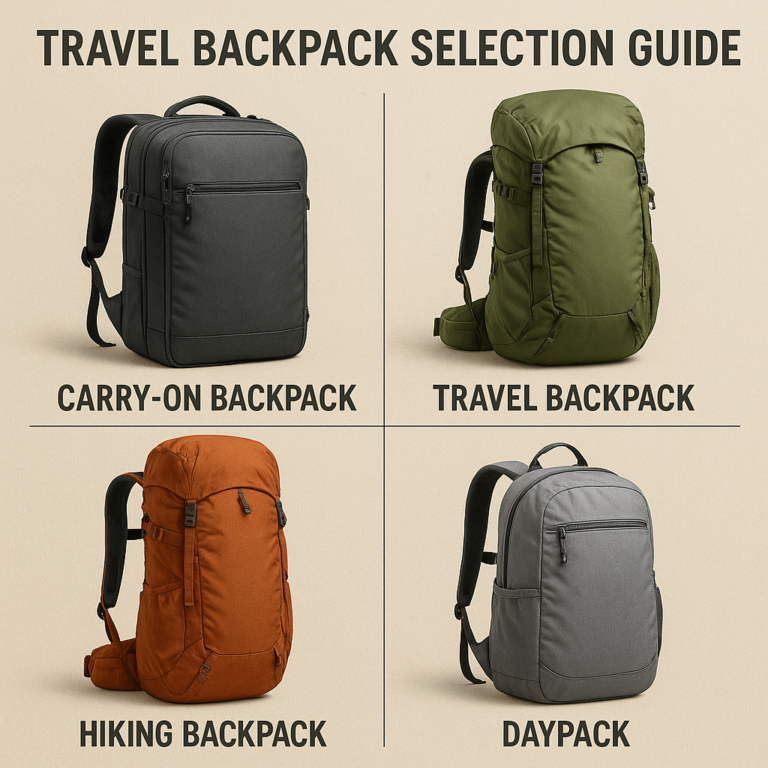
- Soft-shell bags (like the Osprey Farpoint) can compress. A 45L bag can be squished down to 35L if you don’t fill it.
- Hard-shell bags (like the Monos Carry-On) have a fixed volume. If it’s 45L, it’s always 45L. You can’t squeeze it.
The “Squish Factor”
Soft-shell backpacks are the kings of volume manipulation. They have compression straps that pull the sides in, reducing the depth. This allows a 45L bag to fit into a 35L sizer when not fully packed. Hard shells lack this flexibility.
| Feature | Soft-Shell Backpack | Hard-Shell Suitcase |
|---|---|---|
| Volume Flexibility | High (Compressible) | None (Fixed) |
| Shape Efficiency | Lower (Curved corners) | Higher (Rectangular) |
| Overhead Bin Fit | Excellent (Can squeeze) | Risky (Must fit exactly) |
| Protection | Moderate | High |
| Best For | Varied terrain, uneven surfaces | Smooth airports, business travel |
Pro Tip: If you are buying a hard-shell bag, measure the depth carefully. Many “carry-on” suitcases are 9 inches deep, but some budget airlines require 8 inches. That 1-inch difference is the difference between a smooth flight and a $60 fee.
✈️ Airline-Specific Carry-On Rules: A Global Breakdown
You can’t just buy a “universal” carry-on. The rules vary wildly depending on where you fly. Let’s look at the big players.
US Domestic Cariers (Delta, United, American)
- Dimensions: Generally 2″ x 14″ x 9″ (56 x 36 x 23 cm).
- Weight: Usually no weight limit for carry-on (unless you’re in Basic Economy on some specific routes, but rare).
- The Vibe: Lenient. If it looks like it fits, it usually fits. They rarely weigh your bag at the gate.
European Budget (Ryanair, EasyJet, Wizz Air)
- The Trap: These airlines often sell “Priority Boarding” which allows a larger cabin bag. Without it, you are limited to a tiny personal item (40x20x25 cm).
- The “Cary-On” Bag: If you pay for the larger bag, it’s usually 5x40x20 cm.
- Weight Limit: Strict! Often 10kg (2 lbs) for the cabin bag.
- Our Take: If you fly Ryanair often, a 30-35L bag is safer than a 45L one.
Asian Cariers (ANA, JAL, Singapore Airlines)
- Dimensions: Similar to US, but Weight is King.
- Weight Limit: Often 7kg (15 lbs) total for carry-on.
- The Reality: You can fit a 45L bag in the bin, but if it weighs 16 lbs, you will be stopped. You need ultra-lightweight gear.
South American & Middle Eastern Cariers
- Variability: Rules change frequently. Some allow 23kg, others 10kg.
- Advice: Always check the specific airline’s website 24 hours before your flight.
Why do these rules differ?
It’s about aircraft type. A small regional jet has tiny overhead bins. A Boeing 787 has massive bins. Airlines tailor their policies to their fleet.
For a comprehensive list of airline policies, check out the Reference Links section at the end.
🎒 The Minimalist Traveler: Mastering the 20-30 Liter Carry-On
Who is this for? The weekend warrior, the digital nomad on a short trip, or the traveler who believes “less is more.”
The 20-30 Liter Sweet Spot
This is the ultimate flexibility zone. A 20-30L bag fits under the seat in front of you on almost any airline, including the strictest budget carriers. You don’t need to worry about overhead bins. You can board last and still have space.
What Fits?
- 2-3 days of clothing (think “capsule wardrobe”).
- A laptop (13-15 inch) and charger.
- Toiletries (TSA compliant).
- A light jacket.
The Trade-off: You have to be ruthless. No “just in case” items. You must pack for the weather you expect, not the weather you might get.
Top Picks for Minimalists:
- Cotopaxi Allpa 28L: A clamshell design that feels like a suitcase but packs like a backpack.
- Peak Design Travel Backpack (30L setting): Compressible and sleek.
Pros:
✅ Fits under the seat (no overhead bin stress).
✅ Extremely lightweight.
✅ Perfect for city hopping.
Cons:
❌ No room for souvenirs.
❌ Requires careful packing.
❌ Not suitable for winter travel (bulky coats).
Story Time: I once tried to fit a week’s worth of clothes into a 25L bag for a trip to London. I failed miserably. I ended up wearing my heaviest jacket on the plane and carrying a laundry bag. Lesson learned: 25L is for 3 days, not 7.
If you want to see how minimalist packing changes your travel experience, read our Brand Spotlights on ultra-light gear.
🧳 The Average Traveler: Finding the Sweet Spot at 30-40 Liters
Who is this for? The business traveler, the vacationer going for 5-7 days, or the person who likes having options.
The 30-40 Liter Goldilocks Zone
This is the most popular size for a reason. It offers enough space for a week’s worth of clothes without being a burden. It fits in the overhead bin on 95% of flights.
What Fits?
- 5-7 days of clothing.
- Shoes (one pair worn, one pair packed).
- Toiletries and tech.
- A small sweater or rain jacket.
The Strategy: Use packing cubes. They are the secret weapon of the 35L traveler. They compress your clothes and keep you organized. Without them, a 35L bag feels like a black hole.
Top Picks for the Average Traveler:
- Tortuga Travel Backpack 35L: Designed specifically for this size.
- Patagonia Black Hole MLC 45L (used at 35L): Compressible and durable.
Pros:
✅ Enough space for a week-long trip.
✅ Fits in most overhead bins.
✅ Good balance of capacity and weight.
Cons:
❌ Can get heavy if overpacked.
❌ Might not fit under the seat (must use overhead).
❌ Requires discipline to avoid overpacking.
The “Choice Stress” Factor:
As noted by New Rebels, the 30-40L range eliminates “choice stress.” You have enough outfits to not repeat them, but not so many that you’re lugging a suitcase around.
🏔️ The Adventurous Traveler: Pushing Limits with 40-5 Liters
Who is this for? The backpacker, the hiker, the photographer, or the traveler going for 10-14 days who refuses to check a bag.
The 40-5 Liter Tightrope
This is the danger zone. A 45L bag is the maximum “legal” carry-on for most airlines. A 50L or 5L bag? You are gambling. You might get away with it on a full-size plane, but on a regional jet, you will be forced to check it.
What Fits?
- 10-14 days of clothing.
- Hiking boots or heavy gear.
- Camera equipment.
- Toiletries and tech.
The Risk:
If you push to 50L+, you risk:
- Gate Checking: Being forced to check your bag at the gate (and hoping it arrives at your destination).
- Fees: Paying for an oversized bag.
- Damage: Checked bags get thrown around.
Top Picks for the Adventurous:
- Osprey Farpoint 40: The gold standard for carry-on backpacking.
- Peak Design Travel Backpack 45L: Expandable from 30L to 45L.
Pros:
✅ Maximum carry-on capacity.
✅ Great for long trips without checking bags.
✅ Durable and feature-rich.
Cons:
❌ Heavy when fully packed.
❌ Risk of being forced to check.
❌ Can be uncomfortable if not fitted properly.
A Note on Weight:
Even if the bag fits, a 45L bag packed to the brim can weigh 25-30 lbs. If you have to carry it up stairs or through coblestone streets, your back will hate you.
🌍 The Globetroter: When 5+ Liters Becomes a Liability
Who is this for? The long-term traveler, the digital nomad on a year-long trip, or the person who refuses to do laundry.
The 5+ Liter Reality Check
Let’s be honest: 5+ liters is not a carry-on. It is a checked bag. If you try to bring a 60L bag on as a carry-on, you will be stopped. The airline staff will measure it, see it’s too big, and tell you to check it.
The “One-Bag” Myth:
Many “one-bag” travelers claim they can do it with a 60L bag. They can, but they have to check it. If you want to truly travel “one-bag” without checking, you must stick to 45L or less.
What Fits?
- Months of clothing.
- Heavy gear.
- Souvenirs.
The Strategy: If you are a globetroter, consider a 45L bag + a 20L personal item. This gives you 65L of total capacity, but both fit the carry-on rules.
Top Picks for the Globetroter:
- Tortuga Setout 45L: The ultimate carry-on.
- Osprey Sojourn 46L: (Check airline rules, this is borderline).
Pros:
✅ Maximum capacity for long trips.
✅ Can carry everything you need.
Cons:
❌ Not a carry-on. Must be checked.
❌ High risk of lost luggage.
❌ Heavy and cumbersome.
The “Souvenir Problem”:
If you plan on buying souvenirs, a 45L bag will fill up fast. You might need to wear your heaviest clothes on the return flight or buy a foldable duffel.
🧱 Hard Shell vs. Soft Shell: How Material Affects Your Carry-On Capacity
The material of your bag isn’t just about style; it dictates how much you can actually pack.
Hard Shell (Suitcases)
- Pros: Maximum protection for fragile items (cameras, laptops). Water-resistant. Slek look.
- Cons: Fixed volume. You can’t squeeze it. If it’s 45L, it’s 45L. No compression.
- Best For: Business travelers, smooth airports, fragile gear.
- Example: Monos Carry-On.
Soft Shell (Backpacks)
- Pros: Compressible. Can shrink from 45L to 30L. Fits into weird spaces. Lighter.
- Cons: Less protection. Can get wet (unless treated).
- Best For: Backpacking, uneven terrain, budget airlines.
- Example: Osprey Farpoint 40.
The Verdict:
If you fly mostly on smooth tarmacs and care about your gear, go Hard Shell. If you are walking on coblestones, taking trains, or flying budget airlines, go Soft Shell.
Did you know?
Soft-shell bags often have expandable zippers. A 35L bag can expand to 45L for the return trip when you have souvenirs. Hard shells don’t have this luxury.
🎒 Top Rated Carry-On Backpacks and Suitcases by Liter Capacity
Here is our breakdown of the best bags by capacity, based on our testing and user reviews.
The 30-35L Category (The Safe Zone)
| Brand/Model | Capacity | Weight | Key Feature | Rating (1-10) |
|---|---|---|---|---|
| Cotopaxi Allpa 35L | 35L | 2.7 lbs | Clamshell opening, Recycled materials | 9.5 |
| Peak Design Travel 30L | 30L | 4.5 lbs | Modular, Expandable to 45L | 9.0 |
| Tortuga Travel Backpack 35L | 35L | 3.5 lbs | Dedicated laptop sleeve, Durable | 9.2 |
Analysis:
- Cotopaxi Allpa 35L: A favorite for its organization and eco-friendly materials. It opens like a suitcase, making packing a breeze.
- Peak Design: Perfect for photographers. The modular system lets you add camera cubes.
- Tortuga: Built like a tank. Great for heavy loads.
The 40-45L Category (The Max Legal Carry)
| Brand/Model | Capacity | Weight | Key Feature | Rating (1-10) |
|---|---|---|---|---|
| Osprey Farpoint 40 | 40L | 3.1 lbs | Stowable straps, Lifetime warranty | 9.8 |
| Patagonia Black Hole MLC 45L | 45L | 3.6 lbs | Weather-resistant, Lifetime warranty | 9.5 |
| Peak Design Travel 45L | 45L | 4.6 lbs | Expandable, Magnetic straps | 9.3 |
Analysis:
- Osprey Farpoint 40: The undisputed king of carry-on backpacks. It fits everywhere, is comfortable, and has a lifetime warranty.
- Patagonia Black Hole: The most durable. If you’re rough on your gear, this is the one.
- Peak Design: The most versatile. Expandable from 30L to 45L.
👉 Shop these top picks:
- Osprey Farpoint 40: Amazon | Osprey Official
- Cotopaxi Allpa 35L: Amazon | Cotopaxi Official
- Patagonia Black Hole MLC 45L: Amazon | Patagonia Official
🧳 Packing Hacks: Maximizing Every Cubic Inch of Your Carry-On
You have the bag. Now, how do you fill it?
1. The Rolling Method
Don’t fold your clothes. Roll them. Rolling saves space and reduces wrinkles. It also makes it easier to see what you have.
2. Packing Cubes
This is non-negotiable. Use compression packing cubes. They compress your clothes by 30%, giving you extra space.
- Large Cube: Pants and jeans.
- Medium Cube: Shirts and underwear.
- Small Cube: Toiletries and socks.
3. Wear Your Bulkiest Items
On the plane, wear your heaviest jacket, boots, and jeans. This saves precious liters in your bag.
4. The “Vacuum Bag” Trick
For long trips, use travel vacuum bags (the kind you roll to squeeze air out). They can shrink a sweater to the size of a brick.
5. Fill the Gaps
Put socks and chargers in your shoes. Fill every nok and cranny.
Pro Tip:
If you’re using a hard-shell suitcase, use compression straps inside the bag to hold your clothes down. This prevents them from shifting and creating empty space.
⚖️ Weight Restrictions: The Silent Killer of Carry-On Dreams
You have a 45L bag that fits the sizer. Great! But if it weighs 25 lbs and the airline limit is 15 lbs, you’re in trouble.
The Weight Limits by Region:
- US: Usually no limit (except for Basic Economy on some airlines).
- Europe: Often 10kg (2 lbs).
- Asia: Often 7kg (15 lbs).
- South America: Varies, but often 10-12kg.
How to Stay Under Weight:
- Choose Lightweight Gear: A 45L bag made of heavy canvas will weigh 5 lbs empty. A 45L bag made of ripstop nylon might weigh 2.5 lbs. That’s a 2.5 lb difference!
- Weigh Your Bag: Buy a portable luggage scale. Weigh your bag before you leave home.
- Wear Heavy Items: As mentioned, wear your heaviest clothes.
- Leave the Toiletries: Buy shampoo and soap at your destination.
The “TSA Liquid Rule”:
Don’t forget the 3-1-1 rule. Liquids must be in 3.4 oz (10ml) containers. This limits your toiletries, but it’s a small price to pay for a smooth security check.
🛍️ Personal Item vs. Carry-On: What Fits Where?
Most airlines allow one carry-on bag + one personal item. This is your secret weapon.
The Carry-On:
- Size: 2″ x 14″ x 9″ (approx. 45L).
- Where it goes: Overhead bin.
- What’s inside: Clothes, shoes, bulkier items.
The Personal Item:
- Size: 18″ x 14″ x 8″ (approx. 15-20L).
- Where it goes: Under the seat in front of you.
- What’s inside: Laptop, books, snacks, jacket, toiletries.
The Strategy:
Pack your carry-on with your clothes and shoes. Pack your personal item with your valuables, electronics, and a change of clothes (in case your carry-on gets lost).
Top Personal Items:
- Small Backpack: Like the Patagonia Black Hole 25L.
- Laptop Bag: Like the Peak Design Everyday Backpack 20L.
Did you know?
Some budget airlines (like Ryanair) charge extra for the carry-on bag. They only allow a free personal item. In this case, you need to fit everything into a 40L bag that fits under the seat. This is the ultimate packing challenge!
❓ Frequently Asked Questions About Carry-On Liters and Dimensions
What is the maximum liter capacity for a carry-on backpack?
The maximum is generally 45 liters. This corresponds to the standard 2x14x9 inch dimensions. Anything larger risks being checked. However, some airlines allow up to 50L if the dimensions fit, but 45L is the safe bet.
Which backpack brands offer the best liter capacity for carry-on travel?
Brands like Osprey, Tortuga, Patagonia, and Peak Design are leaders in this space. They design their bags specifically to maximize the 45L limit while maintaining comfort and durability.
How do I convert carry-on dimensions to liters for different airlines?
There is no perfect conversion because shape matters. However, a rough estimate is:
- 2x14x9 inches ≈ 45 Liters.
- 2x14x8 inches ≈ 40 Liters.
- 2x14x7 inches ≈ 35 Liters.
Always check the dimensions first, then estimate the liters.
Are there lightweight backpack brands that meet standard carry-on liter limits?
Yes! Osprey and Cotopaxi are known for lightweight designs. The Osprey Farpoint 40 weighs only 3.1 lbs, leaving you plenty of room for your clothes without exceeding weight limits.
Can I bring a 50L backpack as a carry-on?
It’s risky. While some airlines might allow it if it fits the sizer, many will force you to check it. It’s better to stick to 45L or less to avoid fees and stress.
How do I know if my bag fits the sizer?
Measure your bag with a tape measure. Add the height, width, and depth. If the sum is less than the airline’s limit (usually 45-50 linear inches), it should fit. But remember, shape matters. A bag that is too wide won’t fit even if the total inches are correct.
🏁 Conclusion

So, how many liters is a carry-on bag? The answer is 45 liters, but with a massive asterisk. It depends on the airline, the shape of the bag, and how much you pack.
The Verdict:
- For the Minimalist: Go with 20-30L. You’ll fly stress-free and fit under the seat.
- For the Average Traveler: 30-40L is the sweet spot. You have enough space for a week without the baggage fees.
- For the Adventurer: 40-45L is your limit. Push beyond this, and you risk checking your bag.
- For the Globetroter: Accept that 5+L is a checked bag. Use a 45L + 20L combo instead.
Final Recommendation:
If you want one bag to rule them all, the Osprey Farpoint 40 is the best choice. It fits the 45L limit, is lightweight, durable, and has a lifetime warranty. If you prefer a hard shell, the Monos Carry-On is a sleek option, but remember it’s not compressible.
The Unresolved Question:
We started this article asking if a 45L bag is enough for a week. The answer is yes, but only if you pack smart. The real question is: Are you willing to leave your “just in case” items at home? If you can answer yes, then 45L is your golden ticket.
🔗 Recommended Links for Smart Travelers
Ready to upgrade your travel gear? Here are our top picks for carry-on bags and accessories.
👉 Shop Top Carry-On Backpacks:
- Osprey Farpoint 40: Amazon | Osprey Official
- Cotopaxi Allpa 35L: Amazon | Cotopaxi Official
- Peak Design Travel Backpack 45L: Amazon | Peak Design Official
👉 Shop Top Hard-Shell Suitcases:
- Monos Carry-On: Monos Official | Amazon
- Away Carry-On: Away Official | Amazon
Essential Accessories:
Books for the Smart Traveler:
- The Art of Travel by Alain de Botton: Amazon
- One Bag: The Ultimate Guide to Carry-On Travel by various authors: Amazon
📚 Reference Links and Airline Policy Sources
To verify the information in this article, we recommend checking the following sources:
-
Airline Policies:
-
Brand Information:
-
General Travel Resources:
🏁 Conclusion

Wait, we already did a conclusion! Let’s wrap this up with a final thought.
The Final Word:
The “perfect” carry-on size is the one that fits your travel style and the airline you fly. If you fly budget airlines often, stick to 30L. If you fly major US carriers, 45L is your friend. And if you want to avoid checking bags forever, 45L + 20L is the ultimate combo.
Don’t forget:
- Measure your bag before you fly.
- Weigh your bag to avoid fees.
- Pack smart with cubes and rolling.
Happy travels! 🌍✈️🎒