Support our educational content for free when you purchase through links on our site. Learn more
15 Backpack Trends Reshaping Design in 2026 🎒

What are the latest trends in backpack design and technology among top brands? The biggest shift is toward packs that combine ergonomic comfort, smart organization, durable lower-impact materials, and travel-ready features—without loading you up with tech you don’t need.
We’ve seen a well-placed laptop sleeve save a commute and a “clever” pocket swallow someone’s keys like a tiny fabric black hole. That’s why we look past trend lists to ask a more useful question: does this feature make the backpack more comfortable, practical, or longer-lasting for you?
Key Takeaways
- Comfort and fit lead the pack: Adjustable straps, supportive back panels, and stable load distribution matter most when you carry a backpack for hours.
- Organization is getting smarter: Clamshell openings, quick-access pockets, and removable organizers make daily carry and travel easier.
- Sustainability goes beyond recycled fabric: Durability, repair services, transparent material claims, and long-term use all count.
- Tech features should earn their space: A well-protected laptop sleeve and removable power-bank pocket are often more useful than built-in electronics.
- Travel and everyday designs are converging: Trolley sleeves, adaptable compartments, and streamlined silhouettes help backpacks move between work, transit, and trips.
- Choose for your real routine: The best trend is the one that fits your body, load, and usual use—not the longest feature list.
Table of Contents
- ⚡️ Quick Tips and Facts
- 🎒 How Backpack Design Has Changed: A Brief History
- 🔭 The Latest Backpack Trends at a Glance
- 1. Smarter Storage and Modular Organization
- Clamshell openings, quick-access pockets, and better layouts
- Modular compartments, packing cubes, and removable organizers
- 2. Lightweight Materials and Durable Construction
- Recycled fabrics, bluesign materials, and lower-impact textiles
- Weather-resistant coatings, waterproof builds, and stronger zippers
- 3. Sustainable Backpack Design and Repairability
- Recycled content, material transparency, and responsible sourcing
- Repair programs, warranties, and longer-lasting gear
- 4. Ergonomic Comfort for Comuting and Travel
- Contoured straps, breathable back panels, and load support
- Adjustable fits, sternum straps, and inclusive sizing
- 5. Tech-Ready Backpacks for Devices and Daily Carry
- Laptop sleeves, tablet pockets, and device protection
- USB charging ports, power banks, and smart features
- 6. Travel-Friendly Features and Carry-On Design
- Trolley sleeves, expandable capacity, and airline-friendly layouts
- Anti-theft pockets, lockable zippers, and passport storage
- 7. Outdoor-Ready Backpacks with Technical Features
- Hydration compatibility, trekking features, and trail organization
- Weather protection, ventilation, and adventure-ready fabrics
- 8. Minimalist Silhouettes and Everyday Versatility
- From office commute to weekend travel
- Packable backpacks and convertible carry options
- 9. Personalization, Color, and Expressive Details
- Color trends, finishes, and understated branding
- Customizable straps, patches, and interchangeable components
- 10. Accessibility, Safety, and Inclusive Design
- Easy-grab handles, accessible pockets, and one-handed access
- Reflective details, visibility, and commuter safety
- 11. What Top Backpack Brands Are Doing
- Osprey, Patagonia, and The North Face
- Peak Design, Bellroy, and Aer
- Deuter, Gregory, Fjällräven, and Cotopaxi
- 📊 Backpack Trend Comparison: Features by Use Case
- 🧭 How to Choose a Backpack That Fits Your Needs
- Best features for commuting, travel, hiking, and school
- How to assess comfort, capacity, materials, and value
- 🔮 What’s Next for Backpack Design and Technology?
- ✅ Quick Buying Tips for Trend-Savy Backpack Shoppers
- Conclusion
- Recommended Links
- FAQ
- What are the biggest backpack design trends right now?
- Are smart backpacks with built-in charging worth it?
- Which backpack materials are durable and sustainable?
- What features matter most in a travel backpack?
- How do I choose a comfortable backpack for daily use?
- Reference Links
⚡️ Quick Tips and Facts
If you’re curious how backpacks are changing, our guide to how many people use backpacks puts their everyday popularity in perspective: a good pack can serve as a commute bag, travel companion, or trail workhorse. The trick is choosing useful innovation over a pocket that exists mostly to impress your friends.
| Quick takeaway | What to look for |
|---|---|
| Comfort beats cleverness | Padded, adjustable straps and a fit matched to your torso matter more than a long feature list. |
| Modularity is practical when it’s removable | Separate pouches and packing cubes help a bag shift between work and travel without making every outing feel like a gear expedition. |
| A power-bank pocket often beats a built-in battery | It keeps charging hardware replaceable and easier to remove for travel. |
| “Water-resistant” is not “waterproof” | Fabric coatings and rain covers help, but a storm-proof claim should be backed by construction details. |
| Recycled fabric can still be durable | Check the fabric, stitching, zippers, warranty, and repair options—not just the sustainability label. |
| Match capacity to the job | A compact daypack is easier for commuting; longer trips need more room, but extra liters can mean extra bulk. |
We review packs through the lens of Backpack Reviews, Backpack Types, and Backpack Trends. Our central finding: the strongest design trend is not “more tech.” It’s better integration of comfort, organization, durability, and sustainability.
🎒 How Backpack Design Has Changed: A Brief History

The backpack has had several jobs over the years: carry gear, protect books, haul climbing equipment, survive commutes, and—more recently—keep a laptop from meeting a puddle at high speed.
Modern design draws on lessons from both outdoor packs and everyday bags. Hiking brands refined suspension systems, load-bearing hip belts, and breathable back panels. Comuter and travel brands borrowed the practical parts—then added laptop sleeves, quick-access pockets, and cleaner silhouettes.
A few design shifts now shape the category:
- From one big compartment to intentional organization: Laptop sleeves, admin panels, clamshell openings, and quick-access pockets help you find gear without unpacking the whole bag.
- From disposable to repairable: More brands discuss recycled materials, repair services, and product longevity.
- From single-purpose to adaptable: A removable organizer or travel-ready layout can help one backpack serve several roles.
- From “tough-looking” to measured durability: Fabric denier alone does not tell the whole story; construction, coatings, seams, zippers, and repair support matter too.
- From generic fit to better ergonomics: Adjustable straps, sternum straps, and torso-specific fit systems are increasingly visible in outdoor and larger travel packs.
The shift is not purely aesthetic. The U.S. Consumer Product Safety Commission advises users to pack backpacks so that heavier items sit low and close to the body, and to use both shoulder straps. That simple advice explains why a carefully designed harness can matter more than a flashy pocket.
🔭 The Latest Backpack Trends at a Glance
The biggest trends are best understood as a toolkit, not a checklist. A feature that helps a frequent flyer may be dead weight on a school run; a spacious hiking pack may be awkward on a crowded train.
| Trend | What it looks like | Best for | Possible drawback |
|---|---|---|---|
| Modular organization | Detachable pouches, packing cubes, adaptable compartments | Travel, work, gear-heavy daily carry | Accessories can add bulk |
| Recycled and lower-impact fabrics | Recycled polyester or nylon, material certifications, repair programs | Daily use, travel, outdoor users seeking longer-lived gear | Sustainability claims vary; verify specifics |
| Ergonomic comfort | Contoured straps, breathable back panels, sternum straps | Long commutes, hiking, heavy loads | Good fit still depends on your body and load |
| Travel-focused layouts | Clamshell openings, trolley sleeves, compression panels | Carry-on travel, business trips | Can be heavier or overbuilt for daily use |
| Tech-ready pockets | Suspended laptop sleeves, cable routing, power-bank pockets | Comuting, school, business travel | Excess organization can waste space |
| Weather protection | Water-resistant fabrics, coated zippers, rain covers | Wet commutes, hiking, travel | Water-resistant construction is not automatically waterproof |
| Personal style | Retro colors, minimalist forms, patches, reflective details | Students, commuters, everyday carry | Style-first designs may offer less support |
For a broader view of how these ideas show up across the market, browse our Backpack Brands and Brand Spotlights.
1. Smarter Storage and Modular Organization
Good organization should save time, not make packing feel like assembling flat-pack furniture. The current design direction favors compartments that match what people actually carry: a laptop, water bottle, keys, charger, headphones, and perhaps a spare layer.
Clamshell openings, quick-access pockets, and better layouts
A traditional top-loading backpack can be excellent for hiking, where a simple main compartment and a stable shape make sense. For travel, a clamshell opening can be easier: the bag opens wide like a suitcase, making it simpler to pack and retrieve items.
Quick-access pockets are useful for items you reach for repeatedly:
- Transit card, wallet, and keys
- Sunglasses and earbuds
- Passport or travel documents
- Phone and charging cable
- A compact rain shell
But pocket count is not a quality score. We’ve seen beautifully organized bags where the tiny pockets are so specific that they dictate what you carry. A good layout should leave room for your own habits.
Reviewer tip: Before buying, list the five things you reach for most. If the bag gives those items a sensible home without sacrificing the main compartment, the organization is working.
Modular compartments, packing cubes, and removable organizers
Modular designs let you add or remove organization depending on the trip. Brands such as Peak Design and Cotopaxi offer travel-oriented layouts, while Aer focuses on structured everyday and tech carry.
| Modular feature | Benefit | Trade-off |
|---|---|---|
| Removable pouch | Move essentials between bags | Easy to misplace |
| Packing cube compatibility | Separates clothing and gear | Cubes take up some usable volume |
| Attachment loops or webing | Lets you secure extra gear | Can catch on objects or look tactical |
| Expandable compartment | Adds space when needed | Expansion can make the bag less compact |
| Removable laptop sleeve | Allows a lighter setup on non-work days | Sleeve may offer less protection than a dedicated suspended compartment |
What to trust: A modular system is most useful if the attachment points are sturdy, intuitive, and compatible with accessories you already own. More attachment points do not automatically mean better design.
2. Lightweight Materials and Durable Construction
A backpack’s fabric is only one part of its lifespan. A tough fabric cannot rescue weak stitching or a zipper that gives up after a year of daily use. We judge materials alongside seams, reinforcement, zipper quality, coatings, and repair support.
Recycled fabrics, bluesign materials, and lower-impact textiles
Recycled polyester and recycled nylon are widely used in packs from brands including Patagonia and Fjällräven. The term “recycled” can describe different inputs and production methods, so check the product’s material details rather than assuming all claims mean the same thing.
bluesign® is a system focused on the responsible use of resources and management of chemicals in textile production. It can help shoppers assess material-production practices, but it does not replace checking the finished product’s durability, repair options, or full supply-chain information.
| Material | Common strengths | Common limitations | Typical uses |
|---|---|---|---|
| Recycled polyester | Lightweight; widely available; useful for everyday bags | Performance varies by fabric construction | Comuting, school, travel |
| Nylon and ripstop nylon | Strong for its weight; ripstop structure helps limit tear spread | Some finishes and fabric types can add environmental or care trade-offs | Hiking, travel, everyday carry |
| Ballistic nylon | Abrasion-resistant and robust | Often heavier and stiffer | Work bags, tactical-style carry |
| Canvas organic cotton | Familiar look and feel; easy to style | Can absorb water and become heavy when wet | Casual use, lifestyle bags |
| Dynema Composite Fabric | Very light and strong for its weight | Premium technical material; may show wear differently from traditional fabrics | Ultralight outdoor gear |
The practical test: Can the bag handle the way you use it, and can you repair or replace it if something fails? Material labels are useful; real construction details are more useful.
Weather-resistant coatings, waterproof builds, and stronger zippers
Many everyday backpacks use water-resistant fabric or a durable water-repellent finish. That can help with drizzle, but it does not mean the whole bag is waterproof. Water may still enter through seams, zippers, openings, or a soaked back panel.
For regular wet-weather use, look for:
- Coated or covered zippers
- A roll-top or storm-flap closure
- A removable rain cover
- Sealed seams, when the product claims waterproof construction
- A separate sleeve or dry bag for electronics and essential documents
The National Park Service recommends preparing for changing conditions on hikes, which includes bringing suitable gear for the weather. In our testing mindset, that means treating water-resistant fabric as a helpful first defense—not a substitute for protecting electronics in a downpour.
3. Sustainable Backpack Design and Repairability
Sustainability is increasingly part of backpack design, but the most responsible choice is not always the one with the greenest-sounding hangtag. A pack that lasts, gets repaired, and stays in use can be a better choice than a short-lived bag made with a fashionable material.
Recycled content, material transparency, and responsible sourcing
When reviewing sustainability claims, look for specifics:
- What material is recycled? Polyester, nylon, or another fiber?
- How much of the product uses it? A recycled lining is not the same as a fully recycled shell.
- Is there independent information? Material certifications and clear product documentation are more useful than vague eco-language.
- Does the brand discuss production and labor? Fabric content tells only part of the story.
- Can the pack be maintained or repaired? Long-term use is part of the sustainability picture.
Brands such as Patagonia and Cotopaxi publish information about repair or product-care services. Availability and terms can vary by product and region, so check the current policy before relying on a repair promise.
Repair programs, warranties, and longer-lasting gear
A warranty can be useful, but it is not the same thing as a lifetime guarantee against every kind of wear. Read what it covers, how claims are handled, and whether repairs are available after the warranty period.
Our durability checklist:
- Does the brand sell or provide replacement parts?
- Can common failures—such as a buckle, zipper pull, or strap—be repaired?
- Are stress points reinforced?
- Are the fabric and construction appropriate for your load?
- Does the warranty explain exclusions clearly?
Reviewer perspective: We would rather see a brand explain how to repair a worn strap than promise that a bag will never wear out. Real gear gets used; honest aftercare matters.
4. Ergonomic Comfort for Comuting and Travel
A backpack can look sleek on a product page and still feel like a brick strapped to your shoulders. Comfort depends on the fit, load, strap shape, back panel, and how the weight is arranged—not just the amount of padding.
Contoured straps, breathable back panels, and load support
Look for shoulder straps that sit naturally without pinching or sliding outward. A sternum strap can help stabilize a loaded bag, and a hip belt can transfer some weight to the hips on larger packs.
For day-to-day carry, check:
- Strap width and contour: Do they sit comfortably on your shoulders?
- Back-panel shape: Does it feel supportive rather than rigid or poky?
- Ventilation: Mesh or spaced padding may help reduce heat buildup.
- Load position: Does the bag keep heavier items close to your back?
- Adjustment range: Can you fine-tune the fit over different clothing layers?
The American Academy of Orthopaedic Surgeons recommends using both shoulder straps and packing heavier items closer to the back to reduce strain. The CPSC’s backpack safety guidance also emphasizes proper use and reasonable loads.
Adjustable fits, sternum straps, and inclusive sizing
Outdoor packs often offer more fit adjustment than minimalist commuter bags. Larger hiking packs may include adjustable torso lengths, hip belts, and load lifters; compact urban packs may rely on simpler shoulder-strap adjustment.
Try the pack with a realistic load:
- Put your laptop, water bottle, and usual daily items inside.
- Tighten both shoulder straps evenly.
- Adjust the sternum strap so it stabilizes the shoulder straps without restricting breathing.
- Walk for several minutes, then check for pressure points and shifting.
- If the pack includes a hip belt, adjust it according to the brand’s fit instructions.
Fit is personal. One reviewer may love a narrow, close-to-body bag; another may find it restrictive. A comfortable backpack should feel stable, not like it is negotiating with your shoulders.
5. Tech-Ready Backpacks for Devices and Daily Carry
A tech backpack is useful when it protects devices without turning the main compartment into a maze. The best designs give electronics a secure, padded home and leave enough flexibility for everything else.
Laptop sleeves, tablet pockets, and device protection
A laptop compartment may be padded, suspended above the base, or simply stitched into the bag’s lining. A suspended sleeve can help keep a device from hitting the ground when you set the backpack down, but check the fit carefully: “fits a 16-inch laptop” does not guarantee every 16-inch model will fit comfortably.
Check:
- The laptop compartment’s measured dimensions, not only its advertised screen size
- Whether the sleeve closes securely
- Whether the device is held away from the bag’s base
- Whether the compartment is easy to access at airport security
- Whether tablet and charger storage crowds the main compartment
Brands including Aer, Bellroy, and Targus offer tech-oriented backpack collections.
USB charging ports, power banks, and smart features
Some backpacks include an external USB port connected to a power bank stored inside. The port itself typically does not create power; you need a compatible battery, and you should check whether it is included.
A dedicated removable power-bank pocket is often the more flexible option:
- You can use a battery you already own.
- You can remove it for travel or replacement.
- You avoid treating the bag’s charging port as a special piece of electronics that may age faster than the backpack.
For flights, battery rules depend on the battery type and airline. The U.S. Federal Aviation Administration provides guidance on carrying power banks; check it and your airline’s current rules before flying.
| Tech feature | Useful when | Watch out for |
|---|---|---|
| USB pass-through port | You want to charge a phone while walking | Battery is usually separate |
| Suspended laptop sleeve | You carry a laptop daily | Confirm fit and sleeve depth |
| Cable-management loops | You carry multiple accessories | Too many loops can create clutter |
| RFID-blocking pocket | You want a dedicated document pocket | It does not prevent all forms of theft |
| GPS tracking compatibility | Losing a bag is a concern | Usually requires a separate tracker and app |
6. Travel-Friendly Features and Carry-On Design
Travel packs are borrowing ideas from suitcases: wide openings, compression panels, easy-access document pockets, and luggage pass-through sleeves. The best one still works when the airport is behind you.
Trolley sleeves, expandable capacity, and airline-friendly layouts
A trolley sleeve lets a backpack slide over a rolling suitcase handle. It is a small feature that feels like a major invention when you are hustling across a terminal with a coffee in one hand.
Other travel-friendly details include:
- Clamshell access for suitcase-style packing
- Compression straps to reduce empty space
- A separate laptop compartment for quicker access
- A discreet document pocket for passports or boarding passes
- An expandable section for an extra layer or souvenirs
Carry-on size limits vary by airline, route, and ticket type. Always check your carrier’s official baggage rules rather than assuming a backpack marketed as “carry-on friendly” will fit every flight.
Anti-theft pockets, lockable zippers, and passport storage
Hidden pockets and lockable zipper pulls may help deter opportunistic theft, especially in crowded spaces, but they are not a guarantee. The most effective setup is one that keeps valuables close, makes access less obvious, and remains easy for you to use.
PacSafe specializes in travel-security features, while larger travel and commuter brands also add concealed pockets or lock-compatible zipper pulls.
Useful distinction: An RFID-blocking pocket protects against certain forms of unauthorized scanning of compatible cards; it does not secure cash, stop someone from opening a bag, or replace sensible travel habits.
7. Outdoor-Ready Backpacks with Technical Features
Outdoor backpacks are where ergonomics and material engineering get a proper workout. A hiking pack must carry weight comfortably, stay stable while you move, and give you access to water and essentials without requiring a roadside yard sale.
Hydration compatibility, trekking features, and trail organization
For day hikes, look for:
- A compatible hydration-bladder sleeve and hose routing
- Side pockets that can hold water bottles securely
- Stretch pockets for layers or snacks
- Compression straps to limit load movement
- Treking-pole attachment points, if you use poles
- A hip belt for stability on longer walks
The appropriate capacity depends on trip length, gear, and weather. A compact daypack may handle a short outing; overnight or multi-day trips usually require a larger pack and a more supportive frame. Fit is as important as liters: a poorly fitted big pack can make even a beautiful trail feel personally insulting.
Weather protection, ventilation, and adventure-ready fabrics
Outdoor designs increasingly combine lightweight fabrics with airflow-focused back systems and practical weather protection. Suspension styles vary across brands. For example, Osprey, Deuter, and Gregory each make packs with different approaches to ventilation, load support, and fit.
A video perspective worth comparing is the featured hiking-backpack review, which ranks packs using owner-review considerations and highlights comfort, capacity, and versatility. Its top pick is the Osprey Daylite Expandable 26+6, while the TETON Sports Explorer models are presented as larger-capacity options. Those are different categories of pack, so the ranking is best read as a range of user needs—not a direct apples-to-aples test.
8. Minimalist Silhouettes and Everyday Versatility
The minimalist backpack trend has a practical appeal: clean shapes slip into offices, cafés, and transit without looking like you packed for a mountainering expedition. But minimalist does not have to mean featureless.
From office commute to weekend travel
A versatile everyday backpack may include:
- A laptop sleeve that does not dominate the interior
- A quick-access pocket for essentials
- Side pockets for a bottle or umbrella
- A luggage sleeve for occasional trips
- A main compartment flexible enough for a change of clothes
Bellroy, Aer, and Herschel offer distinct takes on daily carry, from streamlined tech organization to classic lifestyle shapes.
The trade-off is that a bag optimized for the office may lack the supportive harness or weather protection you want outdoors. One-bag versatility is real, but every pack still has a home turf.
Packable backpacks and convertible carry options
Packable bags fold into a compact pouch, making them handy as a backup for travel or errands. Convertible backpack-duffel designs add flexibility but can be less comfortable as a backpack if the shoulder straps are basic or the load becomes heavy.
Before choosing one, ask:
- Will it carry your normal load or only serve as a spare?
- Are the straps comfortable for the distance you expect to walk?
- Does it have structure, or will everything slump to the bottom?
- Is the fabric appropriate for the weather and weight?
A packable day bag is a useful accessory. It is not necessarily a replacement for a well-fitted main backpack.
9. Personalization, Color, and Expressive Details
Backpacks are practical objects, but you still have to look at them every day. Current styles span subdued work bags, outdoor earth tones, bright color blocking, and retro-inspired silhouettes.
Color trends, finishes, and understated branding
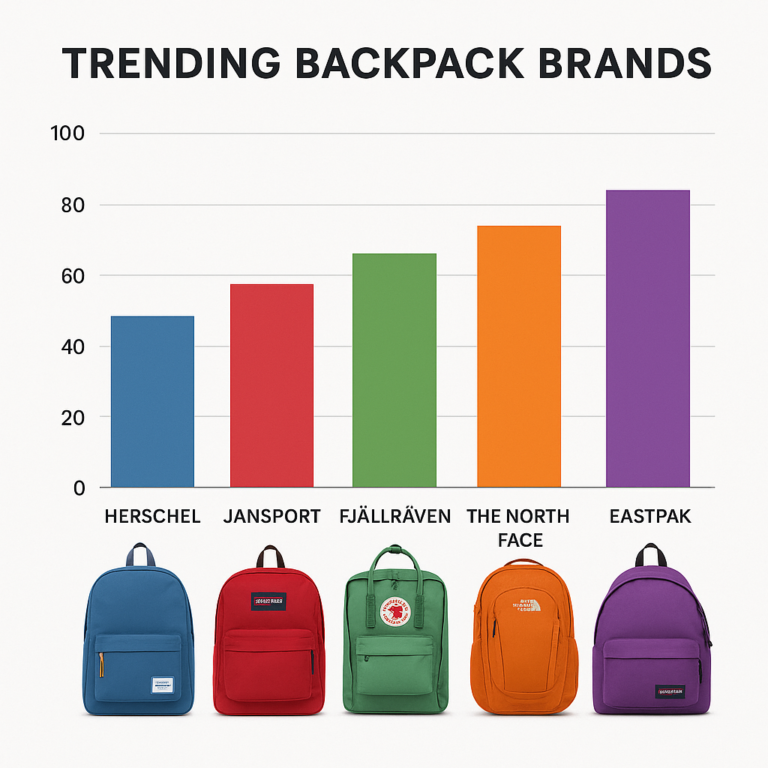
Some brands lean into bright colors and recognizable shapes; others favor muted tones and minimal logos. Fjällräven Kånken remains a recognizable example of a simple silhouette with broad color options. JanSport continues to offer classic school-oriented designs in a wide range of styles.
Aesthetics can be useful, too:
- Reflective details can improve visibility in low light.
- Dark colors may hide grime, while lighter colors can be easier to spot in a packed vehicle.
- A distinctive color can help you identify your bag quickly.
- Minimal branding may suit work settings better.
Customizable straps, patches, and interchangeable components
Patches, pins, charms, and attachment loops let you make a bag feel personal. Just keep decorations away from zippers and moving straps, and avoid adding hard accessories where they could scratch a laptop or poke through the fabric.
Our style verdict: Personalization is at its best when it does not compromise access, comfort, or durability. The bag should carry your things—not become a small, jangly parade float.
10. Accessibility, Safety, and Inclusive Design
Good design should make a pack easier to use for more people, including those who need simpler access, adjustable fits, or better visibility.
Easy-grab handles, accessible pockets, and one-handed access
Useful accessibility-focused details can include:
- Grab handles on multiple sides
- Large zipper pulls that are easy to locate
- Pockets accessible without removing the bag
- Zippers that open smoothly and predictably
- Adjustable straps with a broad range of fit
- Clear separation between frequently used and rarely used items
A bag that opens easily on a crowded bus or while carrying groceries is not just convenient. It reduces the awkward balancing act that tends to end with your keys on the pavement.
Reflective details, visibility, and commuter safety
Reflective accents can make a backpack easier to see in low-light conditions, but they are not a substitute for dedicated visibility gear or safe road habits. If you cycle or walk after dark, consider the backpack’s reflective coverage and add separate lights or reflective accessories where appropriate.
The National Highway Traffic Safety Administration provides bicycle-safety guidance, including the value of visibility for cyclists. For commuters, the practical takeaway is simple: a small reflective detail helps, but being visible from multiple angles helps more.
11. What Top Backpack Brands Are Doing
No single brand leads every trend. Some excel at technical fit, others at sustainable materials, and others at professional organization. The most useful comparison is by design strength—not by declaring one brand universally “best.”
Osprey, Patagonia, and The North Face
- Osprey is known for outdoor and travel packs with attention to suspension, fit, and activity-specific designs. Browse its backpack collection.
- Patagonia combines outdoor utility with a prominent focus on recycled materials and repair. Explore Patagonia packs and its repair information.
- The North Face offers a wide range of everyday, school, and outdoor packs. See its backpack collection.
These brands illustrate an important split: a commuter bag emphasizes access and device protection, while a hiking pack must distribute weight and remain stable over uneven ground.
Peak Design, Bellroy, and Aer
- Peak Design emphasizes adaptable carry and travel-oriented organization; see its travel bags.
- Bellroy focuses on streamlined everyday carry and thoughtful organization; browse Bellroy backpacks.
- Aer targets urban and tech-oriented carry with structured compartments; see Aer backpacks.
These brands appeal to people who want a professional look and a home for devices, but a highly structured bag may weigh more or feel less flexible than a simple daypack.
Deuter, Gregory, Fjällräven, and Cotopaxi
- Deuter: outdoor packs and fit options; official backpack collection.
- Gregory: hiking and travel packs with an emphasis on carry comfort; official backpack collection.
- Fjällräven: recognizable everyday styles alongside outdoor equipment; official backpacks and bags.
- Cotopaxi: colorful travel and outdoor bags, with product-specific material details; official travel bags.
How to choose between them: Start with the trip, load, and fit you need. Then compare the brands’ materials, organizational layouts, repair support, and current product specifications.
📊 Backpack Trend Comparison: Features by Use Case
| Use case | Most useful trends | Brands to compare | Check before buying |
|---|---|---|---|
| Daily commuting | Laptop protection, quick-access pockets, comfortable straps | Aer, Bellroy, The North Face | Device fit, back-panel comfort, weather protection |
| School | Durable construction, bottle pockets, simple organization | JanSport, Fjällräven, The North Face | Strap fit, laptop sleeve, weight when loaded |
| Carry-on travel | Clamshell access, trolley sleeve, compression | Osprey, Cotopaxi, Peak Design | Airline dimensions, empty-bag weight, access to documents |
| Day hiking | Hydration compatibility, breathable back, stable straps | Osprey, Deuter, Gregory | Torso fit, water storage, trail-specific features |
| Wet-weather commuting | Coated fabric, covered zippers, rain cover | Patagonia, The North Face, Osprey | Whether protection is water-resistant or fully waterproof |
| Tech-heavy work | Suspended laptop sleeve, cable organization, removable power-bank storage | Aer, Bellroy, Targus | Total weight, compartment layout, battery compatibility |
| Minimal daily carry | Lightweight construction, flexible main compartment | Herschel, Fjällräven, Bellroy | Whether comfort and organization are sufficient for your load |
Use the table as a shortlist, not a verdict. A model’s name or brand reputation cannot tell you whether the shoulder straps fit your body.
🧭 How to Choose a Backpack That Fits Your Needs
The simplest way to choose well is to work backward from your regular day. Start with what you carry, where you go, and how long the bag stays on your back.
Best features for commuting, travel, hiking, and school
For commuting
- Padded laptop sleeve, ideally positioned away from the base
- Easy-access pocket for transit essentials
- Comfortable shoulder straps
- Weather-resistant fabric or a rain cover
For travel
- Clamshell opening
- Trolley sleeve
- Lock-compatible zippers or discreet document storage
- Compression features and a layout that fits your packing style
For hiking
- Appropriate capacity and torso fit
- Stable straps and, for heavier loads, a supportive hip belt
- Hydration compatibility
- Breathable back panel and weather-ready construction
For school
- Durable stitching and easy-to-use zippers
- A laptop sleeve if needed
- Side pockets for bottles
- Organization that is simple enough to use between classes
How to assess comfort, capacity, materials, and value
Use this five-step test:
- Define the main job. Pick the use you do most often, not the rare trip you might take someday.
- Measure your real load. Include the laptop, bottle, charger, lunch, and jacket you carry on a normal day.
- Try the pack loaded. A showroom-empty bag can feel entirely different with a laptop and water bottle inside.
- Inspect construction. Check stitching at strap attachments, zipper movement, lining, and reinforcement.
- Read the care and warranty details. Repairability can affect long-term value as much as fabric choice.
For model-specific guidance, explore our Backpack Reviews and Backpack Types.
🔮 What’s Next for Backpack Design and Technology?
The near-term direction is more likely to be better materials, better repair systems, and more useful integration than backpacks that need an app to tell you where you put your keys.
Emerging ideas include:
- Improved recycled and lower-impact textiles
- More repairable designs and take-back programs
- Lighter, stronger fabrics for outdoor packs
- Better integration of tracking devices and removable power banks
- More adaptable organization for changing daily loads
- New coatings and textiles designed for stain resistance or weather protection
Some predictions—such as solar charging, self-cleaning fabrics, and fully biodegradable backpacks—remain experimental or product-specific. Treat them as possibilities, not proven category standards. A promising concept still needs evidence on durability, care, and real-world performance.
✅ Quick Buying Tips for Trend-Savy Backpack Shoppers
- ✅ Buy for your most common use. A travel bag that is excellent twice a year may be awkward for daily commuting.
- ✅ Check the fit with weight inside. Empty backpacks flatter everyone.
- ✅ Confirm device dimensions. Laptop screen size alone is not a reliable fit measurement.
- ✅ Separate water-resistant from waterproof claims. Read construction details and plan for heavy rain.
- ✅ Choose repairable construction when possible. A replacement buckle may be more valuable than another novelty feature.
- ✅ Keep power banks removable for travel. Check the FAA’s current guidance before flying.
- ❌ Don’t buy by pocket count. A bag with fewer, better-placed pockets may be easier to use.
- ❌ Don’t assume recycled means fragile—or automatically sustainable. Evaluate the product’s full construction and the brand’s specific claims.
- ❌ Don’t ignore empty weight. A heavy bag starts adding to your load before you’ve packed a thing.
- ✅ For fresh product and style coverage, visit Backpack Trends and Brand Spotlights.