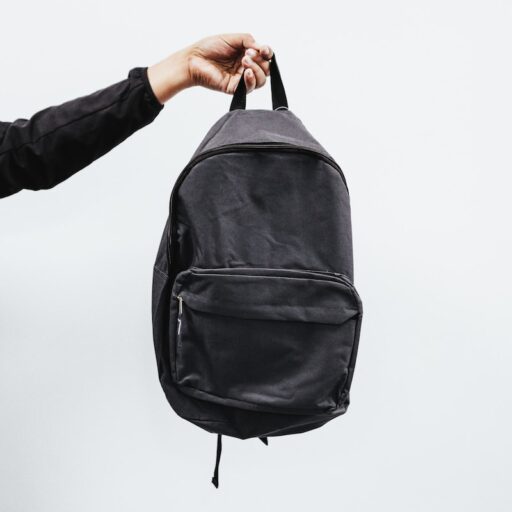
Support our educational content for free when you purchase through links on our site. Learn more
Do Backpacks Affect Posture? 🎒


Yes—backpacks can temporarily change posture and contribute to discomfort, especially when they’re heavy, poorly fitted, or worn one shoulder. To reduce strain, keep the load manageable, pack heavy items close to your back, adjust both straps, and take the pack off when you can.
We’ve watched a familiar commute play out: the bag slips low, one shoulder creeps up, and its owner leans forward as if the backpack has started giving directions. Often, a few adjustments and a lighter load can make the walk feel noticeably easier.
Research has found measurable changes in children’s head and shoulder posture while they carried a heavy backpack, but that does not prove a temporary change causes permanent spinal damage. The practical takeaway is to pay attention to fit, weight, and symptoms—not to panic over the bag itself.
Key Takeaways
- Backpacks can affect posture, particularly when they’re heavy, sit low, bounce, or are carried one shoulder.
- Fit and packing matter: wear both straps, keep the load close to your back, and place heavier items in the compartment nearest your body.
- For children, about 10% of body weight is a conservative target used in health guidance, not a guaranteed safety line for every child.
- Persistent pain, numbness, tingling, weakness, or walking difficulty calls for medical advice—not just a new backpack.
- A temporary posture change is not proof of permanent spinal damage; reduce strain without treating every backpack as a villain.
Table of Contents
- ⚡️ Quick Tips and Facts: Do Backpacks Affect Posture?
- 🎒 How Backpack Weight and Fit Can Change Posture
- What Happens to Your Spine, Shoulders, and Head When You Carry a Backpack
- Temporary Postural Changes vs. Lasting Posture Problems
- 🔎 What Research Says About Backpacks and Posture
- How Backpack Load, Carrying Time, and Body Size Matter
- Backpack-Related Back Pain: What the Evidence Can—and Can’t—Tell Us
- 🧒 Are Heavy Backpacks More Risky for Children and Teens?
- Backpack Weight Guidelines for School-Age Children
- Warning Signs Your Child’s Backpack Is Too Heavy
- 🧍 Backpack Posture Risks for Adults, Comuters, and Travelers
- ⚠️ Common Signs Your Backpack Is Affecting Your Posture
- When Back, Neck, or Shoulder Pain Needs Medical Advice
- ✅ How to Choose a Backpack That Supports Better Posture
- Best Backpack Features for Comfort and Load Distribution
- Backpack Fit: Strap Length, Back Panel, and Waist Belt
- Backpack vs. Messenger Bag vs. Rolling Bag
- 📦 How to Pack a Backpack to Reduce Strain
- Where to Put Books, Laptops, and Other Heavy Items
- How Much Should a Backpack Weigh?
- 🎯 How to Wear a Backpack Correctly
- Adjust Both Shoulder Straps and Keep the Load Close
- Use Chest and Hip Straps the Right Way
- 🧘 Posture Tips, Strengthening, and Backpack Breaks
- Simple Ways to Reduce Back and Shoulder Strain
- When to Lighten Your Load or Switch Carrying Methods
- ❌ Backpack Posture Myths: What to Stop Worrying About
- ❓ Frequently Asked Questions About Backpacks and Posture
- Can a Backpack Cause Scoliosis or Permanently Change Your Spine?
- Is It Bad to Carry a Backpack on One Shoulder?
- Do Ergonomic Backpacks Improve Posture?
- 🏁 Conclusion
- 🔗 Recommended Links
- 📚 Reference Links
⚡️ Quick Tips and Facts: Do Backpacks Affect Posture?
Yes, backpacks can change how you hold your head, shoulders, and trunk—especially when they’re heavy, poorly fitted, carried low, or worn one shoulder. That does not mean a backpack automatically causes permanent spinal damage. The useful goal is to reduce unnecessary load and strain, not to panic over every textbook.
We’ve seen the same telltale pattern during pack-fit checks: the load sinks toward the hips, the wearer hikes one shoulder, then leans forward as if the bag is trying tow them. That’s a cue to adjust the bag and its contents. For context on how widespread backpack use is, see our article on how many people use backpacks.
| Quick check | What to do |
|---|---|
| Weight | For schoolchildren, several health sources recommend aiming for about 10% of body weight as a conservative target. Treat this as practical guidance, not a universal medical law. |
| Fit | Wear both shoulder straps; snug the pack so it sits high and close to the back, not saging below the waist. |
| Packing | Place heavy books and electronics close to the back; remove things you don’t need that day. |
| Comfort | Wide, padded straps and a supportive back panel help distribute pressure. A waist or chest strap can improve stability when properly adjusted. |
| Warning signs | Repeated pain, tingling, numbness, red strap marks, difficulty walking normally, or a persistent forward lean deserve attention. |
| Reality check | Research shows backpacks can cause measurable, often immediate posture changes. It does not prove that every temporary change leads to lasting deformity. |
The American Academy of Pediatrics’ HealthyChildren guidance recommends a properly fitted pack and avoiding excessive loads. For school-specific risk and prevention advice, Stony Brook Medicine also highlights weight, fit, and warning signs. We’ll unpack the key disagreement about weight limits below: why do some sources say 10%, while research has tested heavier loads?
🎒 How Backpack Weight and Fit Can Change Posture
A backpack adds weight behind your body. To stay balanced, your muscles and joints may adjust how you hold your head, shoulders, and trunk. If the bag is close to your back and the load is reasonable, those adjustments may be small. If it hangs low or pulls backward, your body may compensate more noticeably.
The National Safety Council’s backpack safety guidance emphasizes wearing both straps and keeping a pack properly adjusted. Our reviewers agree: the bag’s label matters far less than how it behaves once you load it up.
What Happens to Your Spine, Shoulders, and Head When You Carry a Backpack
A load behind you shifts your center of mass backward. Your body may respond by leaning the trunk forward, moving the head, rounding the shoulders, or tightening muscles to keep you upright. A low-hanging pack can also bounce and pull with each step, adding repeated movement rather than a steady load.
A study of 160 schoolchildren aged 10–15 measured changes in head and shoulder posture while participants carried a backpack weighing 18% of body weight. The authors reported a “significant reduction in the CVA … [and] increase in CHA, and SSP”—measures associated with a more forward head position and more forward shoulders. Those are posture measurements, not a diagnosis of permanent injury. See the full study on PubMed Central.
A practical visualization:
| Backpack setup | Likely body response | What to check |
|---|---|---|
| Light, snug pack worn on both shoulders | Usually less pull and sway | Natural walking; straps stay in place |
| Heavy pack worn low | More backward pull; forward lean may follow | Pack bottom sits near or below the waist |
| Heavy items far from the back | Load feels less stable and may pull more | Books and laptop are in outer compartments |
| One shoulder strap used | Uneven loading and shoulder hiking may occur | One shoulder is noticeably higher |
| Loose straps and bouncing load | Repeated tuging with each step | Tighten straps and remove unnecessary contents |
Review-team tip: Load a backpack with the items you actually carry, then walk for a minute. If you need to hunch, hike a shoulder, or keep grabbing a slipping strap, the “perfect” bag on the shelf is not fitting you properly.
Temporary Postural Changes vs. Lasting Posture Problems
A body can change posture briefly to balance a load. That is different from proving the backpack has permanently changed the spine. The posture study above measured participants standing with a bag and after five minutes of stair climbing; it did not track long-term spinal changes or establish that measured angle differences lead inevitably to chronic pain.
The American Academy of Orthopaedic Surgeons’ backpack advice likewise focuses on reducing excessive load and improving how a bag is worn. This is a sensible prevention strategy, but it should not be misread as evidence that every heavy day causes lasting damage.
You may have seen a video recommending wearing a backpack in front to counter forward pull. That suggestion appears in the featured video, but we would not treat front-carrying as a universal fix. It can create other balance and movement problems, especially on stairs, in crowds, or while cycling. A better first move is to lighten the pack, bring the load close, and wear both straps.
🔎 What Research Says About Backpacks and Posture
The evidence supports a careful, practical answer: carying a backpack can alter posture and create discomfort, particularly when loads are heavy or poorly managed. Research does not establish one exact weight threshold that guarantees safety for every age, body, route, or backpack.
That distinction matters. A measured posture change is real; a prediction that it will become a permanent spinal problem is a separate claim requiring longer-term evidence.
How Backpack Load, Carrying Time, and Body Size Matter
The same bag can be easy for one person and exhausting for another. Relative load, body size, fit, walking duration, stairs, fatigue, and what else you carry all matter. A 10-pound pack is not the same percentage of body weight for a 50-pound child and a 200-pound adult.
In the 160-child study, researchers tested a backpack at 18% of body weight and observed posture changes. That tells us a heavy load can alter measured posture under the study conditions; it does not establish 18% as a safe target. The study did not test all everyday activities or determine whether changes persisted over time. Read its methods and findings.
Some clinical guidance recommends keeping a child’s backpack at or below 10% of body weight, while other checklists describe a broader 10–15% range. We favor the more conservative 10% target when feasible, especially if a child reports pain or struggles to walk. See SpineHealth’s backpack guidance and Stony Brook Medicine’s prevention checklist.
Backpack-Related Back Pain: What the Evidence Can—and Can’t—Tell Us
A heavy pack may increase muscle effort and produce soreness, but back pain has many possible contributors: activity, sleep, stress, prolonged sitting, sports, health conditions, and previous injury. A backpack can be one factor without being the whole explanation.
The CDC’s guidance on back pain encourages attention to symptoms and function rather than assuming a single cause. When symptoms are recurring, worsening, or accompanied by neurological signs, consult a healthcare professional rather than simply buying a more expensive backpack.
Two perspectives can both be true: the 10% rule is a useful conservative school-bag target; the study’s 18% load demonstrates measurable posture changes under specific conditions. They answer different questions. One is prevention advice; the other is a research exposure—not permission to carry 18%.
🧒 Are Heavy Backpacks More Risky for Children and Teens?
Children may have less choice about what they carry and often wear a bag for a full school day. Their pack may include textbooks, a laptop, lunch, water, sports clothes, and that mysterious collection of rocks, receipts, and snack wrappers. A good fit and sensible load matter because daily repetition can make an uncomfortable setup harder to ignore.
The Stony Brook Medicine overview notes that children carrying heavy packs may lean forward to balance the load and can experience strain in the back, shoulders, neck, hips, or knees. It also lists redness, pain, difficulty lifting, and altered walking as signs to watch for.
Backpack Weight Guidelines for School-Age Children
A commonly recommended target is no more than about 10% of a child’s body weight. This is a practical rule of thumb, not a guarantee that every bag at 9.9% is comfortable or every bag at 10.1% is harmful.
| Child’s body weight | Approximate 10% target | What this means in practice |
|---|---|---|
| 45 lb | 4.5 lb | Choose essentials; consider a lighter bag and fewer books |
| 70 lb | 7 lb | Weigh the loaded backpack, including the water bottle |
| 90 lb | 9 lb | Check whether the child can walk upright without strain |
The American Academy of Pediatrics’ backpack safety page offers parent-friendly carrying advice. SpineHealth also recommends a 10% limit. If the school schedule makes that impractical, try a locker, duplicate classroom books, digital materials, or carrying only what is needed between classes.
Warning Signs Your Child’s Backpack Is Too Heavy
Watch the child, not only the scale. A child may be under the suggested percentage and still have discomfort because the pack is too large or poorly fitted.
Look for:
- Leaning forward or rounding the shoulders while walking.
- Difficulty putting on or lifting the pack.
- Red marks, soreness, or indentations where straps rest.
- Frequent neck, shoulder, or back complaints.
- A pack that hangs below the waist or bounces with each step.
- Unsteady walking, stumbling, or trouble climbing stairs.
Stony Brook’s checklist recommends checking the pack, fit, gait, and symptoms regularly. If pain persists or you notice numbness, tingling, or weakness, seek medical advice rather than waiting for the next backpack sale.
🧍 Backpack Posture Risks for Adults, Comuters, and Travelers
Adults get no magical exemption from backpack physics. A laptop, charger, lunch, water bottle, gym shoes, and a few “just in case” items can add up quickly—especially when you walk to transit or carry the bag all day.
For commuters, the strain often comes from duration plus habits: one-shoulder carrying, a bag that swings as you walk, or a laptop placed far from the back. Travelers may carry a pack for hours on uneven ground, making strap fit and load distribution more important than fashionable minimalism. Explore our backpack types guide for options suited to different carry styles.
Try these adjustments:
- Put the laptop in a sleeve closest to your back.
- Remove work items you don’t use daily.
- Use both straps for longer walks, even if one-shoulder carry feels quicker.
- Tighten the pack before walking rather than adjusting it mid-commute.
- Take it off during long waits when practical.
- Consider a rolling bag if carrying the load causes symptoms and your route is accessible.
For product fit, our backpack reviews and brand spotlights can help you compare designs—but no brand can compensate for an overloaded or badly adjusted pack.
⚠️ Common Signs Your Backpack Is Affecting Your Posture
A backpack may be contributing to strain if you notice symptoms during or shortly after carrying it, especially when they improve after removing the bag.
| Sign | Possible clue | First adjustment |
|---|---|---|
| Forward lean | Load is heavy, low, or pulling backward | Lighten the bag; bring it closer and raise it |
| One shoulder sits higher | Uneven strap length or one-strap habit | Use both straps and even them out |
| Neck or shoulder soreness | Strap pressure, prolonged carrying, or excess load | Adjust straps; reduce weight; take breaks |
| Redness or pressure marks | Straps are narrow, tight, or poorly positioned | Refit the pack; use wider padded straps |
| Pack swings or bounces | Straps are loose or pack is overfilled | Tighten straps; use compression or chest strap |
| Pain continues without the backpack | Cause may be broader than pack fit | Seek clinical guidance if symptoms persist |
The AAOS backpack safety guide recommends practical load and fit measures. Remember, symptoms do not diagnose the cause by themselves.
When Back, Neck, or Shoulder Pain Needs Medical Advice
Get professional advice if pain is persistent, worsening, interferes with normal activities, or returns repeatedly despite reducing the load and improving fit. For children, Stony Brook Medicine specifically advises attention to persistent discomfort and visible posture changes.
Seek prompt medical assessment for pain accompanied by numbness, tingling, weakness, unusual balance problems, or difficulty walking. Those symptoms should not be written off as “just a heavy backpack.”
✅ How to Choose a Backpack That Supports Better Posture
A posture-friendly backpack is not necessarily the most rigid, technical, or expensive one. The practical winners have a comfortable fit, two usable shoulder straps, a supportive back panel, enough organization to keep heavy items close, and a size that doesn’t invite you to pack half your room.
For comparison inspiration, browse our backpack brand directory and backpack reviews. We recommend choosing by body fit and daily use—not by how many straps make the product look ready for an expedition across Mordor.
Best Backpack Features for Comfort and Load Distribution
| Feature | Why it helps | Potential drawback |
|---|---|---|
| Wide, padded shoulder straps | Spread pressure across a larger area | Excessively thick padding may feel bulky |
| Adjustable straps | Let you position the pack close and high | Poor adjustment can still leave it saging |
| Padded back panel | Can improve comfort and reduce hard-item pressure | Padding adds bulk and may feel warm |
| Multiple compartments | Help organize contents and place weight strategically | More pockets can encourage overpacking |
| Chest strap | Can steady shoulder straps and limit sway | Must be positioned comfortably; not a weight-removal device |
| Waist belt | Can transfer some load toward the hips when fitted properly | Often unnecessary for a light everyday bag |
| Laptop sleeve near back | Keeps a dense item close to the body | Sleeve location varies by model |
| Lightweight construction | Leaves more of the weight allowance for belongings | Lightweight materials may trade off structure or durability |
The American Academy of Pediatrics recommends wide, padded straps and using both straps. Osprey’s fit guidance explains how pack fit depends on the wearer and intended load, while Deuter’s backpack fitting advice offers adjustment guidance for its packs.
Backpack Fit: Strap Length, Back Panel, and Waist Belt
Use this quick fit check with the pack loaded as you normally carry it:
- Put on both shoulder straps. Avoid balancing the full load one shoulder.
- Snug the straps evenly. The bag should sit close to your back without digging into your shoulders.
- Check the height. For a school pack, the bottom should sit at or near the waist—not hanging low over the buttocks.
- Check the width and length. A child’s pack should not be much wider than their torso; an oversized bag can encourage overpacking and awkward movement.
- Adjust the chest strap if included. It should stabilize the shoulder straps without restricting breathing.
- Use the hip belt when it is designed to carry load. A decorative webing strap is not the same as a supportive load-bearing belt.
- Walk, sit, and reach. Check whether the pack swings, hits the chair, or pulls you out of a natural posture.
A well-fitted pack should feel stable—not like it needs a full-time handler. For outdoor packs, follow the manufacturer’s fitting advice, such as REI’s backpack fitting guide.
Backpack vs. Messenger Bag vs. Rolling Bag
| Carry style | Posture and comfort considerations | Best suited to |
|---|---|---|
| Two-strap backpack | Distributes load across both shoulders when fitted and packed well | School, commuting, travel |
| Messenger or shoulder bag | Concentrates load one side; may encourage shoulder hiking | Light loads and short trips |
| Rolling backpack | Reduces the need to carry weight on the back | Heavy loads on smooth, accessible routes |
| Front-caried backpack | Changes balance and may obstruct movement or vision | Generally not our first-choice prevention strategy |
A rolling bag can help when carrying a load is uncomfortable, but it may be awkward on stairs, rough sidewalks, snow, or crowded transit. A standard backpack is usually more flexible, provided the load is light and the fit is good. The AAP backpack advice supports carrying a pack on both shoulders rather than relying one strap.
📦 How to Pack a Backpack to Reduce Strain
Packing is posture management in disguise. Put a heavy laptop in the outermost sleeve and the bag can feel like it’s trying to peel away from your back. Put it close to your back, and the same load is often more stable.
Where to Put Books, Laptops, and Other Heavy Items
Pack in this order:
- Place the heaviest items nearest your back. This usually includes textbooks, a laptop, or a dense lunch container.
- Put medium-weight items around them. Use compartments to stop objects sliding around.
- Keep small, light items in outer pockets. Pens and snacks belong there; a heavy water bottle may better in a side pocket if it doesn’t make the bag lopsided.
- Secure loose contents. A shifting load tugs at your shoulders and can throw off balance.
- Remove nonessentials. Clear out old worksheets, spare gadgets, and anything you haven’t used in days.
This matches guidance from SpineHealth and Stony Brook Medicine, both of which advise placing heavier items close to the back and reducing unnecessary contents.
How Much Should a Backpack Weigh?
For schoolchildren, about 10% of body weight is a conservative target recommended by several health sources. Adults can use comfort and function as practical checks, while recognizing that a relative-load guideline may still help. If the load makes you lean, causes pain, or feels difficult to lift, reduce it—even if it passes an arbitrary percentage test.
To weigh a school backpack:
- Use a household scale with the child wearing the pack, then without it; subtract the two readings.
- Include the water bottle, lunch, sports gear, and anything clipped outside.
- Check the weight on a typical full day, not only on a light schedule.
- If it’s too heavy, ask about lockers, duplicate books, digital materials, or leaving supplies in the classroom.
One more nuance: the posture study tested 18% of body weight, but that was a research condition, not a recommended everyday target. The study’s full report supports caution around heavy loads; it does not provide a universal safe-weight formula.
🎯 How to Wear a Backpack Correctly
A good bag worn badly can still be uncomfortable. The ideal setup is boring in the best possible way: stable, close to the back, and not forcing you to shift your body to keep moving.
Adjust Both Shoulder Straps and Keep the Load Close
- Lift the bag using the grab handle or set it on a raised surface.
- Put on both straps rather than swinging the full load onto one shoulder.
- Tighten them evenly until the bag sits close to the back.
- Check that the straps do not dig into your neck or slip off your shoulders.
- Walk a short distance and notice whether you’re leaning, shruging, or correcting the bag repeatedly.
- Repack if the bag still pulls backward.
The National Safety Council recommends using both shoulder straps and adjusting them to keep the backpack close to the body. That advice is simple because it works—and because shoulders are not meant to take turns doing all the work.
Use Chest and Hip Straps the Right Way
A chest strap can help stop shoulder straps from sliding outward and may improve stability. A hip belt, when properly designed and adjusted, can transfer some load to the hips. Neither strap makes an overloaded backpack harmless.
- Chest strap: Position it comfortably across the chest, not high against the throat or so tight that breathing feels restricted.
- Hip belt: Place it over the hip bones when the pack’s design intends it to carry weight.
- Fit check: Walk, climb a few steps, and sit to make sure straps don’t pinch or block movement.
For a detailed adjustment walkthrough, see REI’s pack-fitting guidance. When the load is light, you may not need a waist belt at all.
🧘 Posture Tips, Strengthening, and Backpack Breaks
Good backpack habits help, but posture is not a statue contest. You do not need to hold your shoulders rigidly back all day. The aim is comfortable movement, an appropriate load, and a fit that does not make your body fight the bag.
Simple Ways to Reduce Back and Shoulder Strain
- Switch the load off when you can. Take the pack off during long waits or seated breaks.
- Move regularly. Short walks and changing position can help reduce stiffness from long periods of sitting.
- Build general strength and fitness. Regular activity supports the muscles used in carrying and daily movement; the CDC’s physical activity recommendations provide age-based guidance.
- Avoid adding another long forward-head posture. Hold phones and screens at a comfortable height and take regular breaks.
- Lift thoughtfully. Bend at the hips and knees, keep the bag close, and avoid twisting while lifting.
- Check the pack before leaving. Five seconds of removing unnecessary items beats a day of shoulder grumbling.
A posture study discussing backpacks describes how participants’ measured head and shoulder angles changed after carrying a load and climbing stairs, but it did not test a strengthening program. So we recommend strength and movement as general wellness habits—not as a proven “undo” button for backpack effects. See the study limitations and findings.
When to Lighten Your Load or Switch Carrying Methods
Reduce the load or switch to a different carry method when:
- You lean forward or change your stride to compensate.
- The bag causes repeated soreness or pressure marks.
- Your route has many stairs and a rolling bag would be awkward.
- A rolling backpack is practical on smooth, accessible routes and carrying is uncomfortable.
- You have persistent pain or symptoms that continue after taking the pack off.
Do not switch to front-carrying as a default cure. It changes the load’s location and can interfere with balance, visibility, and arm movement. First lighten, repack, and refit; then consider another carry method if symptoms remain.
❌ Backpack Posture Myths: What to Stop Worrying About
| Myth | What’s more accurate |
|---|---|
| “Any backpack will permanently damage your spine.” | Backpacks can alter posture and contribute to discomfort, but evidence of a temporary posture change does not prove permanent damage. |
| “A 10% limit is a precisely proven safety line.” | It’s a widely used conservative recommendation, not a threshold that guarantees comfort for every person. |
| “A chest strap fixes a backpack that’s too heavy.” | It can stabilize straps; it does not erase excess weight. |
| “An ergonomic label guarantees good posture.” | Fit, load, and carrying habits matter more than marketing language. |
| “Carying it in front is the safest correction.” | Front-carrying may create balance and movement problems; it is not a universal medical recommendation. |
| “Backpack pain always means the backpack caused it.” | Pain has multiple potential contributors. Persistent symptoms deserve assessment rather than guesswork. |
The research and clinical guidance are easier to reconcile when we separate what was measured from what is recommended. The child study measured immediate posture changes under a specific load; health organizations offer conservative prevention advice. Neither says every backpack causes lasting harm.
❓ Frequently Asked Questions About Backpacks and Posture
Can wearing the wrong backpack cause back pain or poor posture?
Yes, a backpack that is too heavy, poorly fitted, worn one shoulder, or allowed to hang low can contribute to muscle strain and temporary posture changes. Research involving schoolchildren found measurable changes in head and shoulder posture while carrying a heavy pack (study).
But pain has many possible causes, and a study showing a changed posture angle does not prove permanent damage. Start by reducing weight, packing heavy items close to the back, adjusting both straps, and seeking medical advice if symptoms persist.
How do you choose a backpack that supports good posture?
Choose a pack that fits your torso and daily load, with two adjustable padded shoulder straps, a supportive back panel, and compartments that keep heavy items close to the back. For children, avoid an oversized bag that hangs below the waist. Try it on loaded, walk around, and check for slipping, bouncing, or forward leaning.
For outdoor packs, follow a fit guide such as REI’s backpack fitting advice. Browse our backpack reviews for comparisons, but treat comfort on your body as the deciding test.
Are rolling backpacks better for posture than standard backpacks?
They can reduce the need to carry a heavy load on your back, which may help someone who finds carrying uncomfortable. They are not automatically better for every situation: stairs, rough surfaces, crowded hallways, and long distances can make rolling cumbersome.
If a rolling pack fits your route and the load is heavy, it may be a useful alternative. If you choose a standard backpack, reduce the load and wear both straps. The AAP’s backpack safety guidance focuses on proper fit and two-strap carrying.
What backpack features help prevent shoulder and back strain?
Look for wide padded straps, adjustable fit, a close-fitting back panel, sensible compartments, and a lightweight construction. A chest strap can reduce strap movement, while a functional hip belt may help transfer some load to the hips on larger packs. These features are helpful only when the bag is correctly adjusted and not overloaded.
Can a backpack cause scoliosis or permanently change a child’s spine?
The sources reviewed here do not establish that ordinary backpack use causes scoliosis. A heavy or poorly fitted load can alter posture while being carried and may contribute to discomfort, but that is not the same as proving it permanently changes spinal structure. For persistent pain or visible changes, consult a healthcare professional rather than attributing everything to the backpack.
Is it bad to carry a backpack one shoulder?
For a heavy or long-duration load, one-shoulder carrying can create uneven pressure and may encourage you to hike or tilt one shoulder. Use both straps for regular carrying, especially for school commutes and longer walks. If you carry a light bag briefly one shoulder, switch sides and pay attention to discomfort.
Do ergonomic backpacks improve posture?
They may improve comfort when features such as adjustable straps and a supportive back panel help the pack fit your body. But an “ergonomic” label does not guarantee better posture, and a well-designed backpack cannot compensate for excess weight, poor adjustment, or hours of uninterrupted carrying. Fit and packing are the real test.


