Support our educational content for free when you purchase through links on our site. Learn more
🎒 Backpack Market Share by Brand: Who Really Rules the Pack? (2026)

Ever walked into a crowded airport or a bustling campus and wondered, “Why does everyone seem to be wearing the same three brands?” It’s a question that haunts us here at Backpack Brands™. We’ve spent years tearing apart zippers, testing suspension systems, and tracking the ebb and flow of the global pack economy. The answer isn’t as simple as “the biggest company wins.” In fact, the market is a chaotic, fascinating battlefield where VF Corporation quietly dominates the shelves, while niche disruptors like Cotopaxi and Osprey are stealing the hearts (and wallets) of serious travelers and outdoor enthusiasts.
In this deep dive, we’re cutting through the corporate jargon to reveal the real story behind the backpack market share by brand. We’ll expose why the “budget” segment is shrinking while the premium tier is exploding, and we’ll answer the burning question: Is your favorite brand actually a market leader, or just a marketing mastermind? From the rise of the “carry-on only” lifestyle to the surprising dominance of Asian manufacturers, we’ve analyzed the data so you don’t have to. By the end, you’ll know exactly which brand holds the crown for your specific needs—and why that matters more than the price tag.
Key Takeaways
- The Market is Fragmented: No single brand holds a monopoly; instead, the landscape is split between massive conglomerates like VF Corporation and agile specialists like Osprey and Tortuga.
- Premium is Winning: While budget brands sell the most units, the high-end segment (> $150) is the fastest-growing revenue driver, fueled by demand for sustainability and advanced tech.
- Region Matters: Asia Pacific leads in volume, but North America and Europe drive the highest value per unit, prioritizing durability and eco-friendly materials.
- Warranty = Loyalty: Brands offering lifetime guarantees (like Osprey and GoRuck) are seeing higher customer retention than those relying solely on fashion trends.
- The “Logo Trap”: Many consumers are shifting away from paying for the badge, focusing instead on material quality (e.g., Cordura, recycled nylon) and ergonomic design.
Ready to find your perfect pack?
- For the Ultimate Traveler: Shop Carry-On Travel Packs
- For the Outdoor Adventurer: Shop Hiking Backpacks
- For the Daily Commuter: Shop Tech & Commuter Bags
- For the Budget-Conscious: Shop Affordable Backpacks
Table of Contents
- ⚡️ Quick Tips and Facts
- 📜 The Evolution of the Pack: A Brief History of Backpack Brands
- 📊 Decoding the Data: Backpack Market Share by Brand in 2024
- 🏆 The Titans of the Trail: Top Global Backpack Manufacturers Dominating the Industry
- 🎒 Segment Showdown: Market Share by Usage Occasion (Hiking, Commuting, School, Travel)
- 💰 Price Point Power: How Budget vs. Premium Brands Split the Market
- 👥 Who’s Packing? Backpack Market Share Analysis by End-User Demographics
- 🌍 Global Gridlock: Backpack Market Share by Region (North America, Europe, Asia Pacific)
- 🛒 Where the Magic Happens: Distribution Channels and Retail Market Share
- 🚀 Market Dynamics: Drivers, Restraints, and Opportunities Shaping the Industry
- 📈 Future Forecast: Backpack Market Size, Growth Trends, and Predictions to 2030
- 🔥 The Rise of Niche Players: Emerging Brands Challenging the Giants
- 🧐 Consumer Insights: What Drives Brand Loyalty in the Backpack Sector?
- 🏅 Competitive Landscape: A Deep Dive into Brand Strategies and Innovations
- 📝 Key Industry Developments: Mergers, Acquisitions, and Sustainability Pledges
- 🧠 Expert Verdict: Which Brand Holds the Crown for Your Needs?
- ✅ Conclusion
- 🔗 Recommended Links
- ❓ Frequently Asked Questions
- 📚 Reference Links
⚡️ Quick Tips and Facts
Before we dive into the nitty-gritty of who owns the backpack world, let’s hit the rewind button on some common misconceptions. You might think the most expensive bag is the best, or that the biggest brand is the most durable. Spoiler alert: Neither is always true.
- The “Lifetime” Lie: Many brands tout “lifetime warranties,” but read the fine print! As noted in our analysis of industry trends, brands like Tumi quietly shifted from an unconditional lifetime guarantee to a limited term years ago. Meanwhile, Osprey still offers the legendary “All Mighty Guarantee,” fixing anything, anytime, for any reason.
- Price vs. Performance: A $30 “lifestyle” backpack often costs less to manufacture than a $150 technical pack. You are frequently paying for the marketing budget, not the ballistic nylon.
- The Counterfeit Crisis: In North America alone, over 32 million counterfeit backpacks were seized in 2024. These fakes don’t just steal sales; they ruin brand reputation when they fall apart in three months.
- Sustainability is the New Black: Brands like FREITAG and Patagonia are leading the charge with mono-material recycling and “Worn Wear” programs, proving that eco-friendly doesn’t mean eco-weak.
- Market Shift: The School/College segment still leads in volume, but the Premium (> $150) segment is growing the fastest, driven by tech-friendly features and sustainability.
For a deeper dive into the numbers that matter, check out our comprehensive breakdown of backpack statistics.
📜 The Evolution of the Pack: A Brief History of Backpack Brands

To understand where the market share is going, we have to look at where it came from. The backpack wasn’t always the high-tech, ergonomic vessel we know today. It started as a simple sack.
From Sacks to Suspension
In the early 20th century, backpacks were essentially canvas sacks carried by hikers and soldiers. The game-changer came in the 1950s with Gerry Packers, founded by Gerry Cunningham. He introduced the external frame, which revolutionized load distribution. This wasn’t just a bag; it was a system.
The Rise of the Lifestyle Icon
Fast forward to the 1970s and 80s. JanSport (founded in 1967) and Eastpak (founded in 1952) began targeting the student demographic. They realized that a backpack didn’t just need to carry books; it needed to carry identity. This era birthed the “lifestyle” segment, where brand logos became status symbols.
The Tech and Travel Boom
The 21st century brought the laptop. Suddenly, every commuter needed a padded sleeve. Brands like Tumi and Samsonite dominated the business travel space with sleek, ballistic nylon designs. Simultaneously, the outdoor explosion saw The North Face and Osprey refining suspension systems for heavy loads, creating a divide between “fashion” and “function.”
Today, the market is a battleground between heritage brands trying to stay cool and DTC (Direct-to-Consumer) disruptors like Cotopaxi and Away trying to redefine the category.
📊 Decoding the Data: Backpack Market Share by Brand in 2024
So, who actually holds the reins? The global backpack market is valued at approximately USD 21.74 billion in 2025, with a projected CAGR of roughly 6.69% through 2031. But how is that pie sliced?
The market is moderately fragmented. There is no single “monopoly” like there is in some tech sectors. Instead, we see a tiered hierarchy:
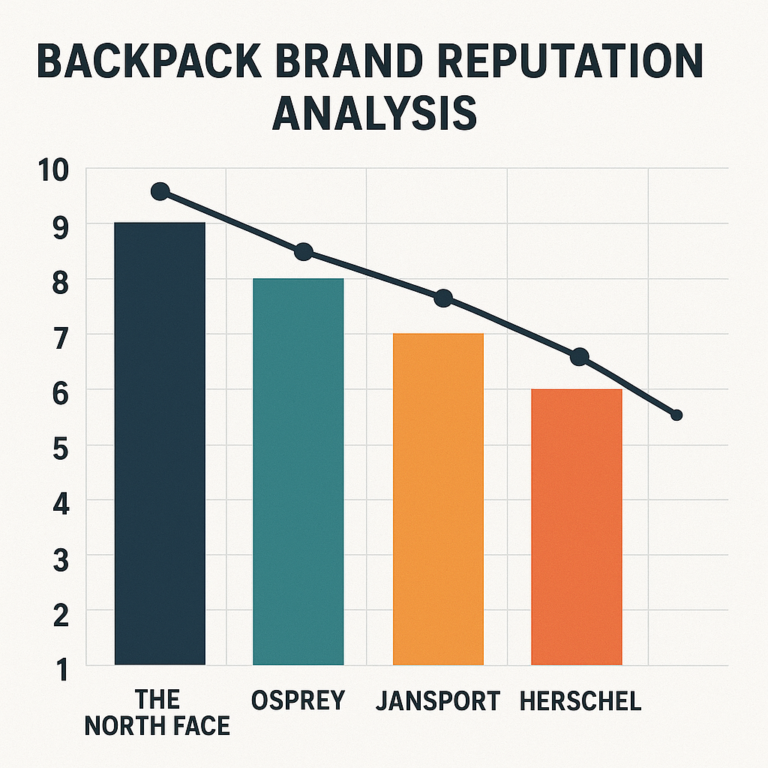
- The Conglomerates: VF Corporation (owning JanSport, The North Face, Eastpak, Vans) and Samsonite dominate the volume. They own the shelf space in department stores and the mindshare of the general public.
- The Specialists: Osprey, Deuter, and Thule hold massive share in the outdoor and travel-specific niches.
- The Fashion Giants: Nike, Adidas, and Herschel capture the casual and athleisure market, often outselling technical brands in urban centers.
- The Disruptors: Cotopaxi, Peak Design, and Nomatic are eating into the mid-to-high-end market with unique designs and strong community engagement.
Key Insight: While Asia Pacific holds the largest market share by volume (driven by massive student populations and manufacturing hubs), North America and Europe generate the highest revenue per unit due to the demand for premium, high-priced gear.
🏆 The Titans of the Trail: Top Global Backpack Manufacturers Dominating the Industry
Let’s break down the heavy hitters. These aren’t just names on a tag; they are the engines driving the industry.
VF Corporation: The Quiet Giant
You might not realize it, but VF Corporation is a backpack powerhouse. Their portfolio includes:
- JanSport: The undisputed king of the school and casual market.
- The North Face: A leader in outdoor performance and urban exploration.
- Eastpak: A European favorite known for durability and style.
- Strategy: They leverage massive distribution networks and cross-promotion. If you buy a North Face jacket, you’re likely to see a North Face backpack next to it.
Samsonite: The Travel Behemoth
Samsonite isn’t just for suitcases anymore. They have aggressively expanded into the backpack sector, particularly for business travelers.
- Key Brands: American Tourister (budget), Tumi (luxury), and their own Samsonite line.
- Market Position: They dominate the “carry-on” and “business” segments, focusing on organization, security, and durability.
Nike & Adidas: The Athleisure Kings
These sportswear giants hold a massive chunk of the youth and casual market.
- Strategy: They don’t compete on technical specs like suspension systems; they compete on brand loyalty and fashion trends. Their “All Conditions Gear” (ACG) lines bridge the gap between sport and utility.
The Outdoor Specialists
- Osprey: Known for the “All Mighty Guarantee.” They focus purely on performance and customer service.
- Deuter: A German engineering marvel, famous for their air-suspension back systems.
- Thule: The go-to for urban commuters and cyclists, blending bike culture with travel.
🎒 Segment Showdown: Market Share by Usage Occasion (Hiking, Commuting, School, Travel)
The market isn’t one-size-fits-all. Let’s look at where the money is flowing based on how you use your pack.
1. School & College (The Volume Leader)
- Market Share: Dominates by unit volume.
- Key Players: JanSport, Herschel, Nike, Adidas.
- Trend: Durability meets style. Students want bags that look good on Instagram but can survive being thrown in a locker.
2. Outdoor & Hiking (The Performance Niche)
- Market Share: High revenue, lower volume.
- Key Players: Osprey, Deuter, Gregory, The North Face.
- Trend: Sustainability and lightweight materials. Hikers are demanding recycled fabrics and PFAS-free DWR coatings.
3. Travel & Commuting (The Premium Growth Engine)
- Market Share: Fastest growing segment.
- Key Players: Tortuga, Away, Peak Design, Thule, Samsonite.
- Trend: “Cary-on only” travel. Bags that open like suitcases (clam-shell), have laptop compartments, and fit under airplane seats.
4. Fashion & Lifestyle (The Impulse Buy)
- Market Share: High volatility, driven by trends.
- Key Players: Fjallraven, Herschel, Beis.
- Trend: Aesthetics over function. The Fjallraven Kanken is a prime example: a simple boxy bag that became a global fashion icon, despite lacking technical features.
💰 Price Point Power: How Budget vs. Premium Brands Split the Market
The price war is real, but the strategy differs wildly.
| Price Segment | Market Share Trend | Key Characteristics | Dominant Brands |
|---|---|---|---|
| Economy (< $50) | Stable/Declining | Basic materials, limited features, high volume. | Kamiliant, Amazon Basics, Samsonite (American Tourister) |
| Mid-Range ($50 – $150) | Squezed | The “Goldilocks” zone. Facing pressure from both sides. | JanSport, Eastpak, Nike, Adidas |
| Premium ($150 – $30) | Rapid Growth | Advanced tech, sustainability, brand prestige. | Osprey, Thule, Peak Design, Tortuga |
| Luxury (> $30) | Niche Growth | Designer materials, exclusive branding, status symbol. | Tumi, Gucci, Prada, NOMANZ |
The “Premium” Trap:
Many consumers are willing to pay more for sustainability and warranties. However, as our video analysis highlighted, some brands like Herschel and Beis charge premium prices for “lifestyle” features that don’t justify the cost in terms of durability. Conversely, brands like GoRuck and Patagonia justify their high price tags with bomb-proof construction and lifetime guarantees.
👥 Who’s Packing? Backpack Market Share Analysis by End-User Demographics
Who is buying these bags? The answer is shifting.
- Adults (68.56% of sales): The primary drivers of the premium market. They are looking for ergonomics, laptop protection, and travel functionality.
- Children/Students: While they buy the most units, they are price-sensitive. However, there is a growing trend of parents investing in ergonomic school bags to prevent back injuries, pushing the price point up.
- Gender Dynamics:
Men: Historically dominated the outdoor and tech segments.
Women: Rapidly growing segment in the fashion-travel hybrid space. Brands like Cotopaxi and Away have seen massive success by designing packs that are functional but aesthetically pleasing to female travelers.
Unisex: The trend is moving toward gender-neutral designs, with brands like Peak Design and Osprey focusing on adjustability rather than “men’s” or “women’s” cuts.
🌍 Global Gridlock: Backpack Market Share by Region (North America, Europe, Asia Pacific)
Geography dictates taste.
Asia Pacific: The Volume King
- Share: ~38.48% of global value.
- Drivers: Massive population, rising middle class, and government investment in outdoor infrastructure (especially in China).
- Trend: High demand for motorcycle commuting bags (weatherproof, reflective) and affordable school bags.
North America: The Premium Hub
- Share: ~34.76% of global value.
- Drivers: High disposable income, strong outdoor culture (168 million participants in 2023), and a “buy it for life” mentality among enthusiasts.
- Challenge: Counterfeit goods are a massive issue here, undermining brand equity.
Europe: The Sustainability Leader
- Share: ~19.46% of global value.
- Drivers: Strict environmental regulations (Carbon Border Adjustment Mechanism) favor brands with transparent supply chains.
- Trend: High demand for eco-friendly materials and circular economy models (repair, recycle). Brands like FREITAG and VAUDE thrive here.
South America & Middle East/Africa
- Share: Smaller but growing (~8% combined).
- Trend: Emerging markets are seeing a rise in urban mobility solutions as cities expand.
🛒 Where the Magic Happens: Distribution Channels and Retail Market Share
How do you buy your pack? The channel matters.
- Offline Retail (64.97%): Despite the digital boom, people still want to touch and feel their backpacks. Specialty outdoor stores, department stores, and brand flagships remain dominant.
- Online Retail (Rapid Growth): E-commerce is growing at a 9.47% CAGR. Third-party marketplaces like Amazon and Zalando are crucial, but they charge high commissions (15-25%).
- Direct-to-Consumer (DTC): Brands like Away, Cotopaxi, and Tortuga have built empires by selling directly to you, cutting out the middleman and controlling the narrative.
Pro Tip: If you buy online, check the return policy. A bag that looks great on a screen might feel terrible on your back.
🚀 Market Dynamics: Drivers, Restraints, and Opportunities Shaping the Industry
What’s pushing the market forward, and what’s holding it back?
Drivers
- Tech Integration: The need for laptop compartments, USB charging ports, and anti-theft features.
- Sustainability: Consumers are demanding recycled materials and ethical manufacturing.
- Travel Resurgence: Post-pandemic travel is booming, driving demand for carry-on travel packs.
Restraints
- Counterfeits: As mentioned, fake goods damage brand reputation and sales.
- Market Saturation: In developed markets, people keep their bags longer (5-7 years), slowing unit growth.
- Cost Volatility: Fluctuating prices of nylon and polyester, plus import tariffs, squeeze margins.
Opportunities
- Smart Backpacks: Integration of solar panels, biometric locks, and modular inserts.
- Niche Markets: Specialized bags for digital nomads, cyclists, and parents.
- Circular Economy: Rental models (like Patagonia Worn Wear) and repair services.
📈 Future Forecast: Backpack Market Size, Growth Trends, and Predictions to 2030
Where are we heading?
- Market Size: Projected to reach USD 31.96 billion by 2031.
- CAGR: Expected to grow at 6.69%.
- Key Trend: The line between “outdoor” and “urban” will blur further. Expect to see hiking suspension systems in commuter bags and waterproof fabrics in fashion backpacks.
- The “Hero” Shift: Brands that prioritize durability and warranties over marketing fluff will gain the most loyal followings.
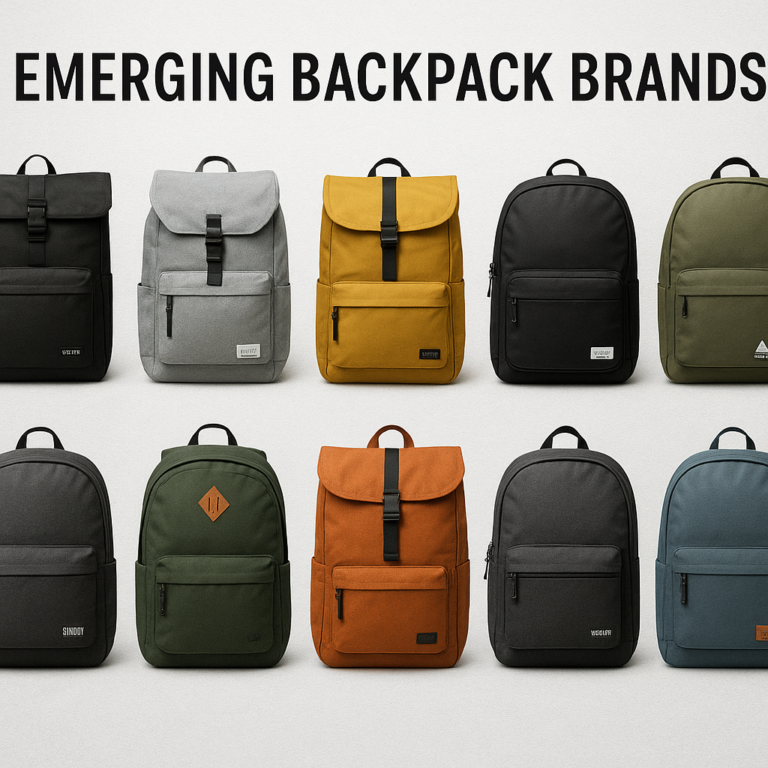
🔥 The Rise of Niche Players: Emerging Brands Challenging the Giants
The giants are big, but they are slow. Enter the disruptors.
- Cotopaxi: Using deadstock fabrics to create unique, colorful bags. They appeal to Gen Z with their “Gear for Good” mission.
- Peak Design: Focusing on camera gear and photographers, offering modular systems that no one else matches.
- Nomatic: Known for “feature overload” and crowdfunding hype. They offer a ton of pockets and organization, though some critics argue it’s over-enginered.
- GoRuck: Building “bomb-proof” packs from 10-denier Cordura with a Scars Lifetime Warranty that transfers with the bag.
- Tortuga: Specializing exclusively in carry-on travel backpacks, engineered for the modern nomad.
These brands are proving that you don’t need to be a conglomerate to win; you just need to solve a specific problem better than anyone else.
🧐 Consumer Insights: What Drives Brand Loyalty in the Backpack Sector?
Why do you stick with a brand?
- The Warranty: This is the #1 factor for outdoor enthusiasts. Osprey’s “All Mighty Guarantee” is a massive loyalty driver.
- Durability: If a bag lasts 10 years, you’re a customer for life. GoRuck and Patagonia excel here.
- Aesthetics: For students and fashion-conscious buyers, the look is paramount. Herschel and Fjallraven win here.
- Community: Brands that build a tribe (like Cotopaxi or GoRuck) create emotional connections that transcend the product.
The “Badge” vs. The “Build”:
As our video analysis pointed out, many consumers are waking up to the fact that they are paying for the logo, not the quality. The smart traveler is learning to “read the build, not the logo.”
🏅 Competitive Landscape: A Deep Dive into Brand Strategies and Innovations
Let’s look at how the top players are fighting.
- VF Corporation: Leverages cross-branding. A North Face jacket pairs with a JanSport backpack.
- Samsonite: Focuses on innovation in materials and security features (RFID blocking, TSA locks).
- Nike/Adidas: Use celebrity collaborations and limited edition drops to drive hype.
- Osprey: Doubles down on customer service and sustainability.
- Thule: Expands into lifestyle with bike accessories and urban commuting gear.
Inovation Spotlight:
- Osprey: Launched the ‘Run Collection’ with bluesign-approved materials and PFAS-free DWR.
- Thule: Refreshed the Paramount collection with hidden security pockets and bike light loops.
- JanSport: Partnered with L2 Brands for collegiate lines and launched an adaptive range for mobility impairments.
📝 Key Industry Developments: Mergers, Acquisitions, and Sustainability Pledges
The landscape is shifting fast.
- M&A Activity: Anta Sports acquired Jack Wolfskin for $290 million in 2025, expanding their outdoor portfolio.
- Sustainability Pledges:
Deuter: Aiming for 90% recycled polyester in their 2025 lineup.
VAUDE: Partnered with Covestro to eliminate perfluorinated compounds.
FREITAG: Pionering mono-material backpacks for 10% recyclability. - Counterfeit Crackdowns: Governments and brands are increasing efforts to seize fake goods, with 32 million items seized in North America in 2024 alone.
🧠 Expert Verdict: Which Brand Holds the Crown for Your Needs?
So, who wins? It depends on you.
- For the Student: JanSport or Herschel for style and affordability.
- For the Hiker: Osprey or Deuter for suspension and warranty.
- For the Traveler: Tortuga or Cotopaxi for carry-on optimization and durability.
- For the Commuter: Thule or Peak Design for organization and tech protection.
- For the “Buy It For Life” Crowd: GoRuck or Patagonia.
The Bottom Line: Don’t let the marketing fool you. Look at the fabric, the zippers, the warranty, and the suspension. The badge might wear out, but the Cordura won’t.
✅ Conclusion

The backpack market is a dynamic, fragmented, and fascinating ecosystem. While giants like VF Corporation and Samsonite dominate the shelves, the real innovation is happening in the niche spaces where brands like Osprey, Cotopaxi, and GoRuck are redefining what a backpack can be.
We started this journey asking: Who really owns the backpack market? The answer is complex. It’s a battle between volume (Asia, schools) and value (North America, premium travel). It’s a clash between fashion and function.
But here is the resolution to our earlier mystery: The “best” brand isn’t the one with the biggest market share. It’s the one that aligns with your specific needs. If you need a bag that will survive a decade of abuse, GoRuck or Osprey are your champions. If you need a bag that looks great for a coffee date, Herschel or Fjallraven might be your pick.
The Final Word: Stop buying the logo. Start buying the build. Whether you choose a Patagonia Black Hole for its weatherproof durability or a Tortuga for its travel-smart design, remember that the best backpack is the one that disappears on your back, letting you focus on the journey.
🔗 Recommended Links
Ready to upgrade your pack? Here are our top picks based on the analysis above.
- For the Ultimate Traveler:
Tortuga Setout Backpack: Amazon | Tortuga Official - For the Outdoor Enthusiast:
Osprey Atmos AG 65: Amazon | Osprey Official - For the Durability Seeker:
GoRuck GR1: Amazon | GoRuck Official - For the Eco-Conscious:
Patagonia Black Hole Pack: Amazon | Patagonia Official - For the Student/Comuter:
JanSport SuperBreak: Amazon | JanSport Official
Books to Read:
❓ Frequently Asked Questions
How do premium backpack brands compare in market share to budget brands?
Premium brands (> $150) are capturing a growing share of the market, driven by demand for sustainability and advanced features. While budget brands dominate in unit volume (especially in Asia and schools), premium brands are generating higher revenue and are growing faster in North America and Europe.
What are the leading backpack brands for outdoor activities?
Osprey, Deuter, Gregory, and The North Face are the leaders. They dominate due to their focus on suspension systems, weather resistance, and lifetime warranties.
How has the backpack market share changed over the past five years?
The market has shifted from a focus on volume to value. There’s been a significant rise in the premium segment and a decline in the mid-range due to pressure from both budget and luxury brands. Sustainability has become a key differentiator.
Which backpack brands are most popular among students and travelers?
Students: JanSport, Herschel, Nike.
Travelers: Tortuga, Osprey, Cotopaxi, Away.
How does market share vary among top backpack brands?
The market is moderately fragmented. VF Corporation (JanSport, North Face) holds a large share, but no single brand dominates the entire market. Niche players like Peak Design and GoRuck hold significant share in their specific categories.
Which backpack brands hold the largest market share globally?
VF Corporation and Samsonite are the largest conglomerates. In terms of individual brands, JanSport and The North Face likely hold the largest global share by volume.
What are the key differences between high-end and budget-friendly backpack brands?
High-end: Better materials (e.g., Cordura, recycled ripstop), advanced suspension, lifetime warranties, sustainable practices.
Budget: Basic polyester, limited features, shorter warranties, often mass-produced with lower quality control.
How do backpack market trends vary by region and country?
Asia Pacific: High volume, focus on school and commuting.
North America: High value, focus on outdoor and travel.
Europe: High value, focus on sustainability and eco-friendly materials.
What factors contribute to a backpack brand’s market share and success?
Warranty, durability, brand reputation, sustainability, and innovation (e.g., tech features).
How do I choose the best backpack brand for my needs?
Identify your primary use case (hiking, travel, school). Look for warranties, material quality, and ergonomic features. Don’t just buy the logo; read the reviews and check the specs.
Which brand has the largest market share in the backpack industry?
While exact numbers vary by report, VF Corporation (through its portfolio of JanSport, The North Face, etc.) and Samsonite are widely considered the largest players by revenue and volume.
What are the top backpack brands in the market?
Osprey, JanSport, The North Face, Patagonia, Tortuga, Cotopaxi, Thule, Deuter, GoRuck, Herschel.
What is the market trend for backpacks?
Sustainability, tech-integration, carry-on optimization, and modular designs.
Who are the leaders in the backpack industry?
VF Corporation, Samsonite, Nike, Adidas, Osprey, The North Face.
📚 Reference Links
- Grand View Research: Active Backpack Market Size, Share & Trends Report, 2030
- Fortune Business Insights: Backpack Market Analysis
- Mordor Intelligence: Backpack Market Report
- Osprey Official Website
- Patagonia Official Website
- Tortuga Official Website
- GoRuck Official Website
- Cotopaxi Official Website
- The North Face Official Website
- JanSport Official Website
- Samsonite Official Website
- Thule Official Website
- Deuter Official Website
- Peak Design Official Website
- Herschel Supply Co. Official Website
- Fjallraven Official Website
- Nike Official Website
- Adidas Official Website
- Away Official Website
- Nomatic Official Website
- FREITAG Official Website
- VAUDE Official Website
- Anta Sports Official Website